








































































































































Love him or hate him, Ryan Murphy is back, and with a new addition to his somewhat controversial biopic universe. Known for hit dramas like “Monster: The Jeffrey Dahmer Story” and his retelling of the Menendez brothers’ case, Murphy is now turning his sights on a new genre: a love story.
His newest limited series, “Love Story,” follows the whirlwind romance between John F. Kennedy Jr. and Carolyn Bessette. The Hulu original begins with the couple’s meet-cute and follows them to their eventual tragic passing. But what makes this adaptation so compelling for such a large audience? Is it the world’s deep fascination with the Kennedy family dynasty, a need for romance or the spot-on casting?
While those reasons may be the first pull for many viewers, the real star is how the show captures nostalgia through set design, a beautifully composed soundtrack, fashion, cinematography and iconic ’90s tropes, all of which encompass the media’s craving for comfort and familiarity.
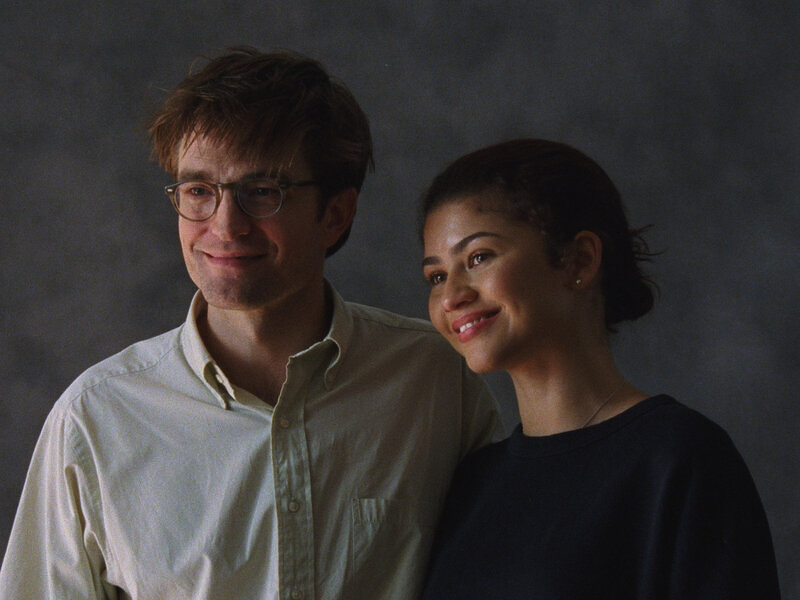
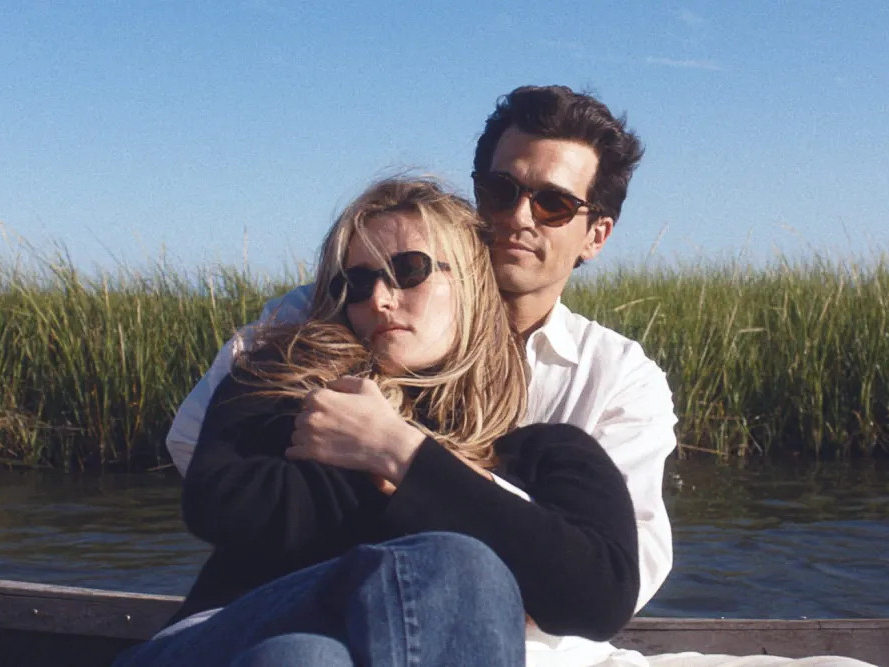
Bessette makes for the perfect archetype of a lead in a ’90s romcom: a business fashionista who carries herself effortlessly and does what she wants rather than being dependent on others. Kennedy is the wealthy heir to one of America’s most powerful and well-known political dynasties, while also possessing the qualities of a classic heartthrob: attractive, charming and, of course, filthy rich.
The show offers a mediatized New York the world is all too familiar with: streets crowded with yellow taxis, plumes of steam rising from the pavement, people biking to work in business‑casual uniforms of oversized blazers, slip skirts and loafers. The cinematography does the rest; from moody and grainy to bright, warm tones, it brings aspects of New York to life that viewers seem to miss, even though many have never actually lived it.
The nostalgia has sparked a new wave of ’90s fashion obsession on social media. Every other scroll on Instagram seems to have a video of Bessette and Kennedy, with captions such as “Bring Back ’90s Fashion” or “When Can We Start Dressing Like This Again?” There have even been look-alike contests built around the fascination and romanticization of Kennedy and other men who embody his style and phenotype.
Not to mention the ’90s-chic it-girl aesthetic, which is highly prevalent in Bessette. From her personal style to her mindset, she leans into sleek minimalism, using nude and neutral palettes that fuel a street casual style but are also business-ready. Her “give no crap” mindset is inspiring when so many feel pressured to conform with unrealistic expectations rather than choosing what’s actually right for them. Sadly enough, the it‑girl look of the ’90s has been replaced by matching sets from Alo or Lululemon, which is why audiences crave nostalgia.
This is where the soundtrack comes into play, pulling the audience to yearn more; not only does it tie the scenes together effortlessly, but it also matches and carries each scene’s aesthetic, mood and emotions perfectly. So much so that the songs could even be considered their own character through the enhancement of pivotal moments.
The first episode begins with Kennedy being so taken by Bessette that he decides to visit her at her job at Calvin Klein under the false pretense of wanting a new suit. One thing led to another, and he slyly asked her out. As he leaves with a smirk on his face, Lenny Kravitz’s song “It Ain’t Over Til It’s Over” begins to play, perfectly encapsulating the scene with high hopes and energy, making the audience twirl their hair and kick their legs, excited to see this new romance blossom.
In episode four, there is a scene where Kennedy and Bessette are at a small-town bar and Sade’s “No Ordinary Love” starts playing on the jukebox, very antique and very right. Bessette, shocked, asks if he likes the song, and he replies, “What animal doesn’t like Sade?” And he’s right.
Sade brings the scene to life through her angelic vocals, capturing the intensity of young love blossoming before the audience’s eyes. With a song as popular as “No Ordinary Love” — which would have been everywhere in the ’90s — fostering an appreciation for the classics and yearning for the past, even though some of the viewers may have never experienced life before the 2000s.
Later, Jeff Buckley’s “Lover, You Should’ve Come Over” plays after an argument between the two, and the placement is painfully perfect. The song is already a heart‑tugger on its own, but paired with the scene’s emotional tension, it adds layers of yearning between Kennedy and Bessette.
Together, they bring fairy‑tale fantasy that almost everyone has craved at some point: the most desired person in the room choosing you, sweeping you off your feet. After all, this trope has been the basis for countless movies and TV shows over the years.
Unlike the fairytale ending Kat and Patrick had in “10 Things I Hate About You,” a poetic ending was, unfortunately, not in the cards for the young couple. It will be interesting to see how their story unfolds on the big screen and whether their story gets its justice.
It feels like all of America is on the edge of our seats waiting for new episodes to drop on Hulu every Friday.
Jessica Ajmani • Mar 25, 2026 at 1:02 pm
Loved this! Such a great piece !So proud of my daughter for being part of it.
Jessica Ajmani • Mar 25, 2026 at 1:02 pm
Loved this! Such a great piece !So proud of my daughter for being part of it.