


































































































































































































In December of 1887, in Beeton’s Christmas Annual, the story “A Study in Scarlet” by Sir Arthur Conan Doyle was first published. The story introduced the world to the deerstalker cap-wearing, pipe-smoking detective Sherlock Holmes of 221B Baker Street. The story is riveting, but it did not launch Holmes and Watson out of obscurity. That moment didn’t come until 1891 with Doyle’s “A Scandal in Bohemia,” the story that set in motion the meteoric rise in popularity of Holmes and Watson. But this article isn’t about Sherlock Holmes and Dr. Watson, so I turn to the French.
In February of 1905, after years of success for Doyle, Je sais tout magazine founder Pierre Laffitte requested a French rival to the immensely popular British detective. Seeking to create a unique adventure serial, he commissioned fellow journalist and amateur novelist Maurice Leblanc to perform the task. Five months later, on July 15, 1905, Leblanc gave him “L’Arrestation d’Arsène Lupin” (“The Arrest of Arsène Lupin”). From the moment of his debut, Lupin was a massive success in France and later worldwide, but I find that Sherlock Holmes, although possibly deservedly, attracts people much more than Lupin does. But I will try to convince nonetheless.
Lupin, Lupin, where do I begin?
In 2021, Netflix released the show “Lupin,” starring French actor Omar Sy, who plays Assane Diop, a master thief who models his crimes after the character Arsène Lupin. I remember watching the show, mesmerized by the finesse and style with which Sy portrays his Lupin-esque character. So much so that 14-year-old me decided to “read”?
For some context, I was never a reader. A movie-watcher? Sure. A TV-enjoyer? Definitely. But never a reader. Yet, within a week of finishing the show’s first season, I had the Arsène Lupin box set on my desk. Five years later, I’m a subscriber to a bibliophile’s way of life.
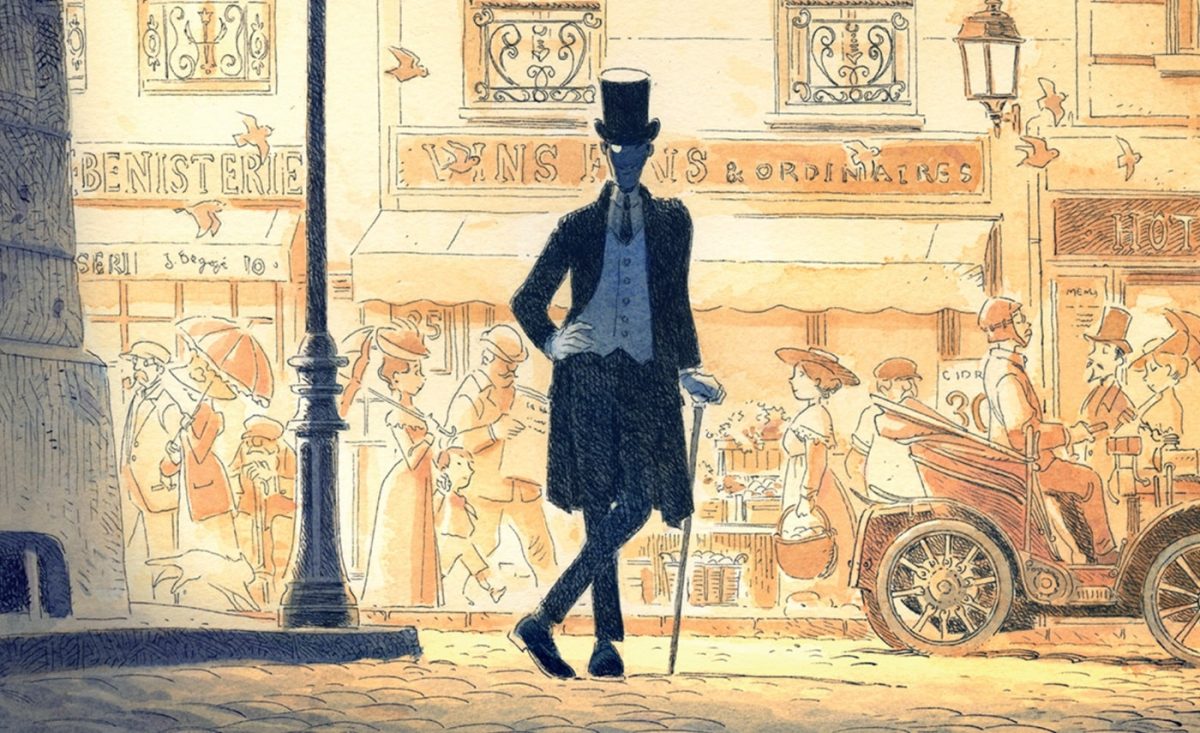
Lupin is a suave master of disguise, an escape artist and a brilliant mastermind. He operates with wit and flair; he steals from the rich and corrupt, often, but not always, aiding the innocent. His signature move of announcing his crimes in advance knowing full well that nobody can get in his way once he has can get in his way once he has set his mind to something, exhibits a borderline reckless confidence that immediately had me rapt.
A scene in the first Lupin book, titled “Arsène Lupin, Gentleman Burglar,” features Lupin breaking into the house of a baron, not taking anything and then leaving a note which reads, “Arsène Lupin, gentleman-burglar, will return when the furniture is genuine.” It is a display of fantastic power. He declares without a doubt that he is inevitable. Even with all his confidence, he still fears his own insignificance. He says, “The essential point is that the public may be able to refer to my work and say, without fear of mistake: Arsène Lupin did that!” He is a showboater. He wants to win, but more than anything, he has a competitive nature that makes him want everyone else to lose.
In a way, Lupin is a French Robin Hood; in more ways, he is not. He steals from the wealthy, but where Robin Hood steals for others, he steals for himself. And as the French response to Sherlock Holmes, he and Holmes, too, share some qualities. Both are brilliant and possess exceptional deductive skills, immense charm and a love for disguise. They even interact in the second Lupin book, kind of. In the second Lupin installment, he must face off against the brilliant and undefeated British detective Herlock Sholmès and his confidant Dr. Wilson. Mr. Leblanc, you’ve done it again! How could you think up something so clever?
My personal favorite of the Lupin series is book three, “The Hollow Needle.” The story follows a murder investigation that leads to a hidden royal secret: the Hollow Needle, a hollowed-out rock formation on the Normandy coast containing the legendary treasure of the French kings. Lupin’s main adversary is a young detective named Isidore Beautrelet, who discovers Lupin’s involvement and begins a battle of wits with him. Beautrelet, alongside Sholmès and recurring Lupin antagonist Ganimard, pushes Lupin to the brink. Lupin struggles more in those 300 pages than he does in the first two books combined.
Lupin is a character who draws people in. He appears in about 24 of Leblanc’s original books, including novels and short story collections. He has been adapted in film, including the 1932 “Arsène Lupin.” There are multiple TV series featuring or inspired by him, including the modern “Lupin” and the long-running anime franchise “Lupin III.” He has been viewed in almost every form of media, making him one of the most adapted characters of all time.
Arsène Lupin, Gentleman-Burglar, the suave mastermind behind some of the greatest thefts that never happened, has etched himself a permanent spot in my brain. So much so that I plan to visit the real-life Hollow Needle at the cliffs at Ètretat if ever I make my way to France. Alas, I don’t think the treasure of French kings awaits me.





Jack Walton • Mar 27, 2026 at 4:12 pm
If you like the 21st century “Lupin” dive back into the 20th and watch Lionel and John Barrymore in the 1932 version. If you like French detective novels, consider George Simenon’s “Inspector Maigret” series which appeared on PBS and can be streamed.