





























































































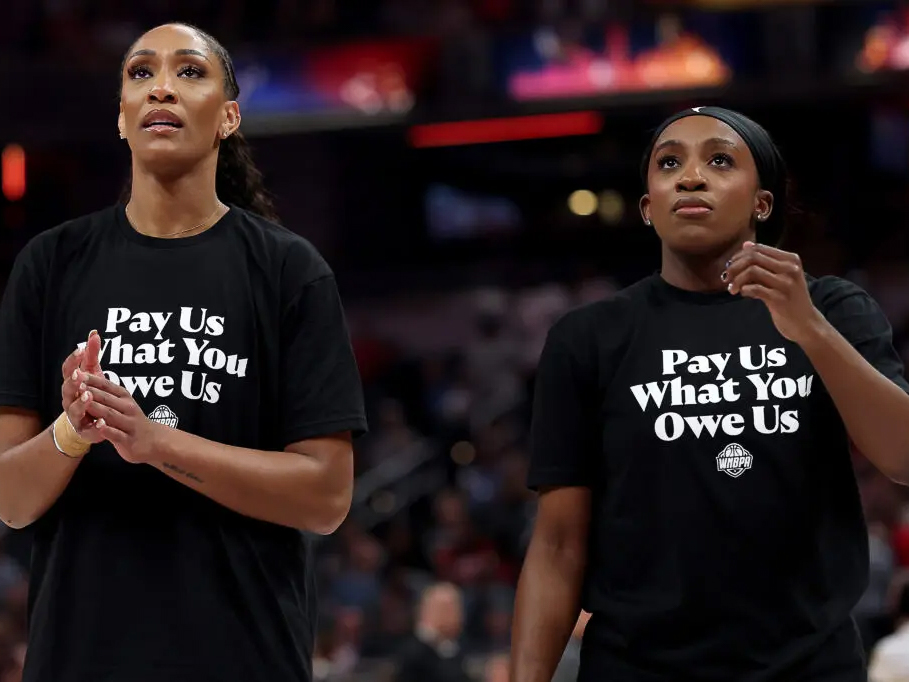



































After 17 months of deliberation between the Women’s National Basketball Players Association (WNBPA) and the WNBA, an agreement has finally been reached. This new agreement will help players secure contracts that finally reflect the growth of the league and include better revenue splits, helping them earn more money.
This agreement is a massive stepping stone for the WNBA and its players. At one point, a lockout seemed imminent. Now the 30th anniversary of the league will tip off on time without any issue.
Contracts will rise from $120,000 dollars on average to $600,000. The revenue split has jumped from just 9.3% to 20%, allowing for rising contracts.
On top of that, first-year players contracts are going to start reflecting their values. First overall pick Paige Bueckers, who last year was only making $78,831, is now projected to be making just over $500,000 annually.
The agreement has many new provisions, including one that the league has dubbed the “EPIC” (Exceptional Performance on Initial Contract). Players will now be able to renegotiate the fourth year of their deal if they were previously named All-WNBA first team or second team, or the supermax if they won an MVP award in the past.
As the season starts, there are more than 100 players who will enter unrestricted free agency. The New York Liberty are in for an especially interesting season as they have multiple All-WNBA team members and MVPs who will become free agents.
Sabrina Ionescu, as well as Jonquel Jones and Breanna Stewart, were the cornerstones of the Liberty’s championship squad in 2024. Now they are all eligible for the league’s new max contract, which has increased to $1.4 million. The salary cap will rise alongside it to $7 million.
While contracts are one of the biggest parts of the CBA negotiations, other key issues were addressed as well. The coring rule, which allows teams to designate one unrestricted free agent per season as a “core player,” granting them exclusive negotiating rights to retain talent, was altered. If a player has been in the league for over seven years, they can no longer be cored starting in 2027.
Another major talking point all throughout last year’s season was roster size. Teams are now required to contain 12 players instead of last year’s optioned 11. Teams can also have two developmental players whose salaries won’t count towards the cap. Chartered flights have been officially codified into the league’s CBA after two years of requiring them independently of the CBA. The league will now have to provide housing for players making under $500,000 over the next three seasons.
For fans, there will now be more games to watch starting in 2026. The schedule will expand to 50 games from last season’s 44, and in 2029, it will expand to 52. By then, the league will expand, bringing it to 17 teams.
While the CBA still has to be ratified by the players as well as the Board of Governors, this is a massive step for the league that shows how much influence it has gained as the popularity of women’s sports continues to grow.
“This Collective Bargaining Agreement represents a defining moment in the WNBA’s 30-year history and all of women’s professional sports,” said WNBA Commissioner Cathy Engelbert. “Since its inception, the WNBA has been shaped by extraordinary athletes who believed in the league’s future. The agreement is a testament to that belief and to the tremendous progress we have achieved together.”
This is only the beginning for the WNBA and its players. Last season, the league had the most viewership in its entire history. The players’ voices are starting to be heard and their concerns taken seriously because without them this league could not succeed.
This is not only a win for the WNBA, but a win for other women’s sports. On March 16, the largest deal in women’s soccer history was signed by National Women’s Soccer League star Catarina Macari. Her deal was worth $8 million and all of that money is guaranteed. This highlights the shift in popularity for women’s sports around the country.
This CBA agreement is a statement to all that women’s sports are here to stay, and their popularity is only going to keep on growing.

