





































































































































































“Project Hail Mary” is a heartfelt, passionate film that brings new excitement to the science fiction genre. This film adaptation of the 2021 sci-fi novel by Andy Weir was released in theaters on March 20. Weir is well known for his other bestselling novel, “The Martian,” which received its own film adaptation in 2015. “Project Hail Mary” was an instant success, having already grossed over $500 million globally. As someone who had read “Project Hail Mary” and devoured it in one sitting due to how compelling Weir’s writing is, I had high expectations for this adaptation that were met completely.
The production opens with schoolteacher and scientist Ryland Grace, played by Ryan Gosling, who is regaining consciousness from a coma while aboard a ship in space. Grace has no recollection of how he got on the ship, what his goal is or even who he is. The audience is just as lost as Grace, as the movie gives no hints. Instead, viewers experience Grace putting together the pieces of his identity alongside him in a nonlinear narrative, as he begins to experience more flashbacks and works to understand his situation.
He quickly discovers the overall purpose of his presence on the ship: finding a cure for the dying sun, which is rapidly cooling down and has the potential to cause the death of half the Earth’s population in the next 30 years. Driven by the intense circumstances, Grace is determined to save his planet, despite the vast distance of multiple light-years.
Though his journey begins in solitude, he unexpectedly finds an ally and friend along the way. Rocky is a rock-like alien engineer from the planet Erid, who is also working to save the sun and his home.
When an A-list actor such as Ryan Gosling stars in a film based on a widely successful book, there is going to be a lot of anticipation regarding his performance. Gosling first secured the movie rights back in 2020, after reading an early manuscript of the book. From his passionate championing of the movie as both actor and producer, Gosling delivered an impressive performance across all levels. Gosling not only encapsulates the intelligence and humor of Ryland Grace but also the empathetic, vulnerable and curious aspects of him. His character was so extremely likable, and Gosling’s emotional performance is so profoundly human that you can’t help but root for him at every moment.
Other notable performances in the film come from Sandra Hüller, who plays Eva Stratt, the stern leader in charge of the space mission, and Lionel Boyce — who many would know from his performance in the hit TV show “The Bear” — an ally to Grace before he leaves for space. Boyce adds a lot of humor in his scenes, and although his character Carl was a new addition to the film, he fits in so well that one would have expected him to appear in the book.
With every book-to-movie adaptations, it is a given that certain aspects would have likely needed to be cut, and I was nervous about what parts of the novel would get sacrificed. However, I felt directors Phil Lord and Christopher Miller did an excellent job of preserving the book’s complex themes and inspiring message. While I already knew the plotline, the film was so immersive that I found myself surprised by every twist, while also eager to experience what additional information would be uncovered to fully flesh out Grace’s story and character. Emotional whiplash is a guarantee while watching this film, as one anxiety-filled moment passes, very quickly another one builds. However, these moments are paralleled by many humorous moments, balancing out the intensity.
Furthermore, it would be a disservice to the movie not to mention the score. Composer Daniel Pemberton’s score ranges from electronic, syncopated sounds that encapsulate the out-of-this-world ambiance of space, to the energetic, bright rhythms that reflect moments of friendship. Each scene’s music sets the tone perfectly, whether it’s the first look at the planet Tau Ceti e, or Grace hard at work in the spaceship.
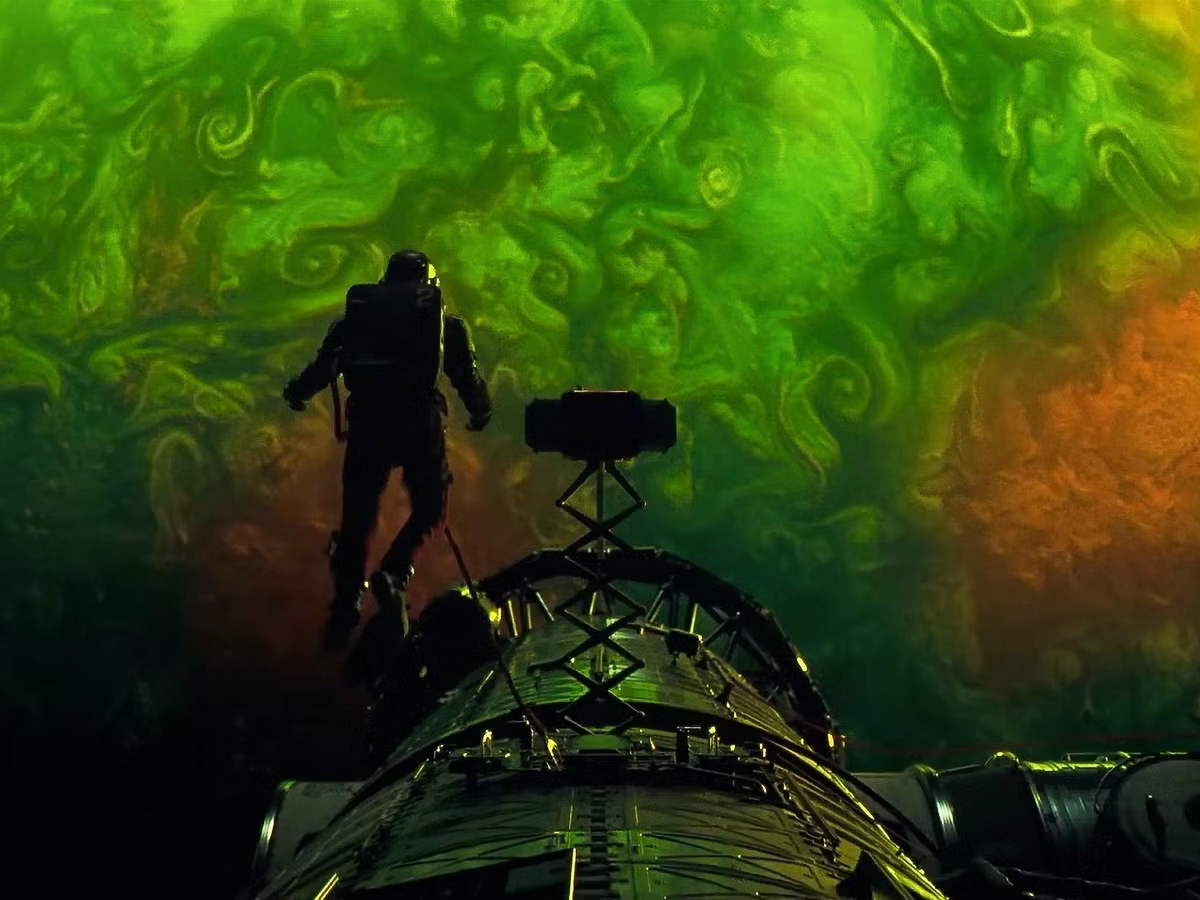
Additionally, cinematography and visuals as a whole were an absolute highlight of the movie. As Grace visited various planets throughout space, it was impossible not to gape at how intricately beautiful the galaxies were and how realistic they looked.
While some massive sci-fi fans feel the film is overall unfitting of the label of the genre due to its heartwarming sincerity and optimistic clichés, I disagree. Science is a major element in “Project Hail Mary,” making it completely deserving of the sci-fi name; it takes the complicated scientific elements of space travel and presents them in a way that is understandable to the audience, without feeling too dumbed down. I don’t believe that a sci-fi film has to have massive layers of complexity to be considered worthy of the genre title.
“Project Hail Mary,” at its core, is a celebration of both scientific achievements and friendship. It’s a film that reminds us of why we go to the movie theater: to feel completely immersed in a storyline, its characters and its meaning.
There is no shortage of space movies, but I believe “Project Hail Mary” provides a more optimistic take on the typical Earth-threatening dilemma. For all of those who wonder what it would be like if a non-astronaut went to space, this is the film to check out — it might just leave your eyes watering.