








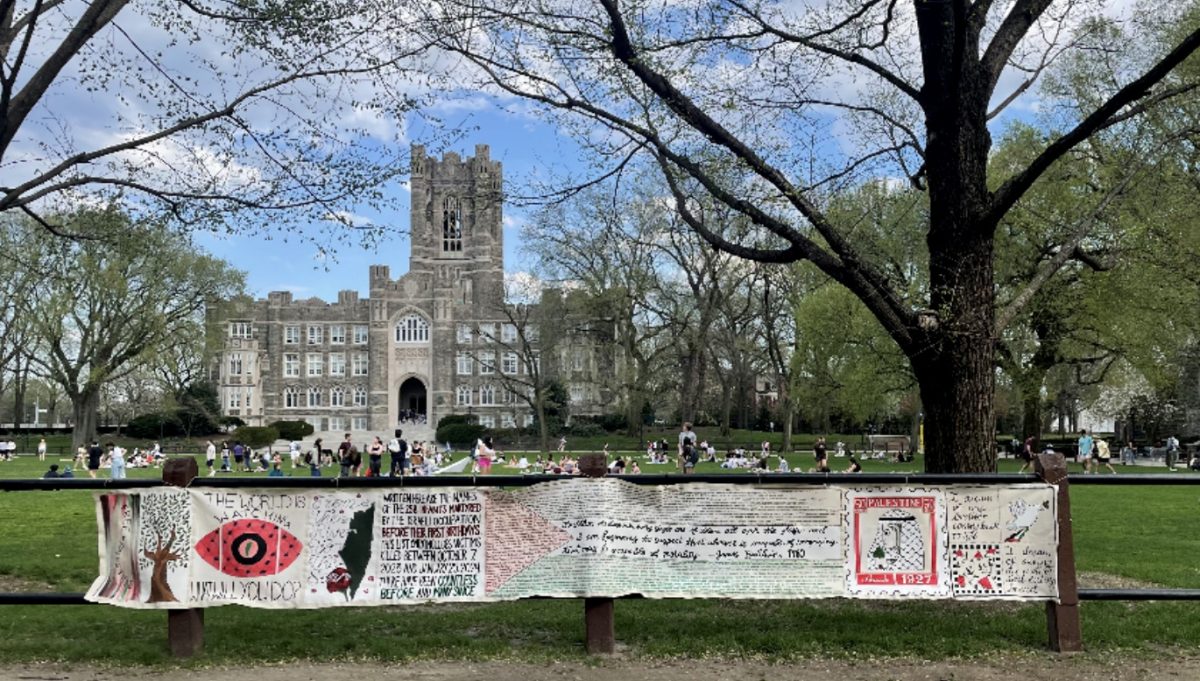


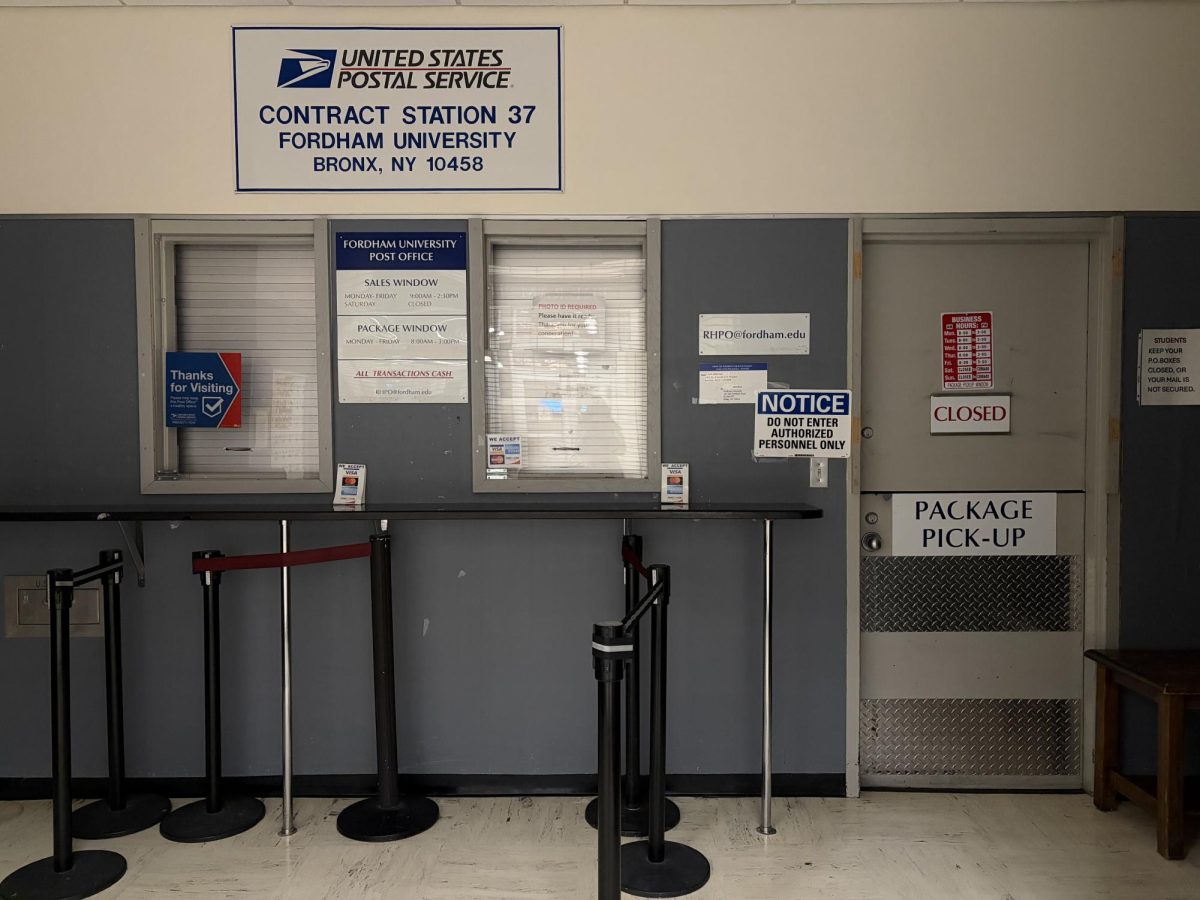















































































































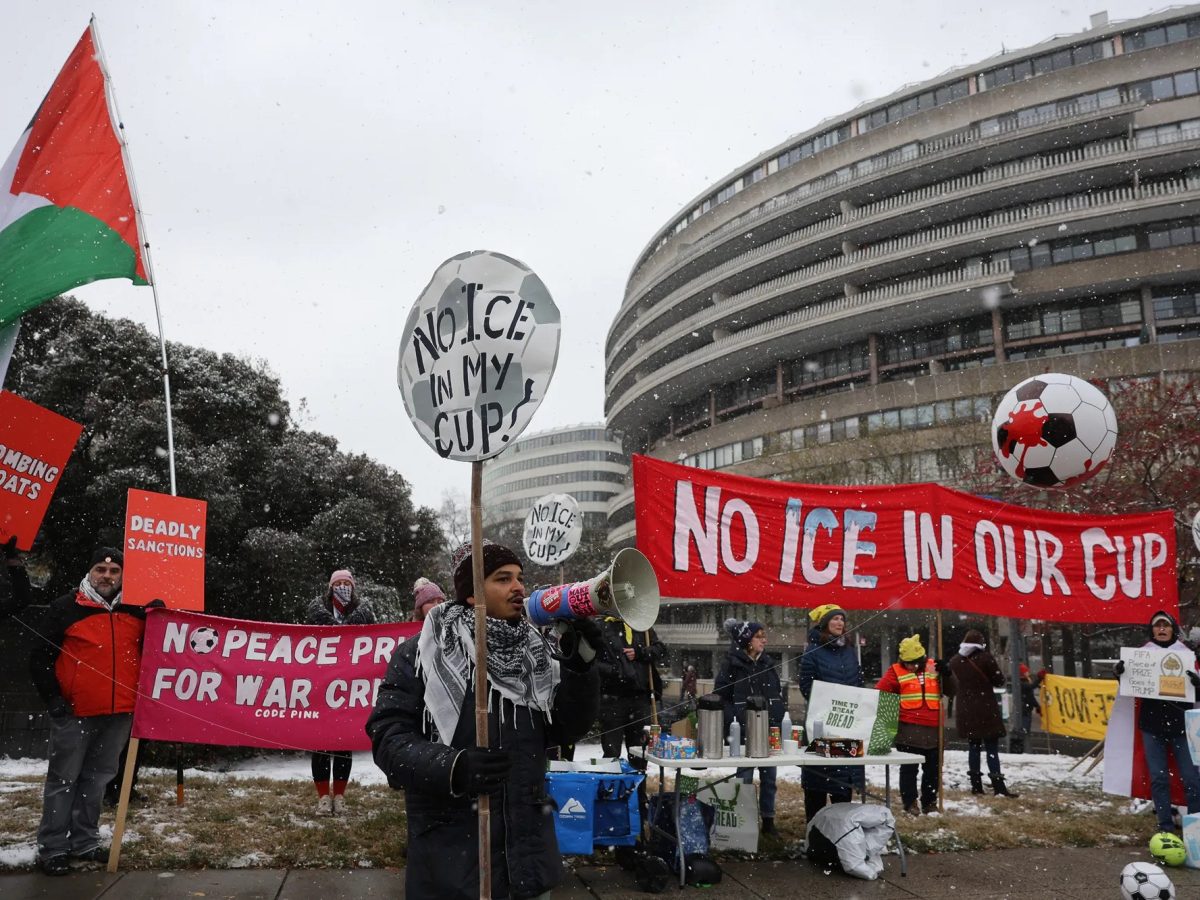


In light of what organizers have described as a surge in Immigration and Customs Enforcement (ICE) activity targeting university campuses across the United States, and the immigrant population in general, Fordham University’s Graduate Student Workers Union (FGSW) recently launched a petition calling on the university administration to declare Fordham’s campuses a “sanctuary space.”
Addressed to the Fordham University President Tania Tetlow, Vice President for Student Affairs Michelle Burris and Provost Dennis Jacobs, the petition urges Fordham’s highest-ranking officials to take a more transparent stance on the university’s policies related to ICE, and demands that they adopt a total of six measures towards making Fordham a sanctuary space.
These measures include a public declaration of a “sanctuary campus,” refraining from disclosing student and faculty data to the federal government, explicit campus response protocols related to immigration enforcement, fully funding immigration legal services for students and employees, issuing annual public reports on immigration-related matters and an overall commitment to protecting its immigrant student community. The petition has received roughly 290 signatures from faculty, staff, students and other members of the Fordham community, since it was first posted online on Feb. 17.
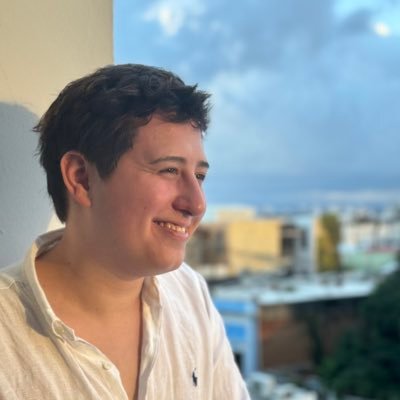
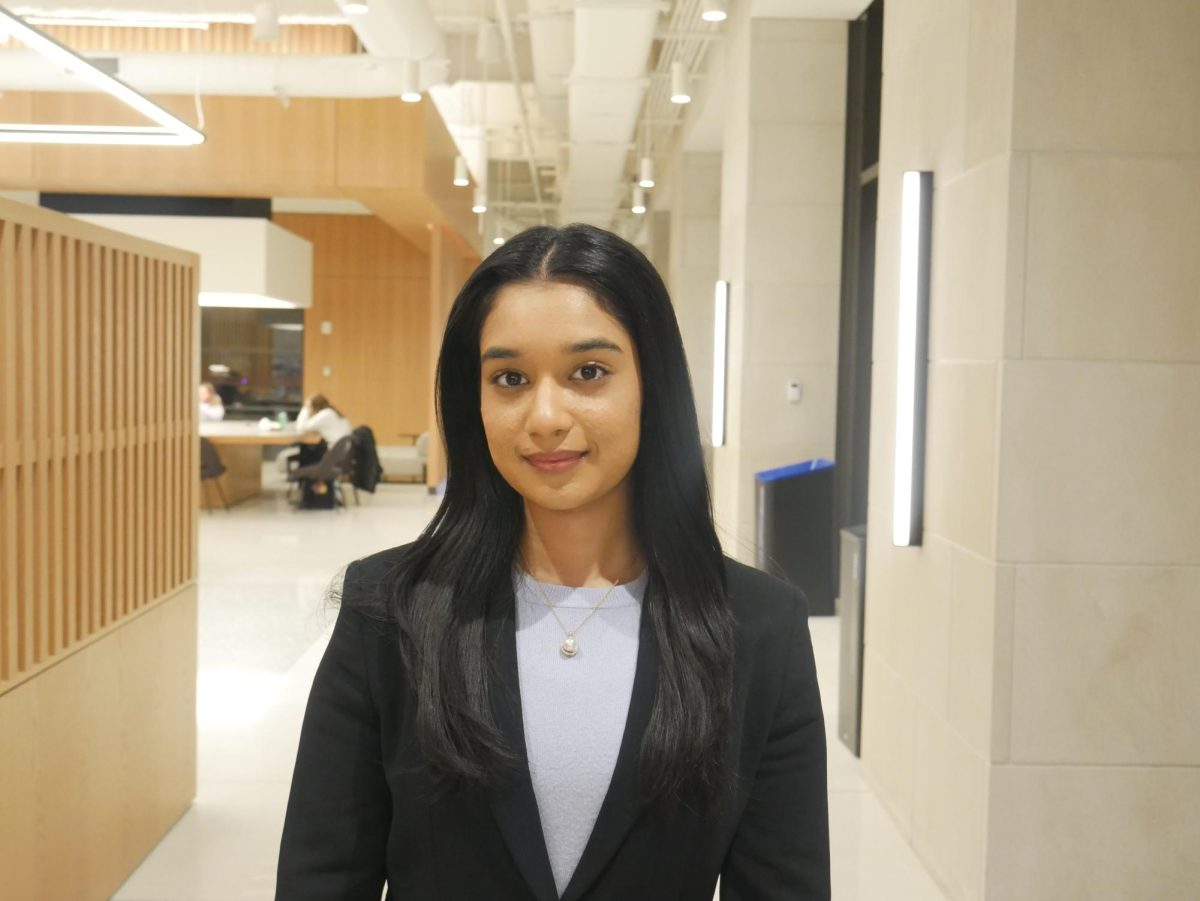
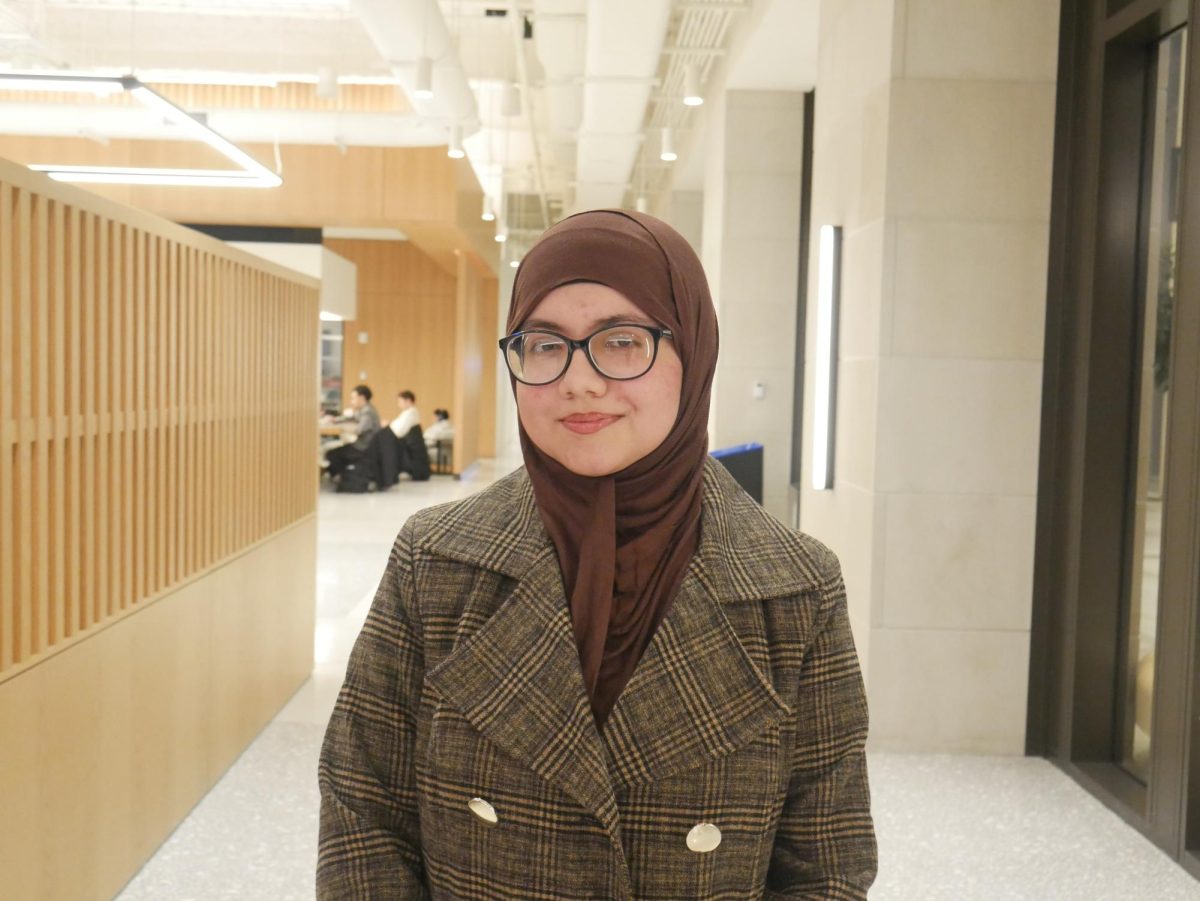
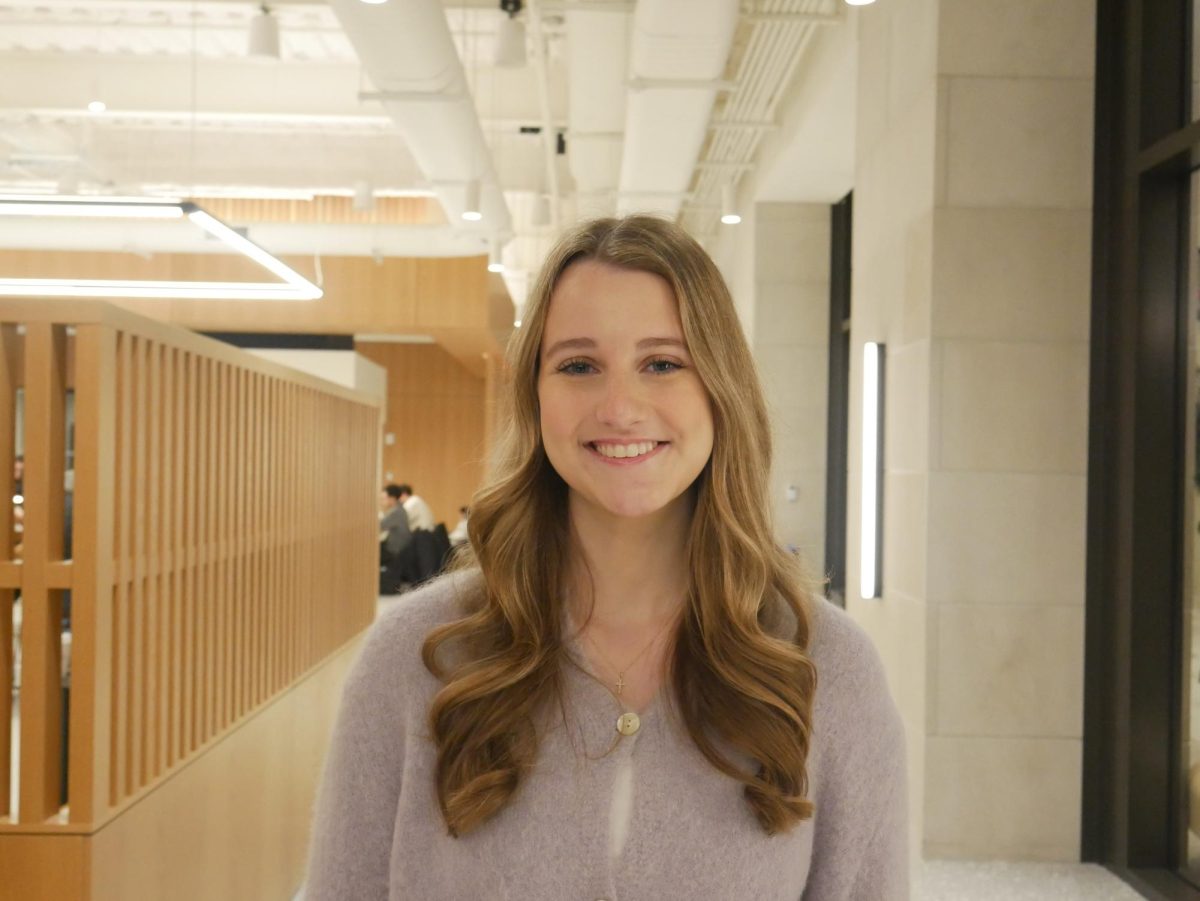
“The goal of this petition is to protect all community members, like including undergrads, including staff who potentially were not born [in] the United States or have family members who [were] not born in the United States,” said Kyra Dezjot, GSW’s Lincoln Center Chief Steward and third year Ph.D. student in history.
“Sanctuary must be more than an internal guideline or public statement. It must be bargained, funded, and enforceable,” the petition states. “A real sanctuary requires clear non-cooperation, privacy protections, workplace safeguards, and material support written into enforceable agreements.”
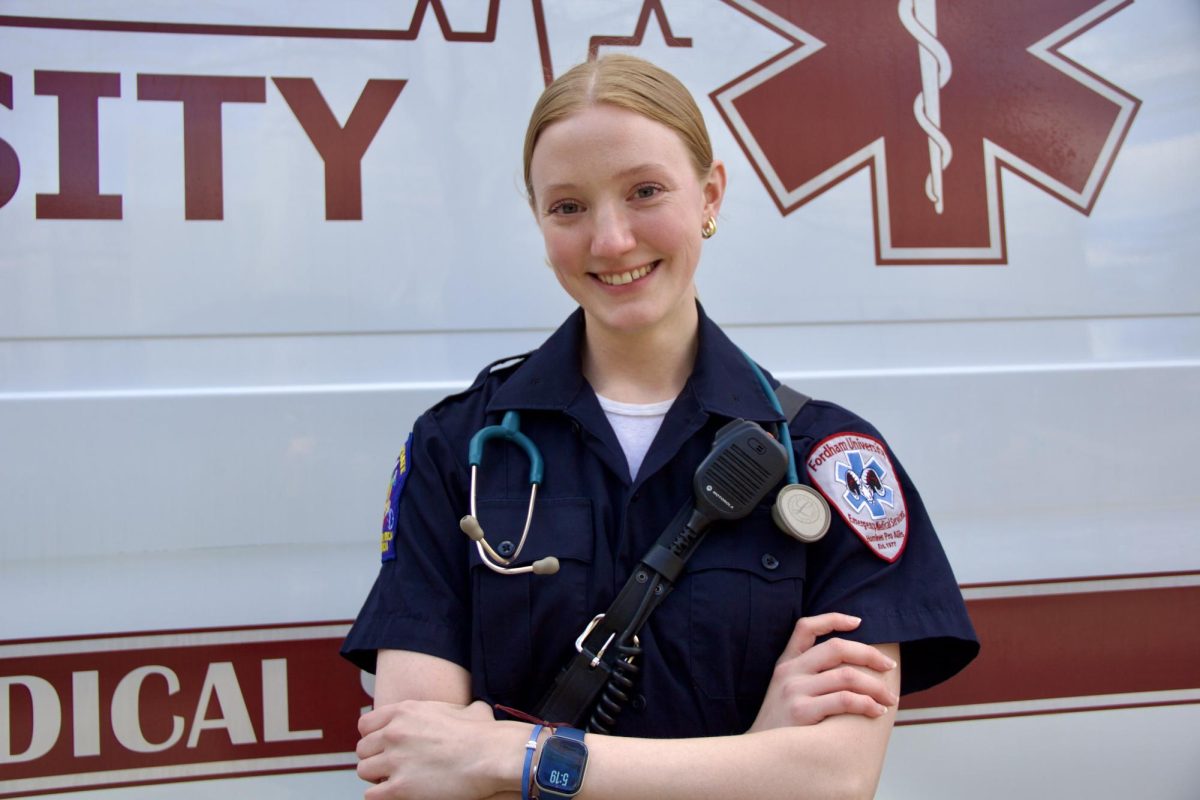
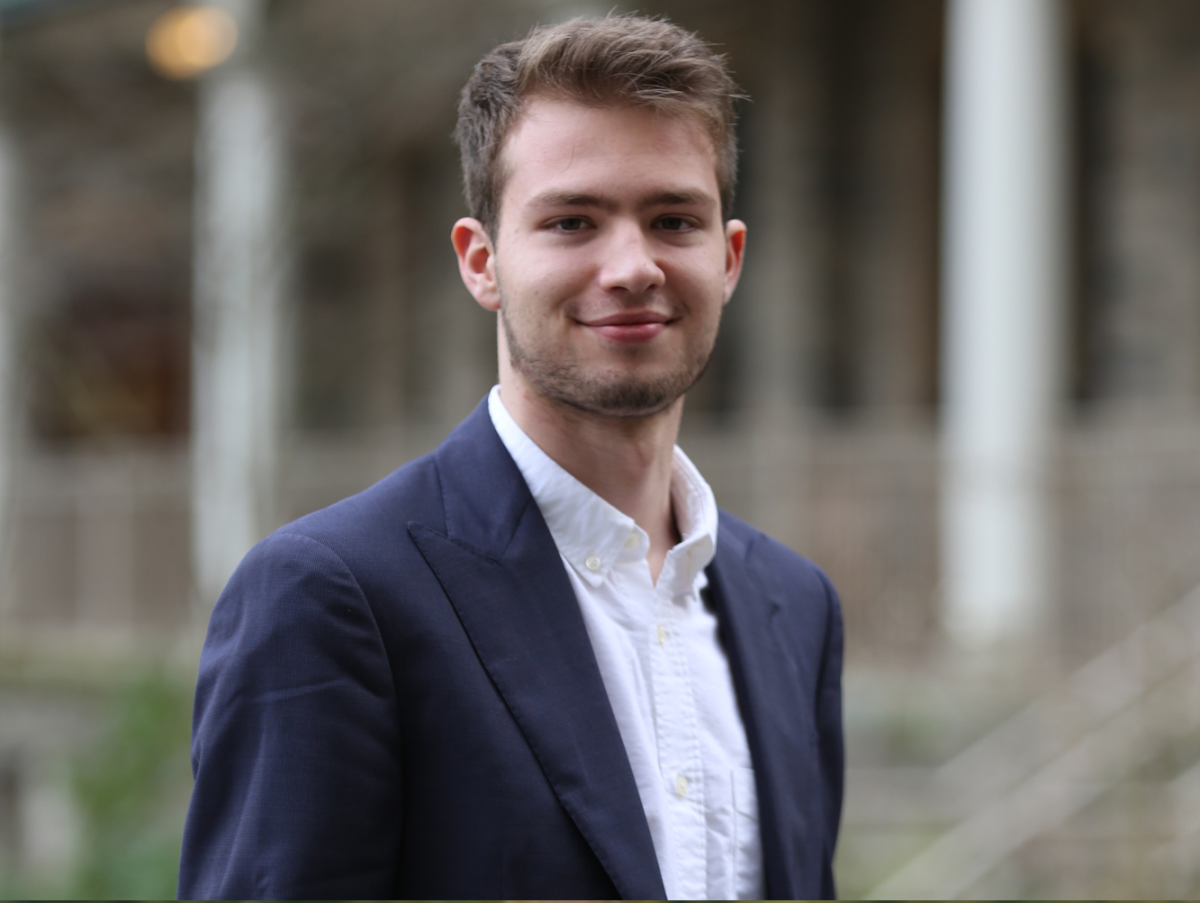
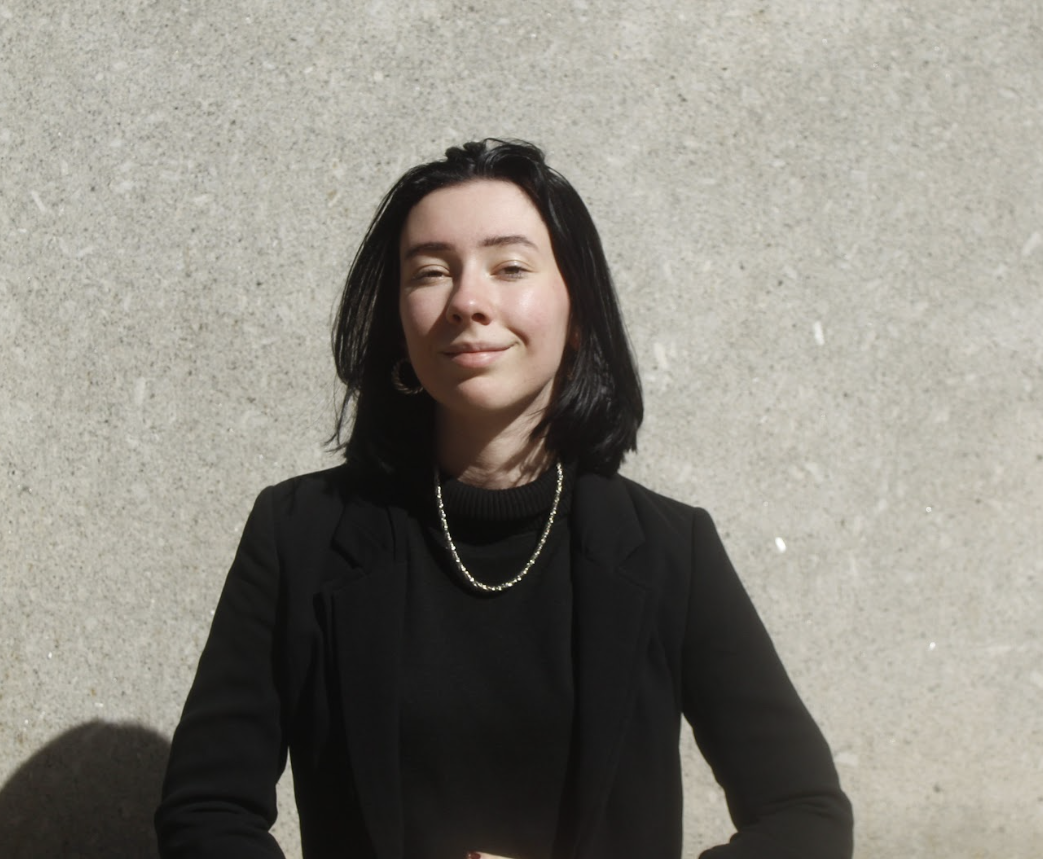
Along with Dezjot, the petition was developed by Preston Carter, GSW business agent, and Molly Crawford, Ph.D candidate in theology and Chief Steward in GSW. According to both Carter and Dezjot, the petition emerged as members of the GSW grappled with how to protect international union members from what he described as a “federal assault on their rights that threatens their safety and residency status.”
After a series of email exchanges with the Graduate School of Arts and Sciences asking for a restatement of the university’s position on immigration, they were ultimately directed to the Fordham Public Safety website, which outlines public safety’s procedures in response to the presence of ICE. The petition’s three authors then decided that initiating a petition would be an effective way to urge Fordham to declare the campus a sanctuary space and clarify their existing immigration-related policies via a public statement.
“We wanted to have the petition in order to push Fordham to clarify its existing policies. I think the fact that you cannot find a page on the Fordham website that clearly states that they will not cooperate with ICE is a problem,” said Dezjot.
According to Carter, the FGSW petition was also partly inspired by similar initiatives from the State University of New York’s Graduate Student Educators Union. Carter detailed that Stony Brook University Ph.D. candidate in art history and criticism Kaya Turan, who is an official of the Stony Brook graduate union, also played a crucial role in the petition’s development.
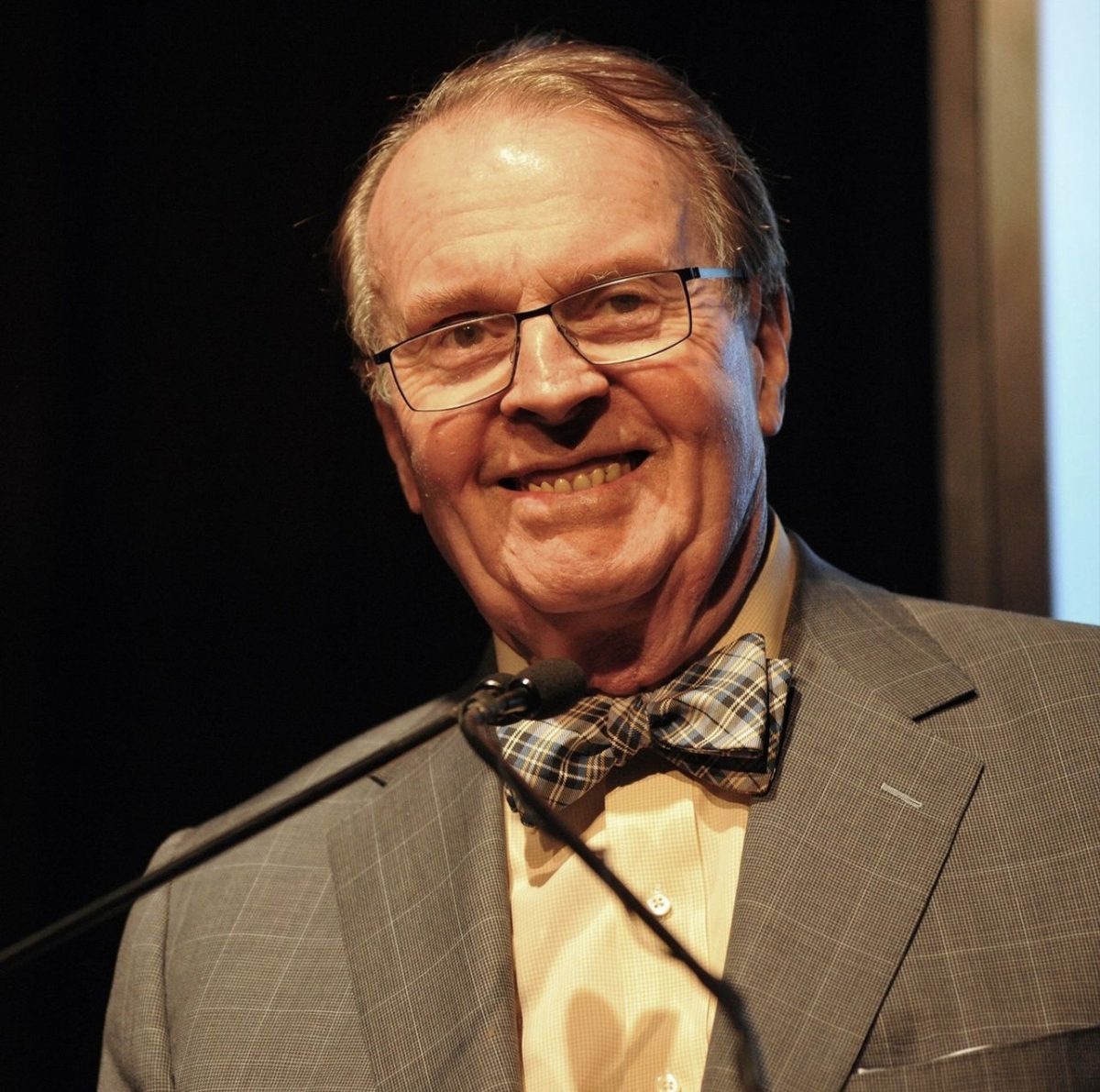
The Ram reached out to Burris, Jacobs and Tetlow, requesting their stance on this petition, but was told in an email from the university spokesperson, Jennifer Petra, that the university was not in a position to comment, citing a need for additional time to review the petition’s specific details and requests.
In an unrelated press conference with The Ram and The Observer, however, Tetlow said that she was “proud” of the Fordham community in regard to its concern for the community, adding that she “shares that deep concern,” but that Fordham already meets many of the petition’s demands.
“The specific requests in the petition almost entirely match what we’re already doing, and you can see that on our website,” said Tetlow. “I think the only area where we would disagree is on declaring ourselves a sanctuary campus. I’m not sure what that means exactly, but I would worry that that would make our community more vulnerable.”
According to its “Updates on Evolving Political Landscape” webpage, unless presented with a judicial warrant legally mandating them to let enforcement officers onto campus, Fordham and Public Safety will not comply with ICE.
“Law enforcement officers must provide judicial orders or lawfully issued subpoenas, which Fordham’s Office of General Counsel will verify before access to campus property will be granted,” the website states.
The page also explains that the university will not disclose any student or employee data unless required under federal law.
Tetlow added that Fordham’s enclosed gates provide a unique form of protection for community members.
“If an ICE agent comes to one of our gates, and we do have walls and gates here, rather than the open campuses most universities have, they would be asked to show a judicial warrant, and that has been true for 20 years,” she said. “Right now, our work is to make sure that the folks who sign on to that petition understand the good news that we’re already doing those things.”
Dezjot explained that she has frequently heard similar responses to the petition that Tetlow raised during the meeting with student journalists, but that what she described as Fordham’s “unclear protocols” has brought about a great amount of angst and uncertainty towards community members, especially international students.
“So I’ve heard this a lot too, like, ‘Oh, Fordham basically practices all of these sanctuary policies.’ But unfortunately, that’s not written down anywhere. And I think until it’s publicly accessible to all of our community members, it’s hard to know exactly what they’re going to do,” she said.
Dezjot argues that, despite potential retaliation from the federal government, such as an increase in ICE presence around campus, that could arise if Fordham initiated the demands laid out in the petition, the university must nonetheless take an accessible public stance on their position regarding immigration enforcement.
“I just think that is kind of an excuse, and I have heard from international students when you kind of pose that question, like, ‘Okay, so it’s fair to just sacrifice my safety for this? It’s fair to sacrifice like my anxiety, my feelings of safety in my school for this hypothetical,” Dezjot said. “It is a hypothetical — we don’t know that that would happen.”
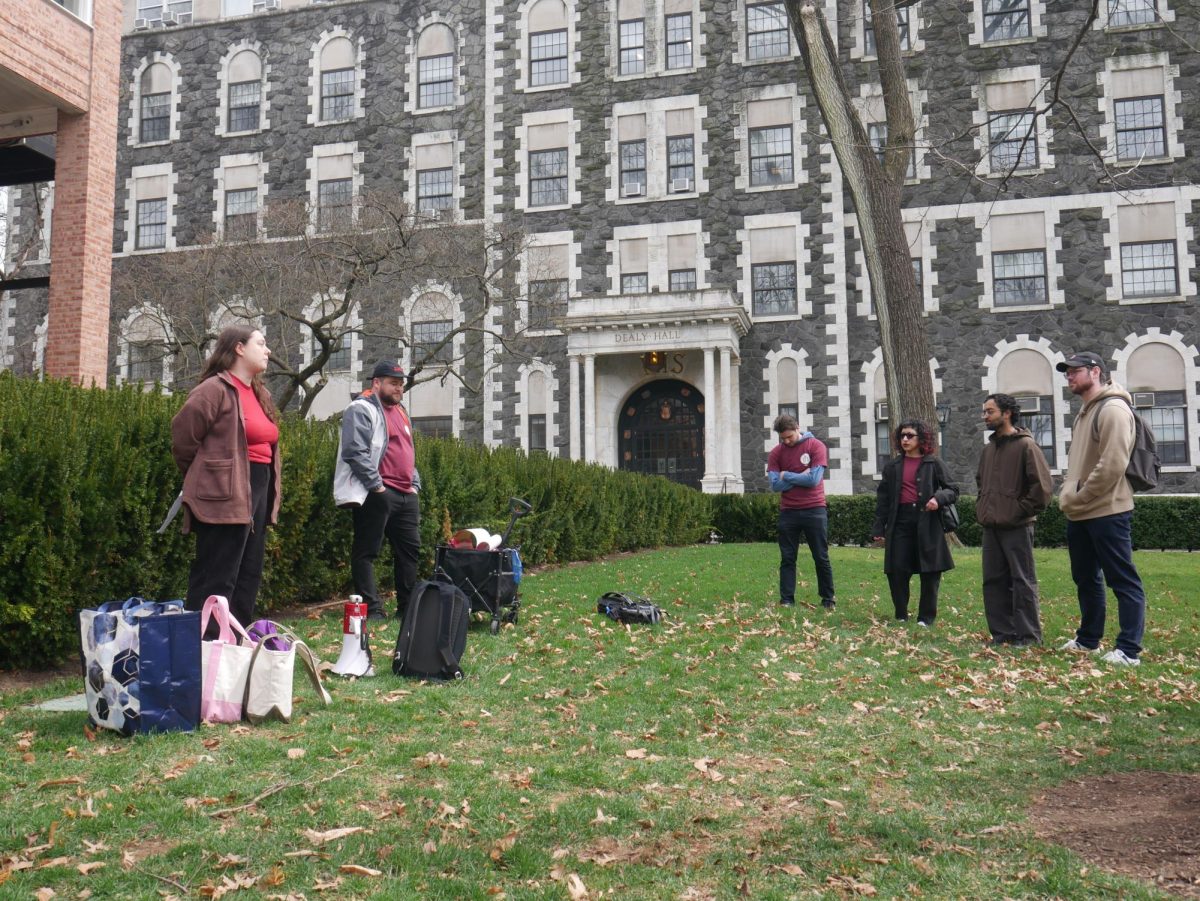
On Friday, March 27, members of the FGSW and other student organizations who had signed the petition gathered outside of Cunniffe Hall to hand-deliver it to the members of Fordham’s administration. Zarirat Ahmed, FCRH ’28, secretary of Rodrigues’s Coffee House, stood in front of the crowd as she detailed her club’s decision to sign the petition.
“We want people to come into this campus and have a feeling of relief and have a little bit more weight off their shoulders,” said Ahmed. “I believe that Tania Tetlow and Fordham University have the moral obligation to ensure the safety of students and graduate student workers, and all others.”
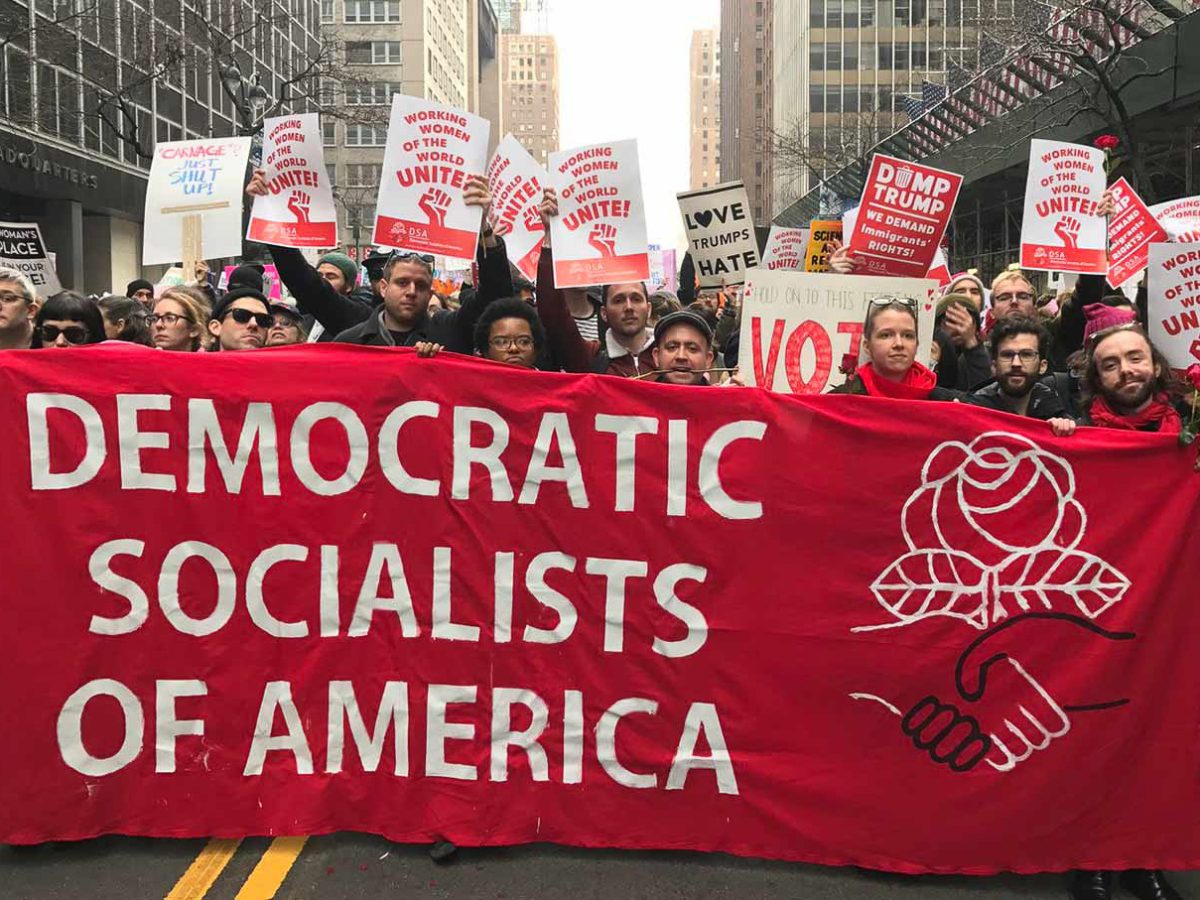
The other organizations that have signed onto the petition are the Fordham Young Democratic Socialists of America (YDSA), Philosophy Society, Caribbean and African Students Association (CASA), Astronomy Club, Society of Physics Students, Students for Environmental Action and Justice (SEAJ), Fordham Palestine Solidarity Network (PSN), Fordham Graduate Students for Justice in Palestine, the Editorial Board of the paper and Lincoln Center Art Club.
One international Fordham Ph.D. student and union member who signed the petition spoke with The Ram anonymously, citing concerns about potential repercussions. Explaining what the petition entails for her as an international student, she said that a declaration of a sanctuary would offer a promise of reassurance.
“My whole life here is dependent on Fordham. I’m not allowed to work outside of Fordham. All of my legal protections are connected to the university,” she said. “And so, just having a sort of very clear statement of the fact that they, as a university, are more invested in protecting their students than protecting the actions of the current administration … that would be just very much appreciated.”
Additionally, there have been information and training sessions on immigration-related matters held on Fordham’s campus. One was detailed in a January 2026 email from Benjamin Mendeiros, Fordham’s Global Outreach Immersion Coordinator, that was sent to the programs’ students.
“Immigration and Customs Enforcement (ICE) has recently abducted numerous people in the vicinity of the RH campus,” the email states. “Members of the Bronx community, including the parish of St. Nicholas of Tolentine, are organizing to protect one another and have asked members of the Fordham community to join these efforts.” The email asks students not to share that information on social media, but to share the training directly with their peers.
“I was shared the information about the training session by a student,” said Mendeiros in an email to The Ram. “They asked if I could share the information amongst my students in the Global Outreach program, which I was happy to do, seeing that this social justice issue does align with my own personal values.”
The fourth demand listed in the petition is for the university to fully fund legal immigration services for both students and employees, asking that Fordham establish an “emergency” legal defense and support fund. Dezjot explained that she is unable to establish a firm amount she would like the university to invest into this fund, given that the needs would vary based on the year and circumstances, but that the university could use some of its money from its endowment fund to fund the services.
“Fordham has an endowment, and I don’t see a huge reason why it can’t take, for example, $10,000 to put in a potential services fund and then use it if necessary, and if not, it goes back into the endowment,” Dezjot said.
Many petition supporters have said that it would aid members of the Fordham community to feel safe amidst vast uncertainty when it comes to immigration enforcement measures and ICE presence. Layla Mayorga Gonzalez, a Ph.D. candidate at Fordham who also teaches philosophy and specializes in ethics related to migration and citizenship, outlined her reasoning for agreeing to sign the petition.
“My worry as a professor is to make sure my students will not be taken away from me,” said Mayorga Gonzalez. “They deserve the right to have a safe space, not just in education, but on their whole campus.”
Another student organization to sign on was the editorial board of Fordham’s publication the paper. Co-chair, Jack Lemon, FCRH ’27, noted that every single one of his editors was in favor of signing.
“I think part of what we believe is that the university has a responsibility to be not only just passive in what’s happening, but actively non-compliant,” said Lemon.
Lemon explained that he feels the university can take a stronger stance on defending their community members.
“Obviously, we’re not expecting them to break the law, but we agree with the petition and that there’s more wiggle room for the university to actively disallow any non-mandatory immigration enforcement presence on campus,” he said.
Some of Fordham’s faculty members argue that the responsibility of becoming a sanctuary campus extends beyond being established through administrative action, emphasizing that it must be first established through the campus community itself. Leo Guadardo, associate professor in the Fordham department of theology and Faculty Senate member, is involved with Fordham’s project on Migrants, Migration and Human Dignity. He explained that he believes that simply declaring a campus a sanctuary space must arise as the result of a greater commitment and transformation within Fordham’s community.
“One does not become that community by first declaring oneself that, and certainly not by saying that the administration must declare that we’re going to be that,” he said. “I don’t think it’s the job of the administration to declare itself a sanctuary. It’s the job of the community to become that, and I would say the administration can be invited to support what’s happening at the grassroots.”
The petition’s organizers are continuing to push for a clear iteration of the university’s immigration policies and for the declaration of a sanctuary campus. Carter says he feels the administration can address the petition in various ways, and he hopes they will be able to reach some sort of resolution in the near future.
“A petition like this can be addressed in numerous ways… we’re obviously not asking the university to make a website where they just sort of verbatim like quote the petition or something,” Carter said. “[We hope] we would come to some kind of agreement and compromise about what actually is being put into practice,” he concluded.

Sally Doukas • Apr 18, 2026 at 8:34 am
I encourage Fordham to be brave in their support of this issue, write it down, get it on paper- and in the meantime, keep those gates tight, security high and students safe.
Alex Brofsky • Apr 16, 2026 at 12:22 pm
Thank you for this article and to Fordham
Kevin Bergin • Apr 15, 2026 at 7:53 pm
They have enough commuters as it is?