















































































































































































While living in New York City may mean the only horses we see on the regular are those pulling carriages through Central Park, these words carry weight as we welcome the Year of the Fire Horse. On Feb. 17, the Chinese New Year ushered in a fresh beginning, carrying us from the Year of the Snake into the Year of the Horse.
In the Chinese zodiac, the animal signs rotate on a twelve-year cycle, while the five elements — wood, fire, earth, metal and water — cycle every 60 years respectively with each sign. Understanding what the horse symbolizes in Chinese culture can help inform us on what to expect from the upcoming year and what energy to meet these situations. The last time this overlap occurred was in 1966, a year marked by major global events including the Soviet moon landing, the founding of the Black Panther Party, the escalation of the Vietnam War and the rise of anti-war demonstrations. These upheavals reflect many of the traits traditionally associated with the Fire Horse: boldness, defiance and a refusal to remain still in the face of injustice. The Fire element intensifies the horse’s already headstrong nature, suggesting not just movement, but combustion — not just momentum, but transformation.
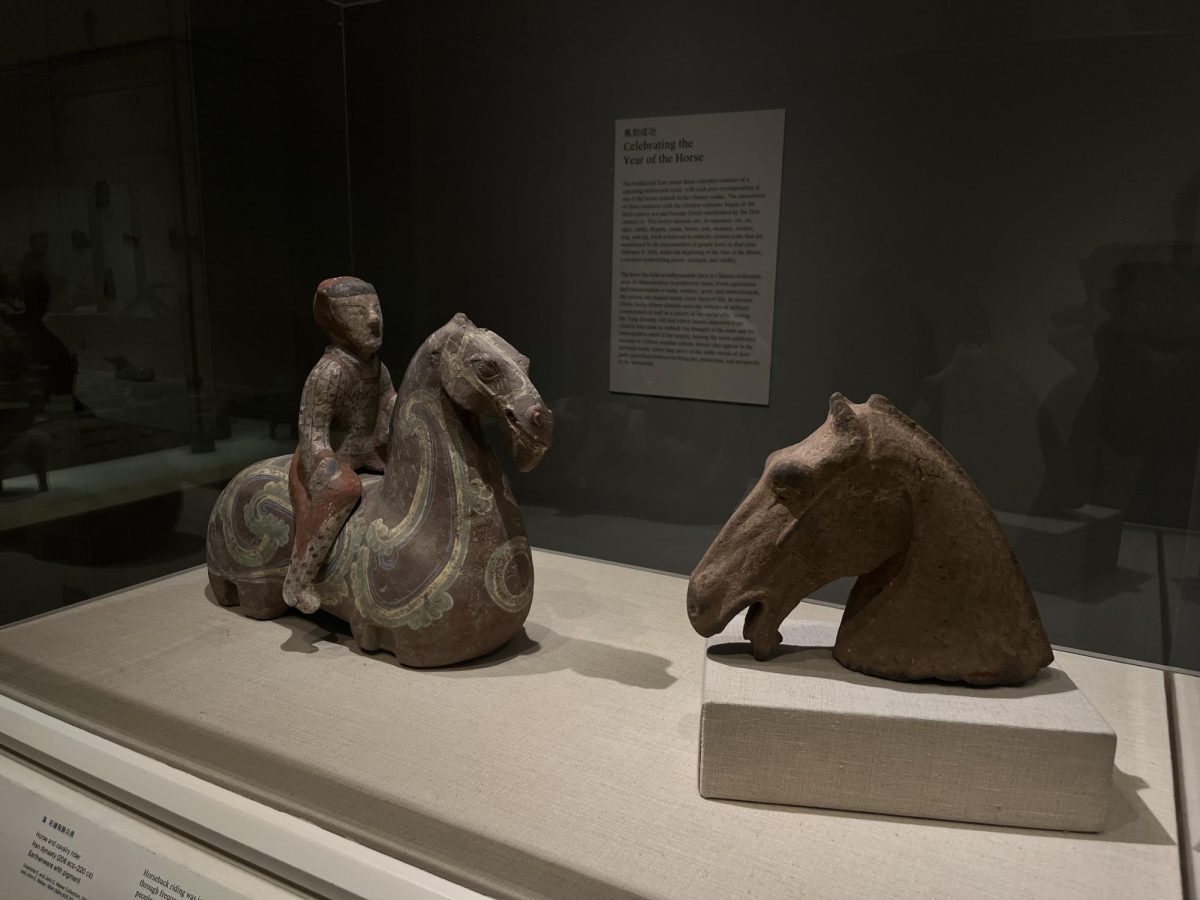
And if the zodiac offers symbolic language for understanding history’s rhythms, art provides its most enduring visual archive. Across dynasties, artists and craftsmen have given form to the horse’s strength, spirit and moral symbolism, preserving these meanings. It is fitting, then, that the Metropolitan Museum of Art opened its exhibit “Celebrating the Year of the Horse” on Feb. 7, featuring a range of works in ceramics, glass, jade, metal and woodblock prints, all of which honor the horse’s presence in Chinese culture.
The most visually striking and largest piece from the collection is an earthenware statue from the Tang Dynasty (618-907), which pays special attention to the strength and grandeur of the horse. The muscles in the horse’s chest and legs are accentuated, and its mouth is slightly open, giving the viewer the impression it is neighing and ready to spring into action. The figure not only depicts the horse’s impressive physicality but also its spiritual disposition — robust, unyielding and embracing of whatever might lie ahead.
In zodiac symbolism, the horse is frequently associated with traits such as being headstrong and excelling at leading others. This intensity is best put to use through helping others, especially when coupled with the horse’s eloquence and moral uprightness. These attributes lead the horse to being well liked in society, for their ability to straddle being a tenacious, mighty animal, but also one with a virtue for justice. Perhaps this is why many scholars in Chinese society revered the horse as a popular insignia.
Small figures of horses, such as the “Recumbent Horse” previously adorned scholars’ desks, serving as both decorations and paperweights while depicting the animal in a pensive, yet equally proud stance. Oftentimes these smaller statues were crafted out of jade, a gemstone thought to be symbolic of wisdom and spiritual pursuit.
Another sect of society that venerated the horse was the nomadic peoples, specifically of the Han Dynasty (206 BCE–220 CE). “The Horse and Cavalry” rider portrays an earthenware man riding a horse, both of which are embellished with ornamental, painted details, giving them faces and color. It was actually horse riders such as the one depicted in the piece that originally introduced the animal to China and led to the development of the mounted cavalry, a transformation which played a vital role in unifying the dynasty. Over time in Chinese culture, the horse became irrefutably tied to notions of resilience and power in the face of driving social change.
As horses were integrated into Chinese society, especially for practical means of transportation and warfare, they became important figures of protection. For this reason, many people even sought to bring the horse as an animal companion with them through their journey in the afterlife, explaining the plethora of burial artwork that includes the animal. One sculpture from the exhibit, titled “Horse and Groom,” depicts a man and his saddled horse, meant to be a tomb offering to serve an individual in the afterlife.
In contemplating the Year of the Fire Horse, we are reminded that to view the world through the eyes — or as Churchill might suggest, the ears — of a horse is to embrace both motion and mindfulness. The horse’s presence in Chinese culture, from the battlefield to the scholar’s desk, speaks to a timeless admiration for courage, resilience and the pursuit of virtue. As we enter this year, the Fire Horse urges us to act boldly, yet thoughtfully; to charge forward when necessary, but also to listen deeply to the world, to one another and to our own conscience. In honoring this animal through art and ritual, we are reminded that strength without reflection is incomplete, and that the noblest journeys require using more than brute strength, but our minds as well.