

































































































































































































A student walks into their first 8:30 a.m. class, AirPods blasting and a new MacBook in their backpack. They leave their pens and pencils in their dorm room and forget about packing a notebook… It’s 2026, the digital age! Who needs that old stuff anyway? They take their seat just in time as the professor is already pacing the front of the classroom scribbling words on the chalkboard. Just like the other 20 students in the class, they unpack their laptops, open them and get ready to work. Like clockwork, when the hands hit 8:30 a.m., the professor speaks his first words of the new semester: “Laptops away, please!” Following these three words, a universal wave of dread washes over the classroom.
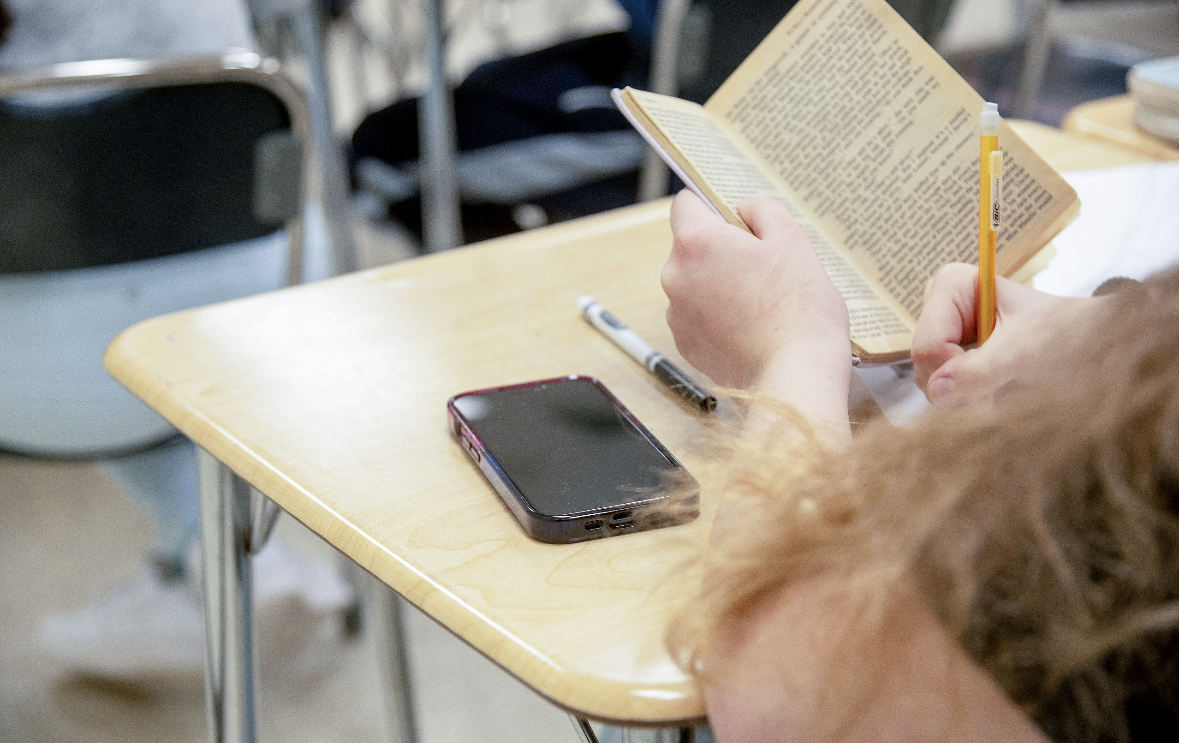
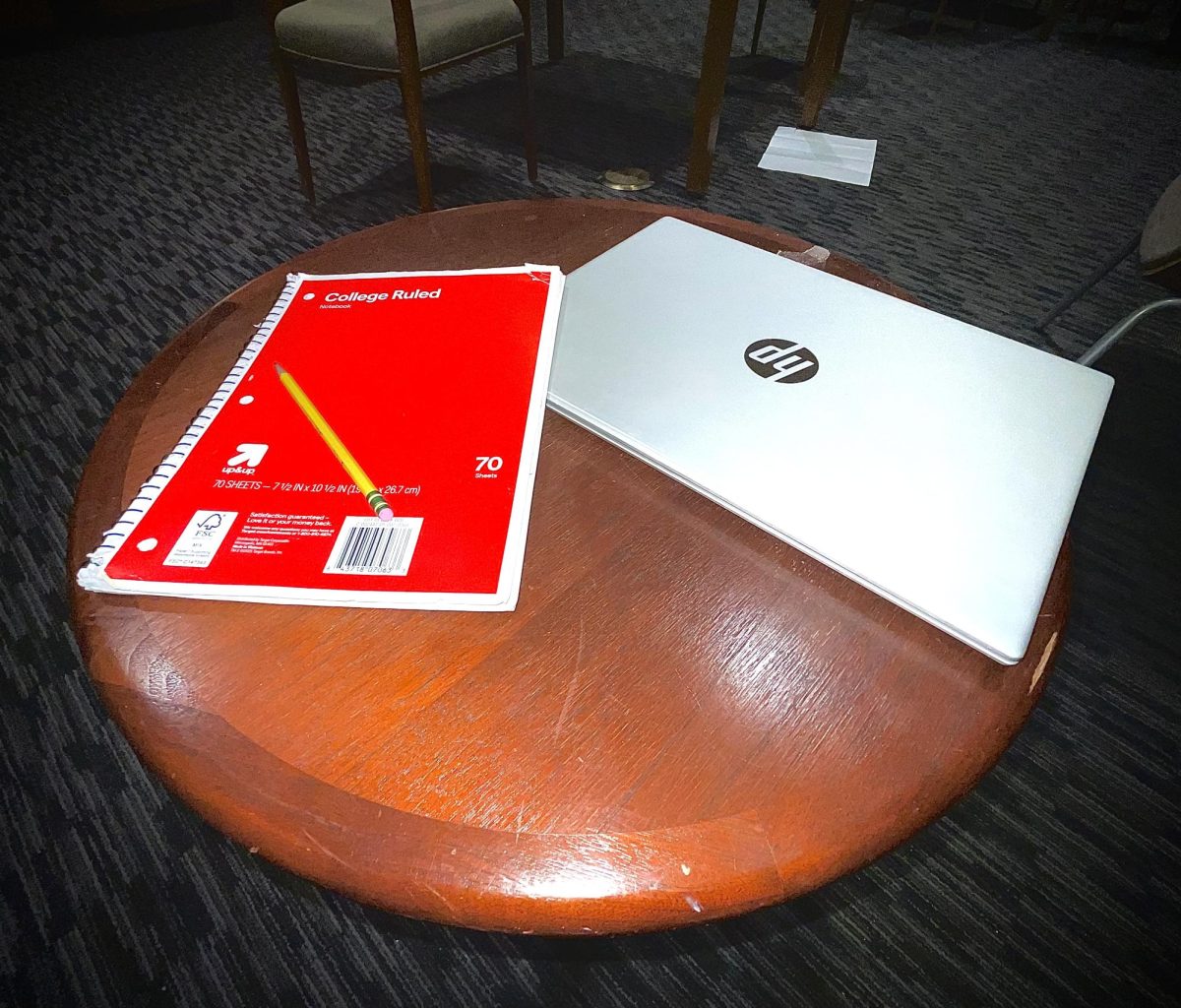
As technology becomes more prominent, university classrooms seem to be trending towards being anti-tech, banning the use of laptops during class in favor of traditional pen-and-paper notetaking, with certain exceptions for accessibility accommodations. Though frustrating for many students who appreciate the convenience (and distraction) of their laptops, this in-class technology ban is not to embitter students. Primarily, the reasoning is to remove technological diversions. Aside from a professor’s desire for undivided attention, multitasking between technologies has been proven to inhibit classroom learning.
In a study conducted at the California State University, Dominguez Hills, Dr. Larry D. Rosen and his colleagues examined the effects of sending and receiving text messages during in-class lectures. The participants in the study watched a 30-minute video, during which they received either no/low texting, moderate or high texting, to which they had to respond. On a post-video recall test, the students who received the most text messages scored on average 10.6% lower than those who received no/low texts.
The study also found that, while many students in the class thought texting was disruptive, 40% saw texting in class as acceptable. Laptops add endless methods of “multitasking” beyond texting, including emails, shopping and other assignments. Because of laptops’ endless opportunities to multitask, professors are in a position in which their best course of action to ensure learning is to ban technology altogether.
Still, Fordham students like Ava Lofromento, SCHOOL ’29, provide the nuances that scientific studies cannot replicate. She feels a blanket laptop ban ignores the importance of technology in certain classes in which laptops provide benefits that notebooks lack.
“In my STEM classes, [laptops are] a lot more convenient, especially with organization and math equations,” Lofromento said. “In non-STEM classes, the laptop ban is better, but I think using a laptop while being a STEM major is a necessity.”
Without a laptop in class, STEM students like Lofromento would be losing out on the necessary organization technology provides. Despite this, Lofromento still feels she learns better when writing by hand.
“I’m definitely more distracted when I have my laptop. Playing the NY Times games every day in class definitely impacts my productivity negatively,” Lofromento said.. “I do think handwriting helps me retain the information for my non-STEM classes better. I would still choose my laptop over paper, because of how organized it is. It makes notes and studying more efficient.”
For many students, like Lofromento, the efficiency of a laptop trumps their efficacy in learning.
Many professors parrot Lofromento’s point that writing by hand helps student retention. A study conducted by Daniel M. Oppenheimer, Ph.D., and Pam A. Mueller, Ph.D., at Carnegie Mellon University researched the effects of taking notes on laptops instead of handwriting. Their study, titled “The Pen Is Mightier Than the Keyboard: Advantages of Longhand Over Laptop Note Taking,” focused on a group of 67 students, some using laptops and some using notebooks.
Students watched selected TED Talks and wrote notes on them. Afterwards, they took corresponding memory tests. The study found that, while factual recall was generally the same, laptop users performed significantly worse on conceptual-application questions than notebook users. The study concluded that replacing the process of rewriting information in notebooks with using a laptop creates a lack of conceptual understanding of the information.
A student walks into their 8:30 a.m. class, AirPods blasting. They sit down, open their laptop and the professor promptly tells them to put it away. For an hour and fifteen minutes, that student is focusing on the lesson, engaging with the material, not shopping on SHEIN. They understand the concepts of Emerson, Plato and Locke, writing notes in ink. At 10:00 a.m., they walk into their Physics 1001 course, open their laptop and can reap the benefits of technology’s organization and convenience for their acceleration and velocity formulas.
Technology is not inherently detrimental; Lofromento pointed out its necessity in STEM classes. But, if students cannot exercise discipline with distractions and understand the time and place for pen-and-paper, professors will continue to push inconvenient laptop bans. Until students stop responding to emails and surfing Amazon in class, syllabi will continue to include the statement “laptops prohibited.”