




















































































































































































While over 60 years have passed since the release of the beloved classic, “The Sound of Music,” I have confidence that the movie continues to draw an audience. This Rodgers and Hammerstein musical— later altered into movie format — not only brought cherished, time-honored songs into our lives but also introduced me to the social and political effects of World War II in a comprehensible fashion.
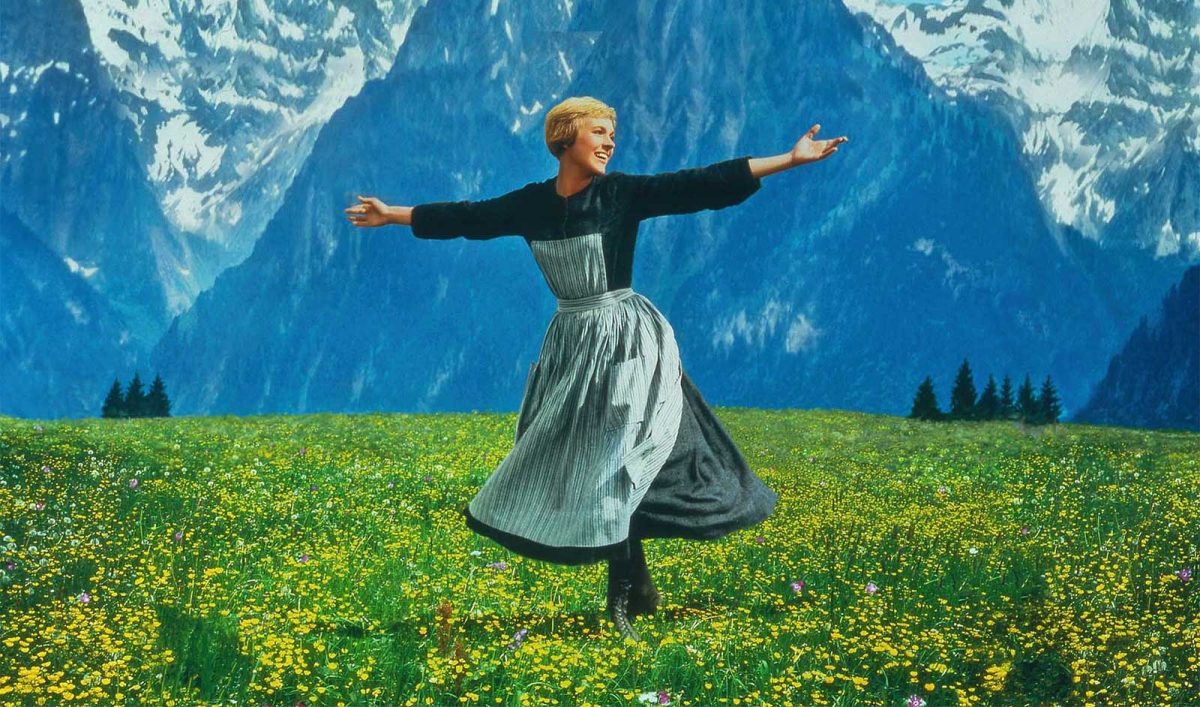
Taking place in the shadow of the Austrian Alps, the story follows the von Trapp family in the pre-World War II era. The family is introduced to Fräulein Maria, a lost soul who previously served as a nun and now works as a governess for the von Trapp family. She not only cares for the family but also brings music and light back into their lives, much to the chagrin of Captain Georg von Trapp, head of the household and father to the children. The children eventually learn to trust their governess and form a relationship strengthened by songs sung together on the lush green hillsides of Salzburg. Even Captain von Trapp finds renewed love for music, as well as romantic feelings for Maria, with the two eventually wedding to form a complete family. Being pursued by the Nazi regime for the Captain’s outward disapproval of the Third Reich, the family does not get to relish in their kinship for long before they are forced to flee to Switzerland.. The family ultimately escapes from the clutches of the Nazi’s.
“The Sound of Music” capitalizes on themes of family, love and morality throughout the film, sending the right messages to the viewers. And let’s be honest, everyone loves a love story, and there is no lack of romance in the film.
The appeal of the story stems from its undeniable emotional accessibility. Everyone can connect to this story in some form, regardless of age, background or prior understanding. The early introduction to the characters and warm environment allow viewers to connect emotionally with the family, investing viewers in the later, darker part of the story. The playful and comforting tone of many of the songs, such as “Do-Re-Mi” and “My Favorite Things,” invoke timeless representations of bliss in the audience. “The Sound of Music” is the epitome of a film for the whole family.
While the story brings in deeply political aspects, they are rooted in emotional attachments and moral issues. Captain von Trapp’s refusal to join the Nazi regime is not one of mere ethical and political disagreement, but rather stems from his patriotic desire for his family to live in the Austria he revered so highly. The audience can relate to this moral dilemma, encouraging sympathy rather than detaching themselves from the plot.
Music acts as a political symbol throughout the story. “Edelweiss,” a song featured in the latter half of the movie, represents national identity and quiet protests for patriotism. Edelweiss is also the national flower of Austria — commonly found in the Alps — that represents loyalty, courage and love, common themes in the movie.
The movie is not riddled with facts of the war but rather allows the audience to emotionally connect to the hurdles the characters are overcoming. Ordinary people were forced to make extraordinary decisions. The predicament of leaving one’s home and all that is familiar for safety is a tragic, devastating concept. This film gives viewers a representative account of World War II rather than just names and dates. Compassion and sympathy are powerful educational tools, especially for young audiences.
Even though the events of World War II seem distinctly in the past, they are still fairly modern in a historical perspective. It seems so crucial that our generation be educated on the atrocities of the war and of the rippling effects it had globally. The fascist ideals that were being encouraged in that time frame may soon reappear in our modern government: a scary yet not far-fetched reality.
My connection to Austria through my mother’s side of the family has always compelled me to learn my Austrian heritage which is undeniably intertwined with the events of the world wars. “The Sound of Music” was my first exposure to Austrian ideals and culture. As we live in a world that was forever changed by the events of World War II, this film offered me a bridge to better understand the everlasting effects of war. It is not an abstract event far removed from our lives but rather a lived experience shaped by morality, courage, sacrifice and love as depicted in the timeless film.