






























































































































































Dating has been in a state of crisis ever since the 1990s when the first online dating platforms were introduced and, subsequently, marketed to the single masses. Modern dating apps offer an endless selection of potential partners, fostering an obsessive user tendency that feeds into the development of a detrimental mentality: the perpetually dissatisfied dater. Dating apps are meant to keep people “dating.”
While many people excuse “serial dating” habits as the byproduct of maintaining “high standards” for prospective matches, this behavior has actually altered our collective perception of said “standards.” “High standards” no longer describe relatable relationship values such as commitment, honest communication and emotional intelligence. Instead, they’ve become synonymous with the work of “Dr. Frankenstein:” an unending list of demands for the right “combination of all the different, awesome parts” of another person we desire with no room for negotiation. Thus, our “standards” become unrealistic boxes that never get checked.
We’ve become “materialists” of the dating world.
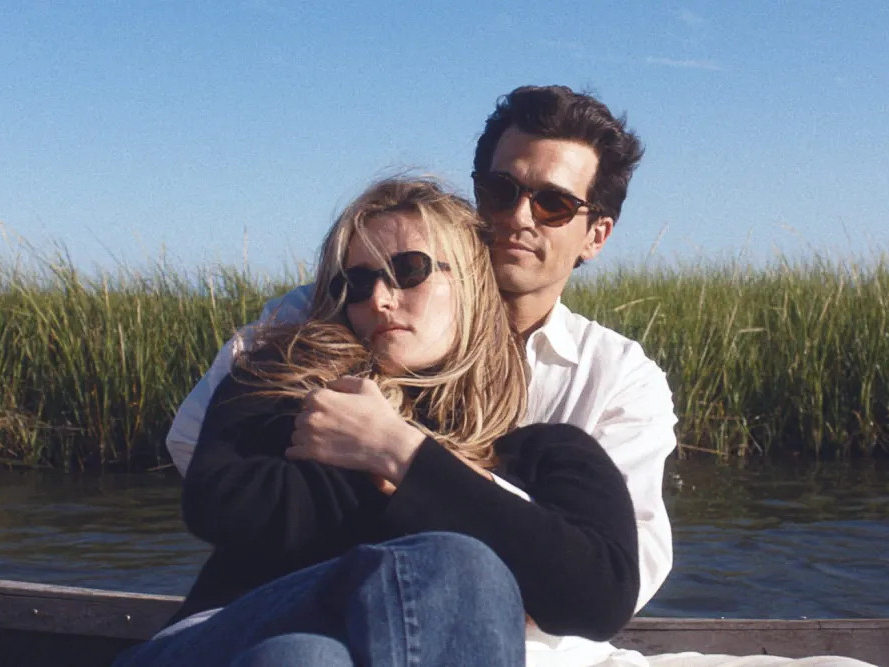
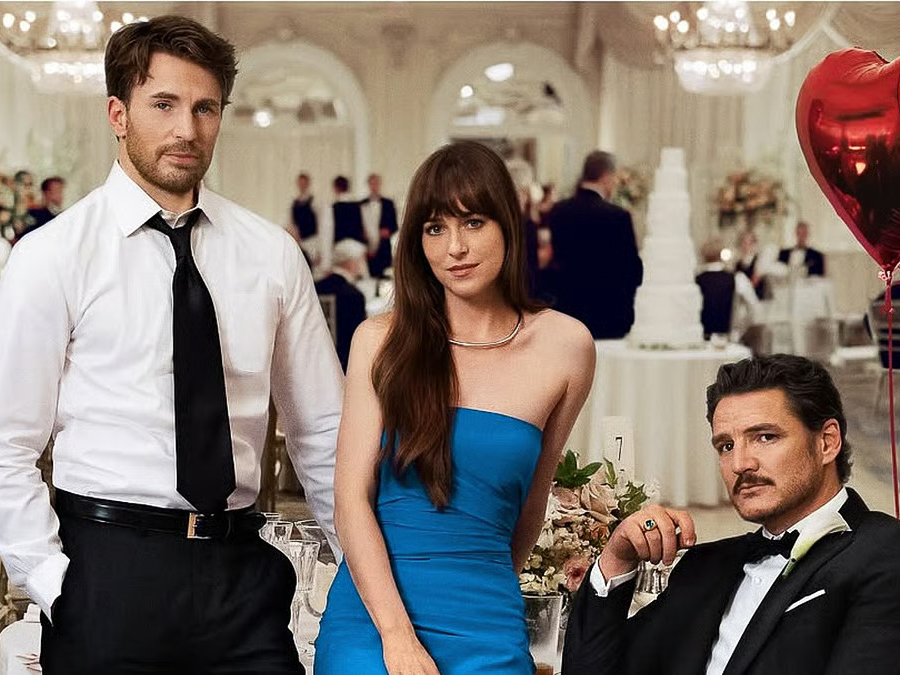
In this way, “Materialists,” which follows a matchmaker (Dakota Johnson) as she navigates between a new relationship with her perfect–on–paper match (Pedro Pascal) and rekindling one with her flawed ex-boyfriend (Chris Evans), had a lot of potential. Its premise is relevant, it’s got a solid line-up of notable actors, good editing, impeccable visual aesthetics and excellent writing. And aside from the fact that for the first four minutes of the movie I legitimately thought I had accidentally put on a history documentary about early civilization, I found it to be almost engaging. Emphasis on almost. Because it still fell woefully short for me.
Although the dialogue of the film is clever and provides astute commentary on the challenges of modern relationships, it lacks a cohesive theme, suffering from a tonal dissonance that is never resolved. The absurdity of companionship, specifically marriage, is highlighted consistently throughout the movie, yet our financially and emotionally independent protagonist still chooses to pursue two relationships that — evidenced by flat chemistry between actors — don’t seem to add much of anything (except, fortunately, some eye candy) to her already fabulously self-sufficient NYC life.
The strongest moment of the story comes around the 15-minute mark before either of our protagonist’s male suitors are even introduced, which in and of itself demonstrates my not-so-secret ambivalence toward this movie. In this scene, Johnson tries to comfort and reassure a distraught bride about her decision to marry, but it is ultimately the bride’s analysis of the situation that is most powerful:
“…I am a modern woman. I could’ve been anything. Anything. But I chose to become a bride. I chose this. It’s not like I’m getting married because I need to forge a relationship between two kingdoms. It’s not like my family needs a cow. I chose this. I chose to marry a man.”
Now here is a universal theme I would’ve liked to have been explored throughout the movie: the female struggle between the expectation of companionship and desire for independence. But it’s instead used like a witty punchline to a nonexistent joke, while the protagonist mulls over which uninteresting, bland man she wants to spend the rest of her life with. Because, at the end of the day, “who our partner is…determines our whole life,” especially if you’re a woman (she said with intense sarcasm).
She really doesn’t have much of a choice anyway. Her options are a guy who literally has nothing to offer her but a ring he makes out of a flower (although that scene is probably the most romantic thing in this whole ill-classfied rom-com) or a guy who has everything but the mental sanity to rethink getting leg lengthening implants to impress women with his height. Seriously? These are really her only options? She couldn’t find anyone else? She’s a matchmatcher!
And, yes, I realize this is obviously commentary on her own materialistic tendencies. I get it. I did, in fact, read the title of the movie. But what I don’t understand is why she has to quit her job, give up her independent lifestyle and marry a guy who will most certainly neglect his individual financial responsibilities and rely almost exclusively on her wealth to support them both (they better have signed a pre-nup) just to affirm she isn’t a self-involved, shallow dater.
For a movie that has marketed itself as a rom-com, I can understand why the “love conquers all” trope might have been the attractive inclination for this creative team. But, realistically, this is not a rom-com at all. There is barely any romance in it (I was literally “Team No One”) and the impressive comedic elements are often completely overshadowed by a dark, underdeveloped subplot about the dangers of dating in general.
It’s disappointing because this movie could’ve been so much more. However, we again defer to a predictable plot structure: choosing to reinforce the inevitability of a woman’s desire for an all-encompassing heterosexual relationship instead of praising self-sufficient, autonomous individuals who would rather pursue a career than a man.
God forbid we let a woman end up on her own, content with single life, for once.