




















































































































Amid the chaos across the globe, Italians sought to bring the world together in the Opening Ceremony of the 2026 Winter Olympics in Milan. The theme of the Opening Ceremony was “Armonia” which roughly translates from Italian to “Harmony.” While of course highlighting Italian culture and heritage, global unity and interconnectedness took center stage, woven into the songs and dances of the night.
The Opening Ceremony began with Italian actress Matilda De Angelis walking onto the stage in the center of the stadium while mascot-like figures of the three most prominent Italian composers (Giacomo Puccini, Gioachino Rossini and Giuseppe Verdi) entered from the other side. Three massive red, yellow and blue paint tubes slowly descended from above and began to spill their respective colors onto the stage. The stage filled with dancers in colorful, rainbow costumes depicting some of Italy’s iconic cultural symbols, like the Colosseum and the Moka Pot. The performance ended with the dancers arranging themselves in rainbow order, representing unity and symmetry.
Mariah Carey performed her rendition of the song “Nel blu, dipinto di blu” in Italian and her own song “Nothing is Impossible.” Both songs depict flight as a result of bravery and overcoming obstacles, a message that can be linked back to the talent and persistence of the athletes competing. Italian singer Laura Pausini also performed “Il Canto degli Italiani,” a patriotic Italian song that was originally used to represent the unification of Italy as the Italian flag was flown.
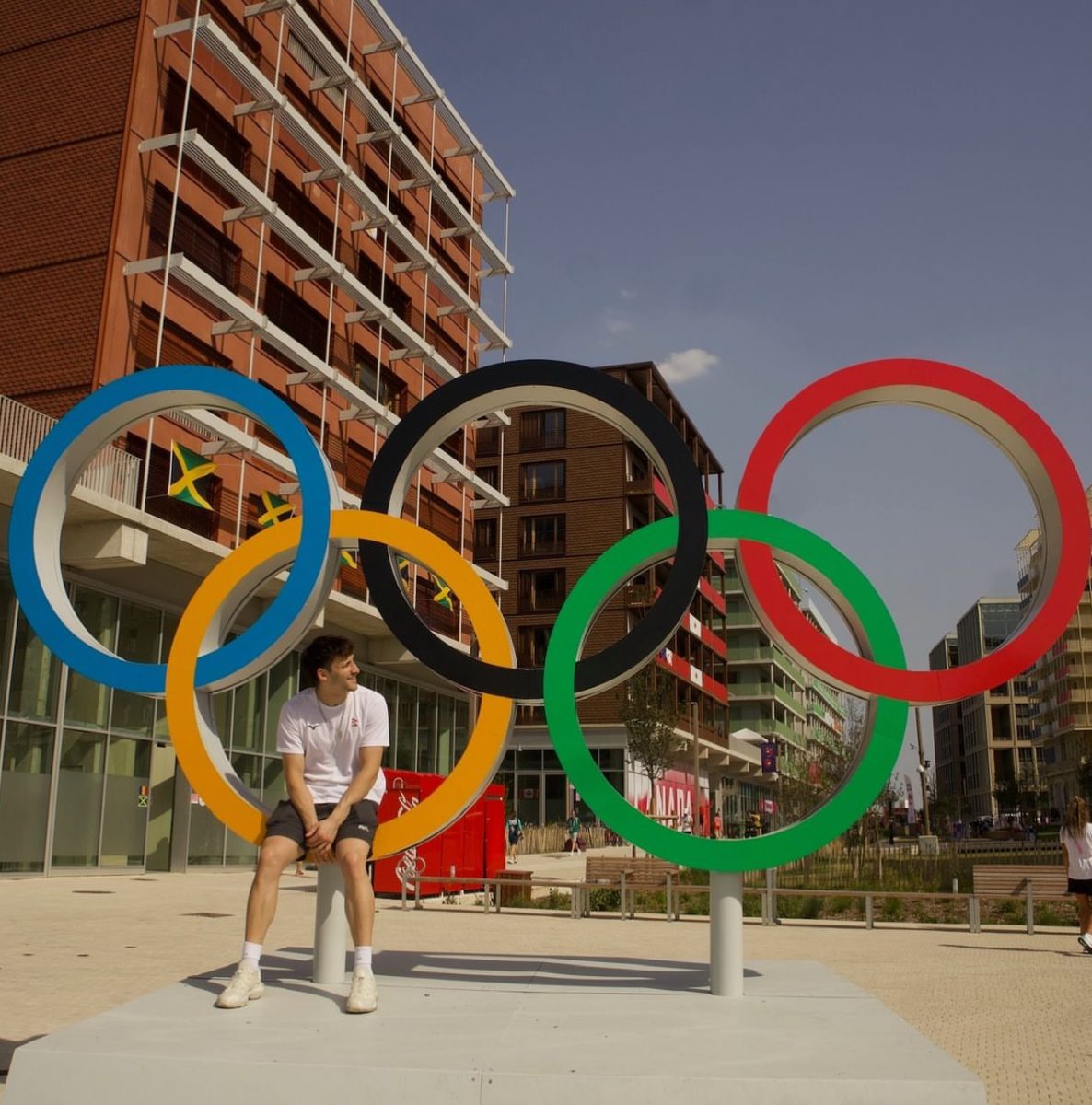
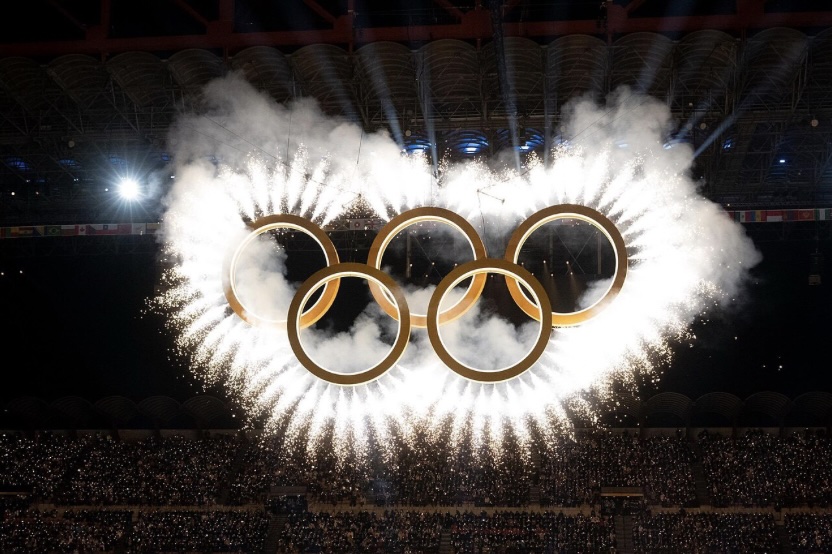
The Olympic rings were unveiled during another dance, one that involved two distinct groups of dancers in different costumes colliding and uniting. One group wore flowy green costumes while the other wore a dark, geometric outfit, offering a display of the tension between nature and the city. The first two rings appeared from opposite sides of the stage and slowly came together, demonstrating harmony between two seemingly different ideals. That gesture also represented the collaboration between Milan and Cortina, the two host cities of this year’s Games. Once the other three rings slowly united with the first two, the dancers blended together, showing how the Olympics connect the world through the determination of the athletes and the support of their fans.
As for the Games themselves, the athletes competed for about three weeks, finishing Sunday, Feb. 22. It’s no surprise that the top five countries, apart from the United States, were located in Europe, either in Scandinavia or near the Alps. Norway dominated the Games this year, winning the most gold medals and the most medals overall. According to the official Olympics website, of the 93 countries that participated in this winter’s games, only 29 teams won medals. Norway’s dominance isn’t exactly surprising, except that they had only 80 athletes competing this year compared to Team USA’s 232.
Team USA placed second in overall medals won this Olympics, with some of the most exciting wins being the gold medal for the figure skating team event and gold for the women’s ice hockey team. Alysa Liu’s incredible performance in the women’s figure skating singles secured her the gold medal and skater Ilia Malinin landed the first-ever legal backflip in Olympic competition in 50 years. Additionally, for the first time since 1980, the U.S. men’s ice hockey team defeated Canada for gold in overtime. According to ESPN, 63.6% of total team USA medals were won by women, while women made up only 47% of the team.
Looking ahead, Milan will pass the torch to Los Angeles, where the Summer Olympics will be held in 2028, and then to France for the Winter Olympics in 2030. Milan’s message of “Armonia” was a call to action for the world to come together; the next Olympics will be a test of whether that unity continues.