

























































































































































































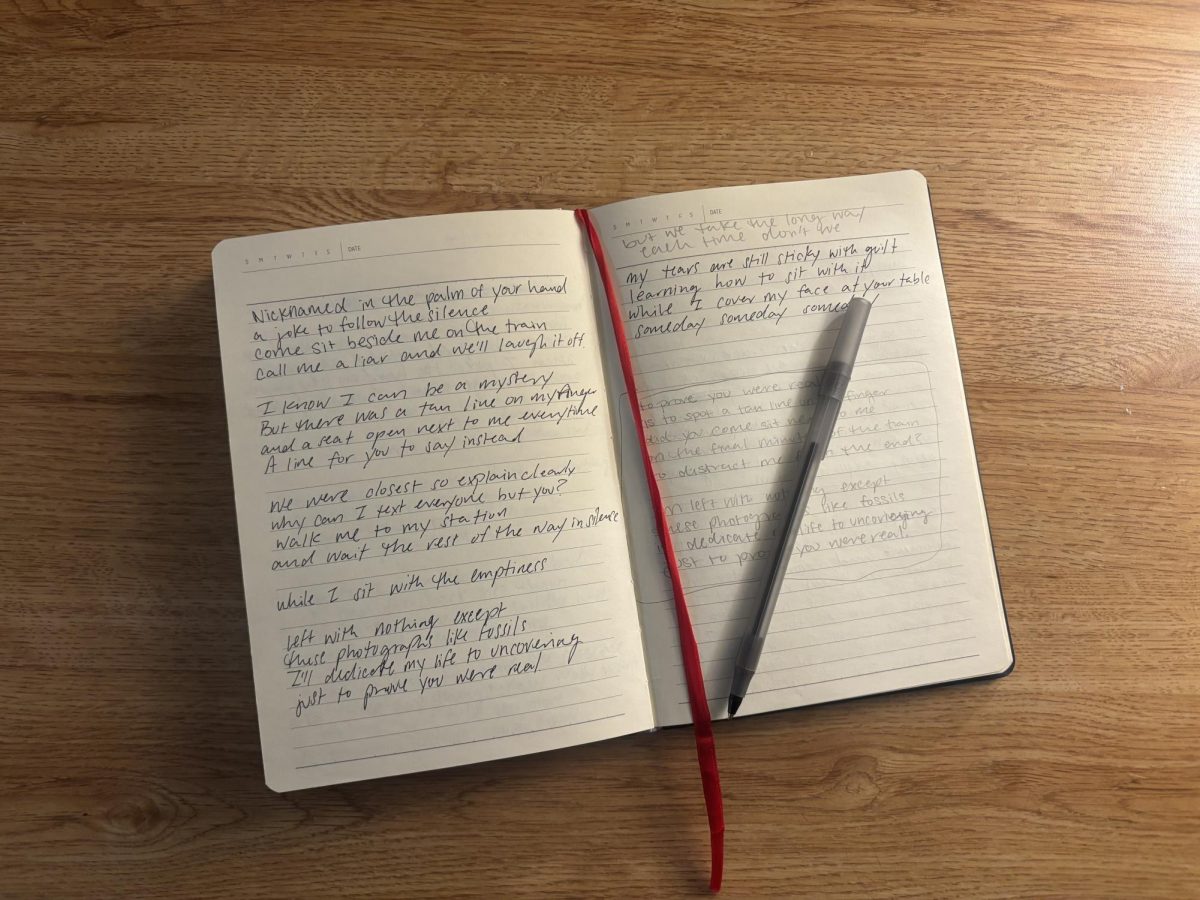
Like most New Year’s resolutions, journaling begins strong, but within a month, it often becomes another expensive notebook collecting dust on a bookshelf or hidden away in a drawer. Journaling is repeatedly at the top of resolution lists, but there seems to be a disconnect for many people that isn’t always mentioned. Keeping a journal has proven benefits, from reducing stress to gaining self confidence, and has been recommended for just about every type of person. So why doesn’t it work for so many people?
In my experience, journaling is a lot more attractive in theory. Seeing the hardcover Moleskine journals in the front room of McNally Jackson, sitting on the shelves like candy, makes it hard to settle the ache of wanting to be a writer. The idea of sitting down and writing your thoughts and feelings everyday until you’ve filled out a stack of journals is inspiring. In the past, when I’ve tried to start journaling, it came from a desire to have stability in my life, something to look back on with accomplishment and pride.
Usually the first couple days of journaling go smoothly, but it’s difficult to stick with a journal when you feel your life isn’t super exhilarating. Even if it is, journaling can feel incredibly repetitive, eventually leading to it feeling like I’m forcing myself to write. This pressure to not only write daily but also write something interesting daily results in journaling feeling like a task or a chore to check off of a list, rather than a helpful tool.
One of my friends shared with me that, often, when she tries to journal, her writing comes out very literal and childish, rather than fully conveying the complexity of what she wants to write. Other times, I find my hand unable to keep up with my mind, thinking or talking about what I want to write faster than I’m physically able to. Moments that I discuss with friends or family sometimes feel too repetitive or taxing to later physically write down in a journal.
These mental blocks or difficulties around journaling are what lead most people, including myself, to quit all together. They seem to undermine the benefits that so many swear by and create the illusion that writing isn’t enjoyable. However, journaling is meant to slow our minds down, to release the stress and excitement of the day. If you, like me, find yourself overwhelmed with pressure while journaling, it might be time to take a step back.
The most important thing to remind yourself while doing anything is that you don’t have to be good at something to do it. The pressure to not only write, but to write well, is something that even the greatest writers of all time have felt. Writers like Franz Kafka, Sylvia Plath and Dorothy Parker have all admitted to facing imposter syndrome at one point or another in their careers. Many of these authors even conveyed that sentiment within their own diary or journal entries.
People that journal daily didn’t begin strong, and they don’t feel confident in every single entry. Like every skill, journaling needs to be trained, but journaling doesn’t have to be a daily or challenging activity. Writing when you have the specific urge or inspiration to will often lead to better results and a better attitude, even if the urges come weeks or months apart. The point of journaling isn’t to keep a record of your entire life or attempt to track time, it’s to clear and steady your mind.
The notion that journaling has to be uniform and structured is misleading. All over Pinterest, there are millions of pins about journaling prompts, page ideas or overall inspiration if you feel stuck or bored.
Journaling can also take many forms if traditional diary entries aren’t proving helpful. Book journals, film journals, scrapbooks and junk journals are just some of the unique ways to get your thoughts down. In my own experience, I’ve found writing letters inside of a journal can be more cathartic than traditional journaling. You don’t have to write strict sentences or paragraphs, but can write poetry or even fiction. Allowing journaling to take more of a relaxed, freeform structure can make it seem less like a chore and turn it into a successful resolution.