








































































































































































































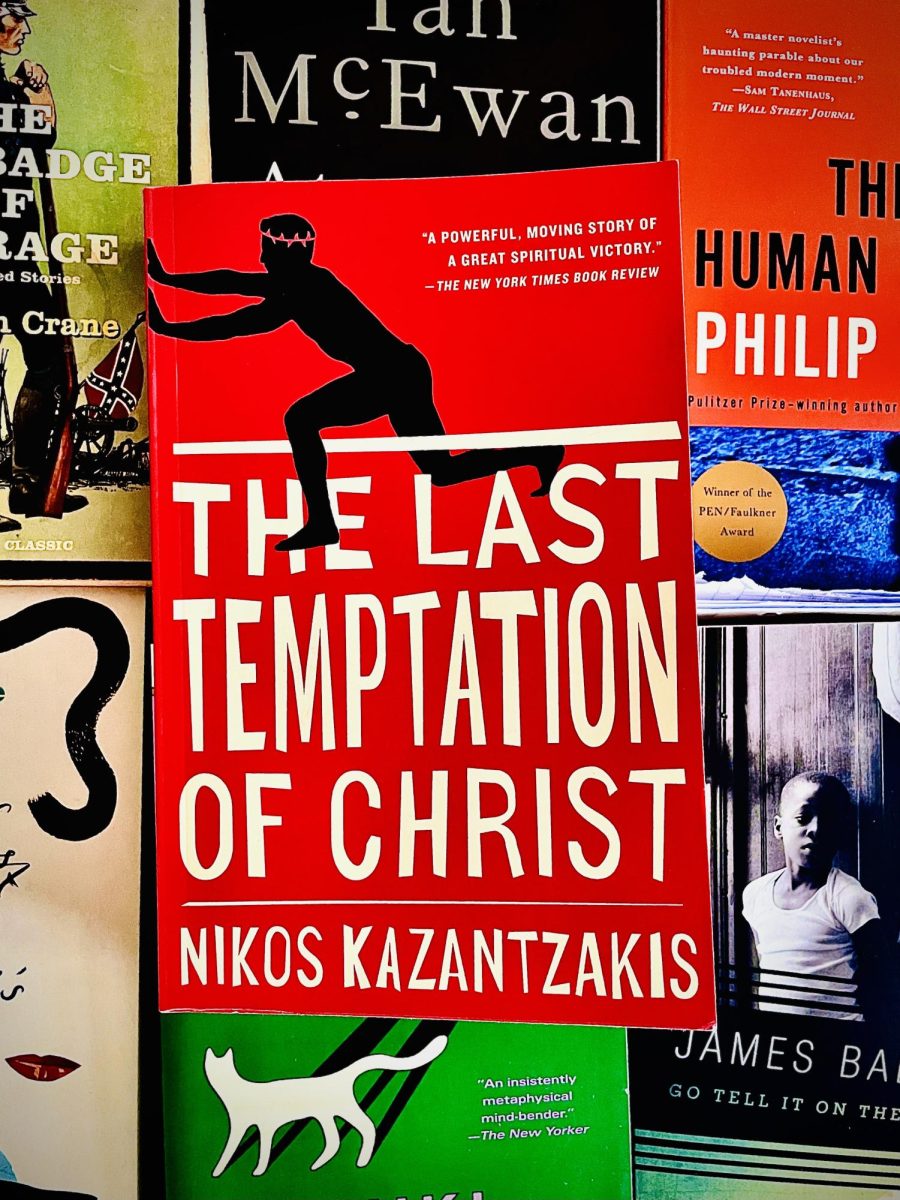
Christianity holds arguably the most profound paradox of any major faith: Christ exists as fully human and fully God. The futile attempt to understand this incomprehensible nature of Christ, I suspect, is a presumably universal Christian experience. No matter how you try to contend Christ’s two complete natures, it is inevitable that one comes up short in their understanding. And yet, Greek writer Nikos Kazantzakis bravely explored this seemingly contradictory belief in his 1952 novel “The Last Temptation of Christ,” a book that was condemned by Christian authorities because of its attempt to understand the man and the God that Jesus is.
The novel portrays Jesus as deeply complex, always engaged in conflict with his divine mission and His human sensibilities: He knows that His mission is to be the Messiah crucified for humanity, but His fear goads him and causes obstacles in the path of salvation. Christ knows He must remain chaste and dedicate His life to God, yet a lust for worldly pleasures tempts Him with the ease of family and community life. By doing this, Kazantzakis portrays a fully fleshed-out Christ; Jesus is not just a God easily traversing the physical world with supernatural composure, nor is He just a man who sins and always falls short of God’s will. Rather, He is fully both, and both are always warring within Him.
The book opens with a preface, explaining that Kazantzakis’ intention is not to bastardize the truth of Christ’s life, but to try to understand and relate to Christ beyond His divine nature, only one part of His whole. Kazantzakis, though not necessarily a devout Christian, was deeply spiritual and loved Christ. In this love, he attempted to know Him as He was, as paradoxical as Christ may seem. Kazantzakis humbly channeled his love into a knowingly imperfect, but honest attempt to know Jesus in His entirety; he knew the weight of writing a novel like this, but its necessity outweighed its imperfections. Still, because of the book’s frank portrayal of Jesus’ struggles with temptations (particularly in scenes regarding temptations of lust), both Catholic and Greek Orthodox Churches banned the novel and condemned Kazantzakis on the grounds that the novel was heretical. In fact, his novel was so scandalous that the Greek Orthodox Church refused Kazantzakis a Christian burial, and he was instead buried on the Martinengo Bastion.
A man tried to understand the most important yet enigmatic figure in Western culture, and he was scorned by the Church for his sincere attempt. This novel is staggeringly sincere, even in the midst of all its fictionalized representation and liberal interpretations. This novel emits a humility so often lost in Christian works. Reading “The Last Temptation of Christ,” I understood the author’s struggle to comprehend Christianity’s mysteries and struggled with him. I understood Christ’s struggle; for the first time, I felt the weight of being the Messiah prophesied to bear the weight of the world’s sins. No priest nor prayer has ever brought me closer to Jesus in my 18 years of Catholic education. No mass service has conveyed the power of Christ in as tangible a way as Kazantzakis has with his novel. I have never desired more to know Christ in my heart and mind than I do after reading this novel, which is rejected by the Church because it doesn’t adhere directly to its doctrine.
As a Catholic wandering in a proverbial desert, it disheartens me to know that the novel I found spiritual solace in got such aggressive pushback from the Church. Even more upsetting may be the hostility that met the film adaptation of the novel, such as calls for its director, Martin Scorsese, to be excommunicated and another condemnation by the Catholic Church. This occurred in 1988, more than thirty years after the novel was written, and it seemed as if the anger directed at trying to understand Christ only worsened.
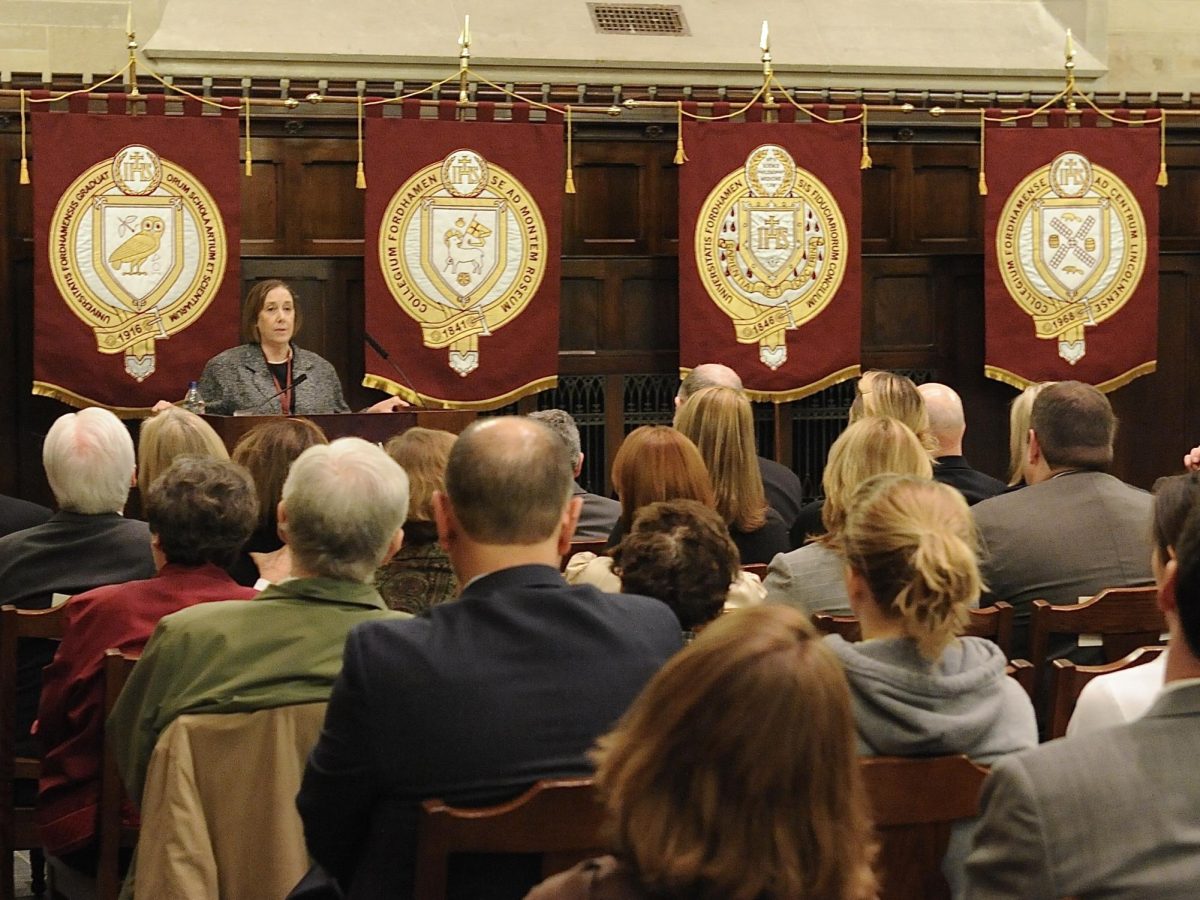
Today, at Jesuit institutions like Fordham, students are encouraged to seek all sorts of knowledge, especially spiritual. Offerings of classes on Islam, Judaism and even classes on spirituality without religion coexist with traditional classes on Christianity. It is this diverse approach to spiritual understanding that “The Last Temptation of Christ” upholds; not a path relegated by dogma and hierarchy, but one paved by an understanding of the soul’s yearning for a relationship with the divine. Not a catechism of rules and mandatory adherence, but understanding. That is what Kazantzakis strives for with his novel, and it helped me to understand Christ.
Ruth Marconi • Mar 4, 2026 at 6:50 pm
Thoughtful and well constructed articulation of an exceptionally complex topic. Excellent piece!