




















































































































































































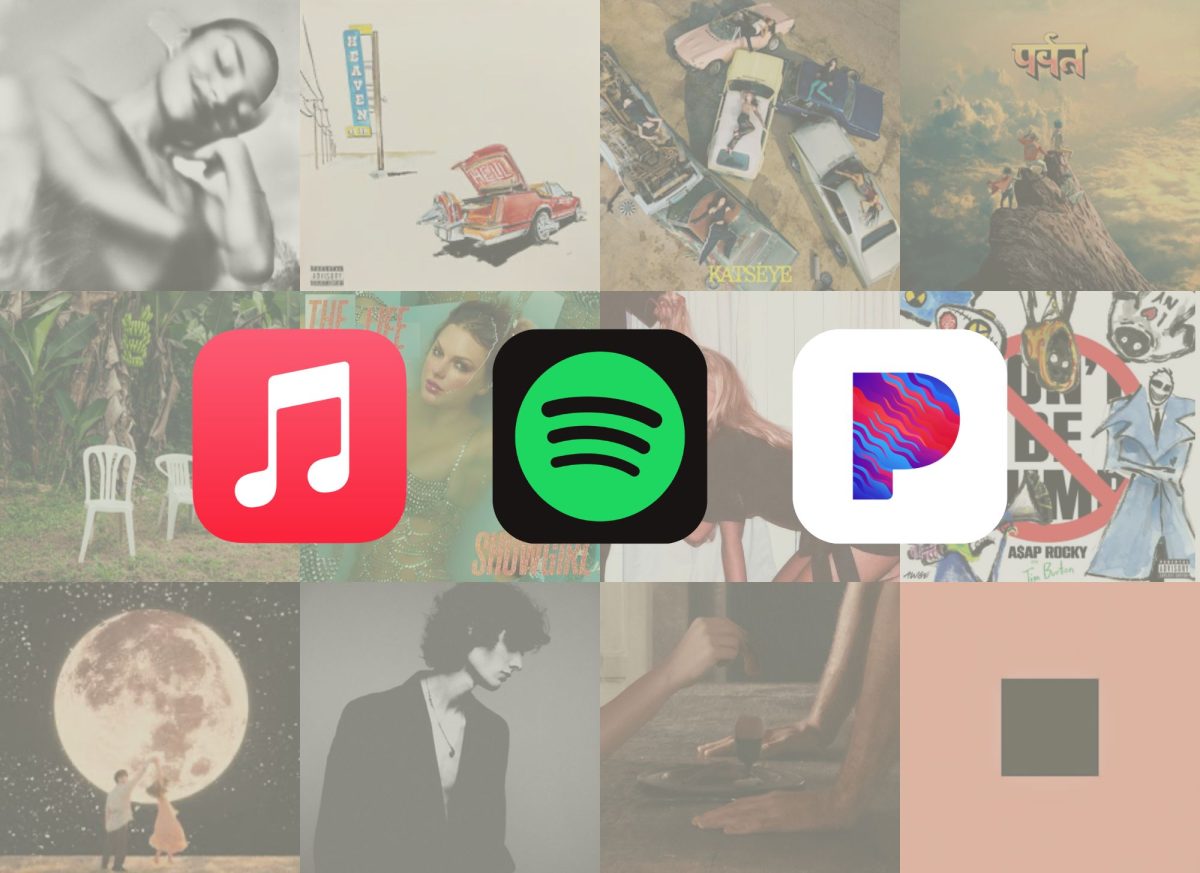
With modern developments in how we can incorporate listening to music into our daily lives, I don’t believe it to be abnormal or concerning that we, as humans, now listen to more music as a result. I may not be the most neutral person to speak on this, though, as I have had an average of 100,000 listening minutes yearly on Spotify for the past few years. Despite this substantial streaming time, music did not steer my attention away from assignments or otherwise inconvenience anything in my life — it has only brought me positives.
To begin, I believe that one of the most popular arguments against listening to a lot of music is that it will prevent any work from being done while listening to it. In a sense, I do agree with this. As The National Library of Medicine found in a professionally conducted experiment, “College students completed tasks of verbal and visual memory, reading comprehension, and arithmetic under three conditions: silence, instrumental music, and music with lyrics… Music with lyrics hindered verbal memory, visual memory, and reading comprehension.” As found in this study, listening to music with lyrics causes distractions from the primary items of focus for the subjects. This makes complete sense, as it is hard to focus your brain on constant words in your ears while trying to read or comprehend something entirely separate. The National Library of Medicine further stated, “Instrumental music (hip-hop lo-fi) did not credibly hinder or improve performance… Instrumental music was, however, sometimes perceived as beneficial.”
I, too, find that listening to music with lyrics while attempting to study, write or do anything else requiring my full attention can be very distracting. This is why I choose to listen to instrumental music instead in these moments. Therefore, it is the choice of the music listener to decide what works best for them while attempting to complete a task. I don’t believe that music itself is to blame for causing distraction but rather the type of music chosen. It can easily be played while completing work as long as you find what works best for your focus.
Given modern technology, it is now easier than ever before to find songs that are relatable to the listener. While going through substantial emotional events in life, whether they are happy, sad or angry, music can be a powerful, safe way to release these emotions into the universe. As stated by Tallahassee Memorial Healthcare, “Music can validate your current emotional state and influence your emotional destination…It works most effectively when we first find a song that matches our current feeling or mood… Knowing yourself and which music you pair with your emotions will improve self-regulation, or ‘feeling your feelings.’” One of the best ways to cope with struggles in life is to know that your feelings are validated. Listening to songs that seem to perfectly fit your situation can provide a feeling of comfort knowing that you are not the sole person to experience this situation, leading to feeling more content with any current emotions.
Before music streaming platforms were created, I am sure that you could find a record with a song that somewhat fit your emotions. However, now that just about every song is accessible to us with the press of a button, it is much easier to find one or many songs to help with this process.
While it now may be inherently more “aesthetic” to listen to your favorite album on vinyl or cassette, it is wildly more convenient to simply press play on your phone and have the songs with you everywhere. It is nice to be able to play music in a different way other than music streaming services, but being able to have control over what you listen to at all times is a luxury that I think not many people recognize.
Overall, I do not believe that we are now listening to too much music; we simply have more access to it. The only way one could be considered to listen to “too much” of it would be if it interferes with other aspects of life in a negative way. Just because there is the possibility of abusing music does not mean that music consumption as a whole in modern times is inherently bad. It simply means that, like anything, people can abuse elements of life by not controlling how much they intake or the way they intake it.
Emily Mitton, FCRH ’29, is a journalism major from Lisbon, New Hampshire.