












































































































































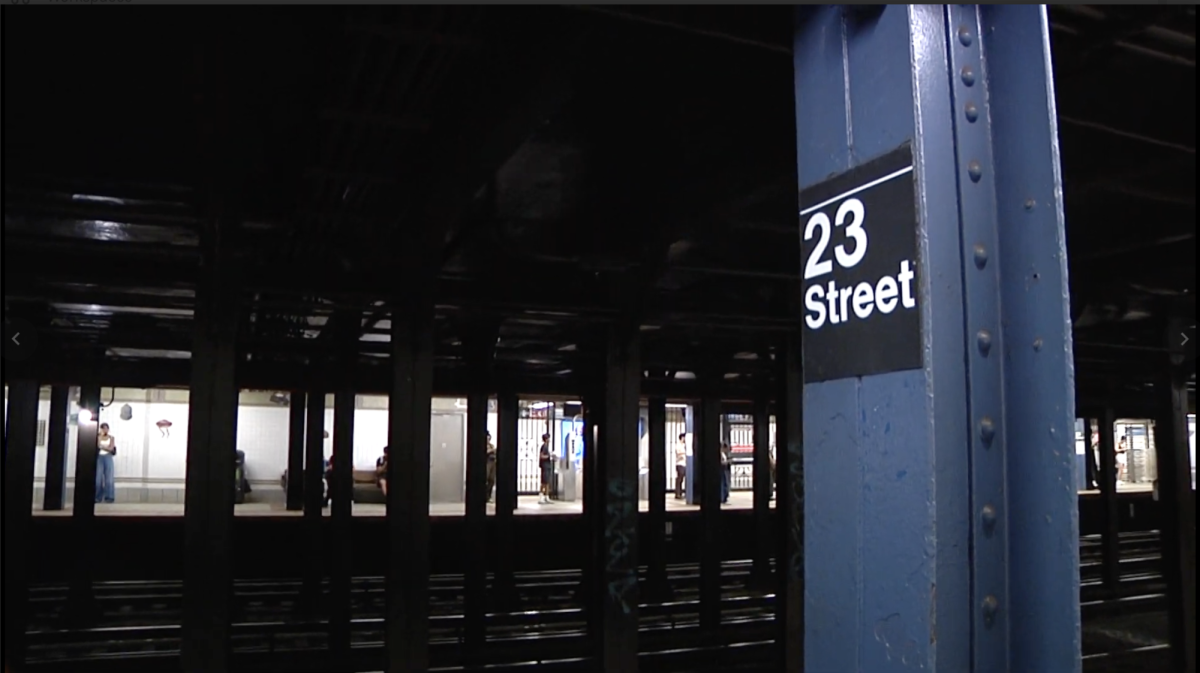
The MTA recently increased subway and bus fares from $2.90 to a flat $3. The price increase has been controversial among New Yorkers, especially amid the introduction of congestion pricing and the ongoing affordability crisis. New Yorkers seem to be paying more for less, and with public transit becoming more expensive, living in the city feels less and less attainable for the middle class.
I take great pride in the subway’s extensive network; every weekday, its ease of use allows roughly 4 million people to travel throughout the five boroughs and beyond. It is easy to understand why New Yorkers feel they are being forgotten. Issues that are most important to riders, such as delays and safety, seem to be making little progress. A system that serves so many people so frequently is deserving of efficient investment, and New Yorkers deserve efficient service.
The MTA’s annual budget is $19.88 billion, which has been spent on various efforts to modernize the subway. The MTA’s 2025-2029 proposed capital plan includes a $5.4 billion budget to modernize subway signals, 69% of which are over 100 years old. “Signal trouble” accounts for roughly 31% of all delays. A total of $10.9 billion was allocated to new railcars and $1.1 billion to new turnstiles. The new turnstiles, meant to prevent fare evasion, have proven ineffective.
Many updates, especially the new railcars and fare gates, feel like superficial improvements aimed at making the system prettier rather than more efficient. I don’t care much about new cars, new turnstiles or more cutting-edge maps, for that matter. It is politically tantalizing to install new, modern-looking solutions to a relatively boring issue. Raising the fare yet again while spending money on gates that are easier to evade feels like a betrayal. Riders, especially those who pay the fare, get the short end of a multi-billion-dollar stick.
The elephant in the room is that decades of leadership have failed to adequately address is accessibility. Elevator outages occur regularly, making the subway less accessible and transportation more difficult. Accessibility is a lofty goal, but not an unattainable one. Every New Yorker, whether by virtue of old age or a broken bone, could benefit from accessibility at some point. Transit has served millions of people, but could be improved in practical ways. Accessibility is an urgent issue for which $7.1 billion was allocated, almost $4 billion less than the budget for new railcars.
I can’t imagine a more worthy investment than public transit. The MTA is a great equalizer of the city: People of all backgrounds rely on public transit daily. There are no fare zones, and service runs 24 hours a day. Wherever you need to go, no matter your neighborhood, transit is available. The construction of the subways marked one of the greatest public works projects launched in the United States. At the time, largely middle-class Brooklyn, Queens and the Bronx were isolated from Manhattan. The subway was an expensive, ambitious project with a high-minded goal: providing all New Yorkers with easy access to every part of the city.
The past decade has also been marked by broken promises of development. The MTA launched a plan for a new Second Avenue subway line in 2017, which eventually became the Q train, but further development has been put on the back burner. Plans for a Second Avenue line were developed in the 1920s, and have yet to come to fruition. For residents of Alphabet City and the Lower East Side, the nearest subways remain on Lexington Avenue or 14th Street.
There is also a recent proposal for an Inter Borough Express (IBX) line that would facilitate travel between Brooklyn and Queens without detouring into Manhattan. The G train is the only line that does not enter Manhattan, and the IBX would fill the large transit gaps in Brooklyn and Queens. Both plans would involve significant investment, but I would argue that our transit system is more than worth it.
Riders’ feelings are exemplified by Ana Permadoro, an upstate resident who is disheartened by the MTA’s attempts at improvement. She told the New York Post, “Maybe they think it’s too expensive, but I think they make enough money… They raised the fare. Where is the money going?”
Solutions to the subway’s issues are not as shiny or politically exciting as billion-dollar fare gates or railcars with modern displays. Modernizing the signal systems, which are approaching 100 years old, would be a reasonable first step, saving money in the future by reducing long-term maintenance costs. We owe it to ourselves, as well as the ambitious people who made the subway possible, to take care of it. The infrastructure is in place, all we need is the willingness to maintain it.
Alana Jones, FCRH ’27, is an English Major with a minor in psychology from Manhattan, New York.
