































































































































































For 2000 years, the Catholic Church has urged people to question “Who am I?” Now, for a rare moment in history, people are asking this question without prompting from the Church. Instead, it is Artificial Intelligence (AI) that “has prompted many people to reflect on what it means to be human,” and ask themselves, “Who am I?” In the coming years, it seems inevitable that AI will imitate and replace countless human functions, forcing people to reflect on this question: “Who am I?” This is an opportunity for the Church to do something simple: Walk with and prepare a way for a wandering humankind by relying on her ancient wisdom.
Rest assured, history has proven that the Church is well-equipped to accompany pilgrims along the journey of questioning one’s identity. Oftentimes, these metaphorical pilgrimages occur during times of great social disorder, such as periods of war and major disruptions to the economy and labor markets. Following numerous recent revolutions, the current dawn of the AI Revolution marks one of these transformative periods. The Catholic response to the Second Industrial Revolution in the late 19th century was led by Pope Leo XIII (the namesake of the current pope). During the time of booming industrial capitalism and subsequent wealth disparity, many pilgrims wandered through the spiritual wilderness of the new industrial age as they questioned the value of work in monotonous, automated and profit-centered factories. In response, Pope Leo XIII and the Church issued the papal letter Rerum Novarum, which established guidance for modern Catholic social teaching and the proper relationship between capital and labor. Today, the world is in a similar position: Wealth gaps are the widest in generations, the economy is booming on the back of technology and people are searching for purpose. Just as Pope Leo XIII gave direction during the Second Industrial Revolution, it is now Pope Leo XIV who stands ready to give direction for human-tech relations during the Intelligence Revolution.
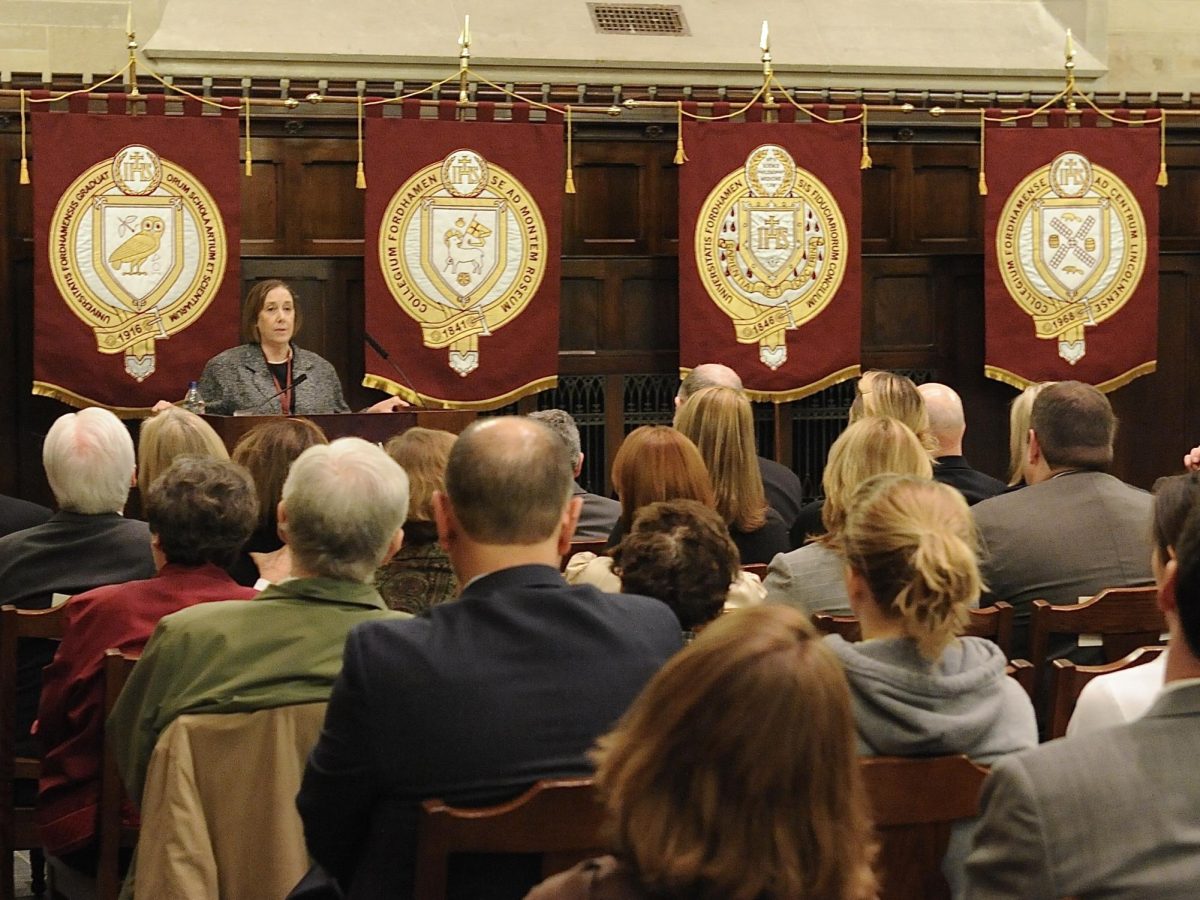
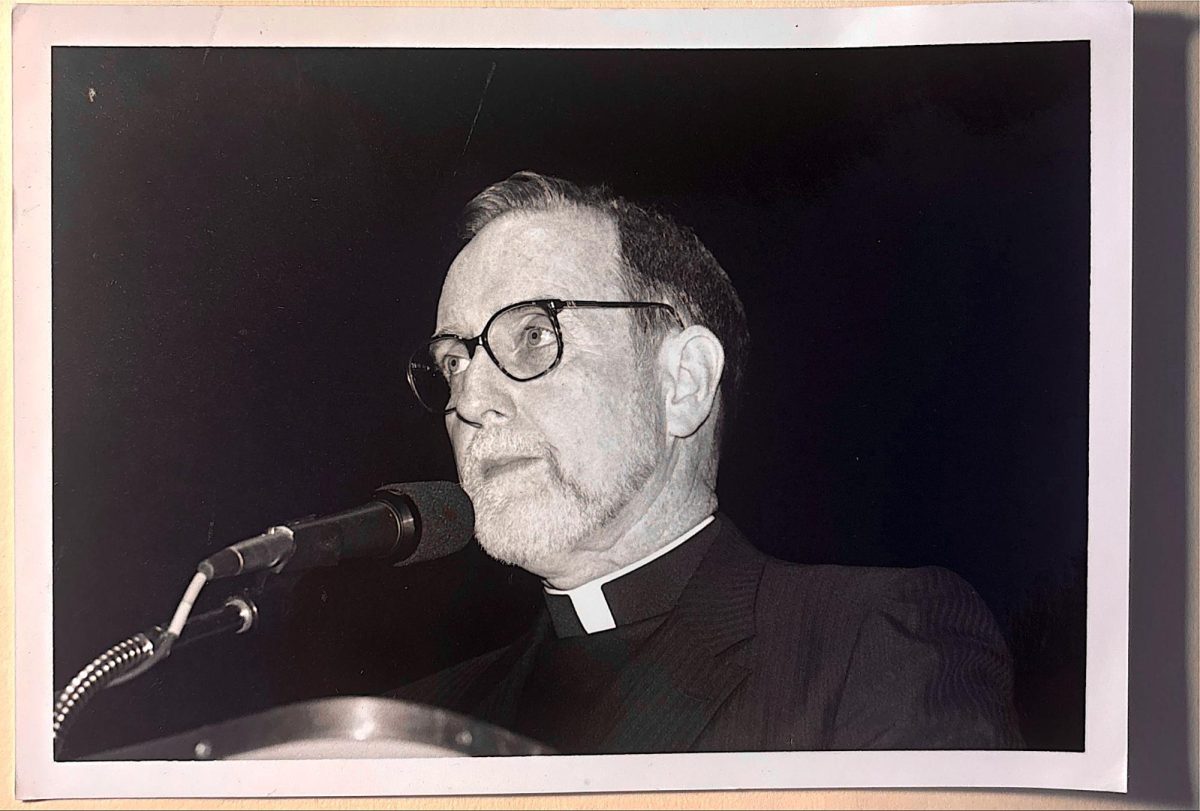
Last week, the AI at Fordham club gathered to ponder the wisdom the Church offers to individuals making the “Who am I?” reflection that AI continues to provoke in many wandering and trying hearts. Brother William Rehg S.J., Fordham’s St. Ignatius Loyola Chair in the philosophy department and computer ethics professor, lent an expert voice to the conversation on A Catholic Response to AI. The first step when asking “Who am I?” said Rehg, is to reconsider the belief that every human, including oneself, bears an intrinsic dignity.
The Church teaches that every human has dignity because they are created “in the image of God” (Genesis 1:27). God freely gave humans this dignity — A belief completely misaligned with the predominant worldview that values humans only through the economic value that their work produces. As AI draws more pilgrims into reflection, it is the Church’s moment to share what she has known for millennia: Dignity cannot be earned because it has been gifted.
This is a hopeful outlook: that AI will replace — or at the very least, imitate — many human functions, and that humanity will still bear its dignity as being made “in the image of God.” While hopeful, AI makes it increasingly challenging to notice human dignity in oneself and others. For example, in an absurd experiment, a Swiss Catholic Church installed an AI-Jesus in a private room for people to talk to. More than 1,000 people interacted with the avatar, and “feedback suggested two-thirds of them had found it to be a ‘spiritual experience.’” This feedback is indicative of a larger trend in society, seen on social media and in AI: People would rather spend time interacting with technology than interacting with other humans, or, in the case of the Swiss Church, interacting with God. If this trend continues in greater facets of human interaction with others and God, a dystopian future is likely where the dignity of the human person goes unnoticed in favor of “real connection” with technology.
That is what a wandering humanity looks like. It is a humanity that will look a camera in the eye but not another person, talk to an AI-Jesus but not a priest, pray with an AI chatbot but not God, avoid loneliness with artificial friends and avoid suffering with technology that will never suffer.
In this world of wanderers, which we all are, Pope Leo XIV and the Church have an opportunity like never before to prepare the way, the truth and the life for pilgrims walking through artificial disruption. She reminds us that a wandering humanity is also one that, deep down, knows that we were made for real connection with real people and a real God. It is a humanity that knows it will continue to fall, but that purpose can be found in wandering while asking again and again: “Who am I?”
Jack O’Brien, GSB’27, is a public accounting major from Brookfield, Wisconsin.

Rev. Raymond A Bucko, S.J. • Nov 7, 2025 at 2:02 pm
Most younger people are more likely to ask ’’can I get a job?” Instead of asking “who am I?”. College is a key time to ask deep questions yet students are more job oriented than ontological thinkers; lt is time now to ask the deep questions before it is too late.