







































































































































































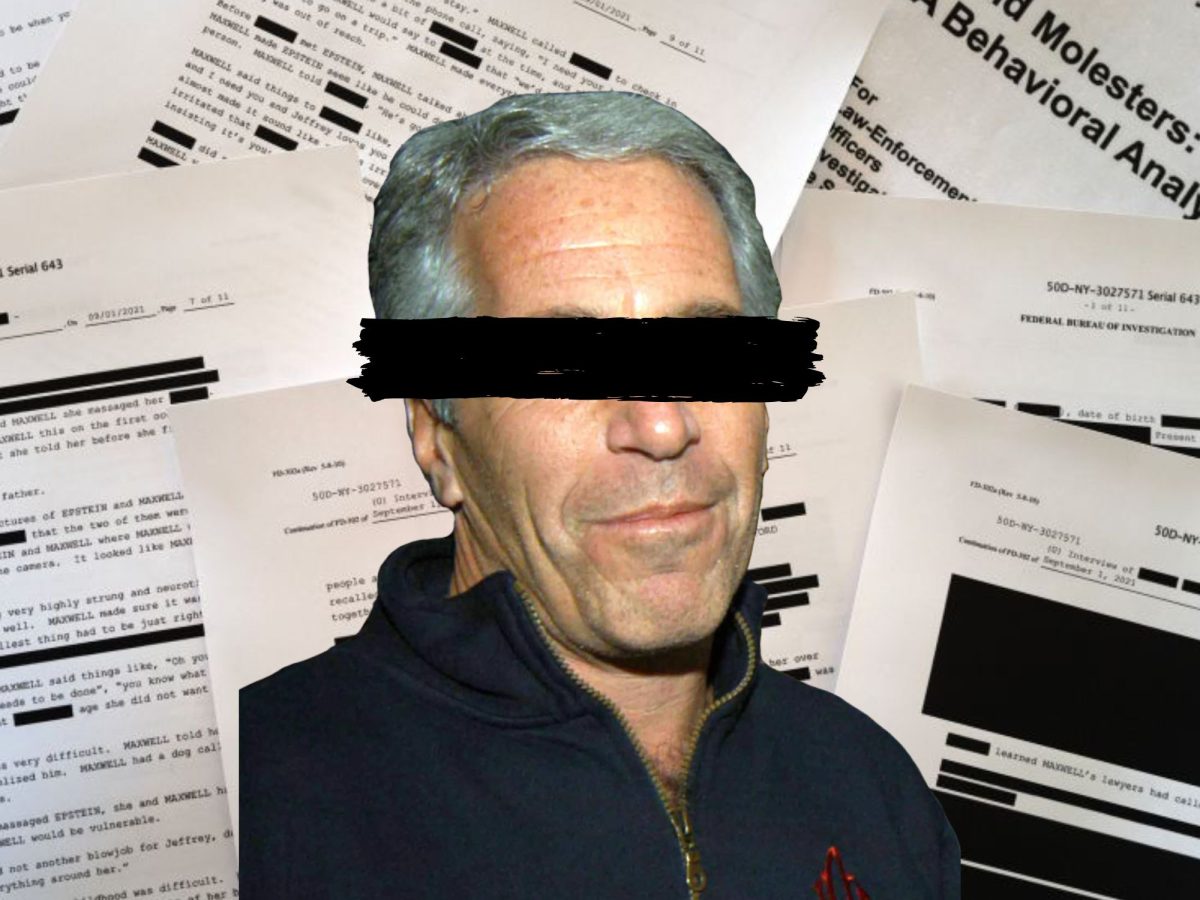
Last summer, I worked at a law firm in San Jose, California, that specializes in representing victims of childhood sexual abuse. While the stories of the clients the firm represents are fully deserving of the highest legal experience and passion that my bosses brought to the table, I cannot help but think of my time at the firm when I think about the released Epstein files. My experience in that office informs my perspective that we need to reshape how we think about the files.
For instance, people immediately think of Bill Gates, Steve Bannon and Bill Clinton, among others. But what we’re forgetting is that we’re also talking about everyday people whose lives have been impacted forever by what happened as a result of Jeffrey Epstein’s sick and twisted acts.
I’m referring to the Epstein survivors.
What bothers me the most is that while people call for unredacted versions of the files, they’re also calling for painful pasts to be unearthed and re-lived. What outrages me the most is that some officials, like Pam Bondi, intentionally disregard this key aspect of the files, as she purposefully did during a congressional hearing.
To put things in perspective, the issue of the Epstein files is such a force of negative cohesion that Republicans and Democrats, like Thomas Massie and Ro Khanna, are openly coming together in one of the rarest forms of bipartisanship that we’ve seen in years. What’s even more exceptional is that Massie and Khanna are coming together because they’ve been allowed to view unredacted versions of the files. They are, as a result, doing the Department of Justice’s job and exposing the names of six perpetrators whose names were redacted.
Why those parts of the files were redacted is still something that’s up in the air. However, there’s a bigger concern: What other perpetrators are being protected that shouldn’t be?
While you might be quick to name President Donald Trump in response to my last question, I’m going to encourage you to expand how you’re thinking. After all, there are millions of documents in these files and the vicious fact we must face is that there are countless people we still need to absorb information on, let alone call for action against as a result.
This seems to be what’s going on in the United Kingdom.
Just this past month, Andrew Mountbatten-Windsor was arrested by UK authorities for his connection to Epstein. From what we know, he was arrested for “Misconduct in Public Office.” To be more accurate, what he’s being accused of relates to how he watched a child be tortured by electrocution, in addition to all the other disgraceful and sick acts he’s done and that are already public.
While we will watch as a disgraced former prince tries to weasel his way out of justice like he’s already done before, we need to recall someone else who’s already been served justice: Ghislaine Maxwell.
In 2022, Maxwell was sentenced to 20 years in prison for her exploitation, trafficking and abuse of the Epstein victims. While Maxwell clings to claims of innocence, she has stated that she will crack the lid on what happened to Congress under the condition that Trump grant her clemency.
In layman’s terms, the situation with Maxwell is the exact same thing as watching someone start a fire, confronting them and then having them beg you not to blame them while they hold the only bucket of water nearby.
While we know a bit about the extent of what Maxwell is responsible for, we need to remember that she’s being allowed to hold cards right now. She is demanding things from the government while she’s wearing a jumpsuit in a Texas prison.
In what world is this okay? How is it even being allowed?
Very soon, we will reach a point where, as it happens in every news cycle, people will get sick and tired of the conversation and move on.
We, the American people, cannot let this happen.
We must recall the moral and ethical obligations owed, given the gravity of the situation the files present.
What we need is to keep Epstein’s victims close to our hearts.
What is owed is not only obligation but also action — that is, indictments, public rejection and sustained accountability through continuous oversight.
The policy that we need is: If you did it, you’re going to face the consequences.
If you also believe in this, call your senators, members of Congress and other public officials and demand accountability. As students, it’s the least that we can do for now.
But we cannot let this conversation become clouded or distracted by nonsense either.
Feeding into baseless ideas about conspiracy theories will only lead people to become radicalized through outlets like social media, to the point where debates will end up giving people like Nick Fuentes more support.
We’re already on this path with the Epstein files. If you don’t believe me, look no further than what happened with how Charlie Kirk’s assassination paved the way for Fuentes to become mainstream.
We also need to remember that while we’re dwelling on the brutal issues that the files demonstrate, not every headline is an intended distraction. For better or for worse, the world will keep moving forward, headlines will change and some people will forget and move on. But that doesn’t mean that what’s in those files will change, let alone the harm that the victims have felt.
The truth and harm exist, so justice must as well.
Michael Duke, GSB ’26, is a business administration major from Scottsdale, Arizona.
