




















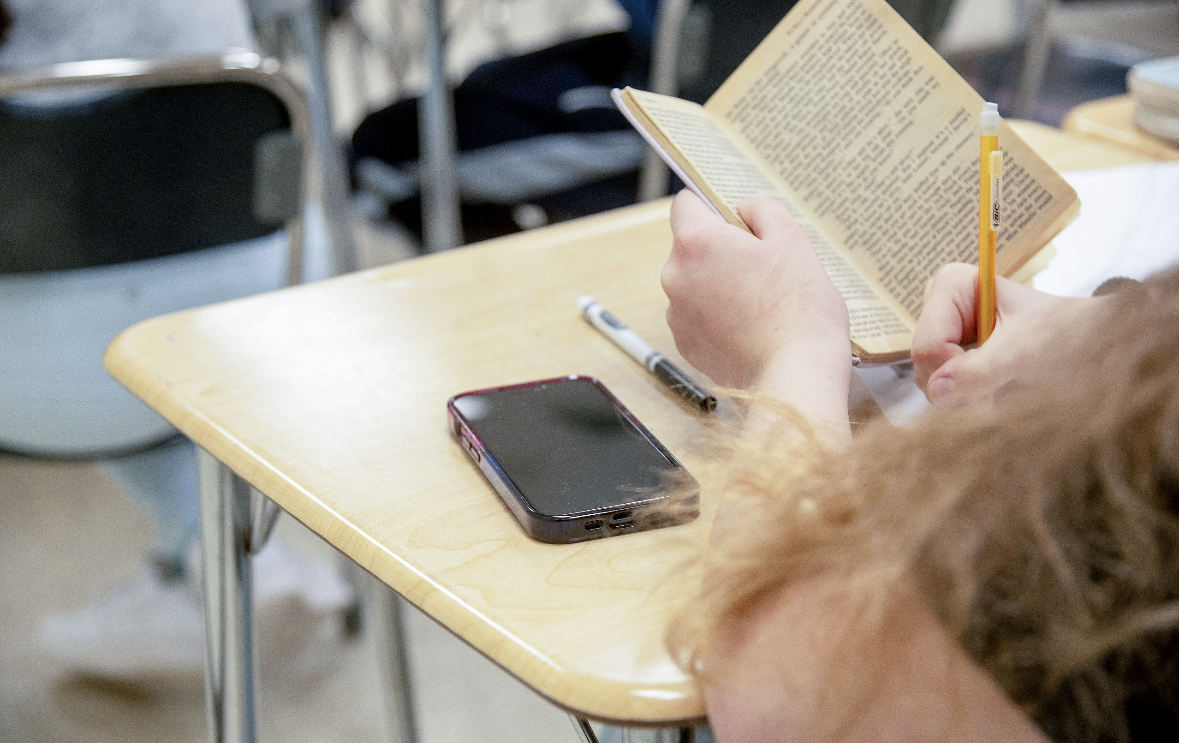


























































































The title of 2025 Banned Books Week speaks true to the apparent state of media suppression in the United States. This year, Banned Books Week is a play on George Orwell’s novel “1984,” titled “Censorship is so 1984. Read for Your Rights.” The week of Oct. 5 to Oct. 11 reminds us that despite our government’s efforts to censor literature, we all should and do have the right to read. Banned books mean less accessibility to the knowledge that shapes students’ lives, fosters the willingness to accept others’ differences and enables meaningful conversations. Our right to read lies in these truths, and a country that imposes on such a right is not a country that supports the future of education nor the individual freedoms of the people.
To ban a book means to restrict public access to that book, which is the fundamental principle of successful book bans. It is true that even if schools and libraries ban a book, it can still be purchased from bookstores or online. However, these alternatives still present barriers, particularly financial ones. Schools and libraries themselves play crucial roles in the community, keeping literature accessible and affordable for all students. Not all students have access to affordable online or in-person bookstores, or live within walking or driving distance of their public libraries.
When access to books is restricted, it also limits students’ access to information that enhances their personal development. No longer can they find characters or stories that are representative of their personal experiences, particularly for LGBTQ+ students and students of color. Younger students will feel less inclined to share their struggles or identities out of fear of rejection, affecting a larger demographic of youths who are inevitably self-conscious as they enter adulthood. From a young age, censorship shapes their perception of the world, without them even realizing that things do not have to be this way. Identities, diversity and acceptance of mental health can and should be celebrated, but they can’t be without standing up to censorship..
Many banned books share similar reasons for being banned. The most disproportionately affected books are those that feature characters representative of people of color or LGBTQ+ identities. Banned books also often have themes such as race, sexual violence, gender identity, substance abuse and depression that are decried as problematic or too mature for younger audiences. These bans ignore the idea that books concerning these topics enable marginalized authors to engage in difficult and also very real conversations with their audience.
A 2022 ALA poll found that 71% of Americans disagree with book bans, despite the nearly tenfold increase in such bans since 2020. This leaves the remaining supporters to suggest that the intention lies in defending the American youth from themes they may find offensive or upsetting, or even ideas or ideologies that do not reflect an ideal mainstream lifestyle. But does the so-called protection of the youth, as they learn to experience the world, set them up to successfully enter adulthood? Will they be unnecessarily wary of the free expression of diverse genders and sexualities and be less accepting of cultural and racial diversity? Such possibilities seem exaggerated, but are within reason, and may soon be realized should reading and access to books become even more restricted.
The concept of banning books seems like a prohibition of specific content from certain books for a reason, but the underlying issue lies with the imposition of such restrictions. The book-banning process imposes one person’s or a group’s standards, sensitivities or biases onto a larger audience, limiting the overall access to a controversial theme in other books. Restrictions on the diversity of books limits everybody, especially the youth, impinging on their ability to explore their own identities through relatable characters and themes. Access to books with heavier themes brings those with complex stories and struggles into the conversation and, consequently, creates the willingness to engage in important real-life discussions. Discussing books introduces sensitive subjects more easily, not just among youths, but also with parents and other adults.
Looking back on the novels that were part of my high school English curriculum, many of them are now popular banned books. I distinctly remember Harper Lee’s “To Kill a Mockingbird” fascinating me with its exploration of racial injustice during the Jim Crow era, in this way being crucial to teaching empathy by showing the consequences of racism. Of course, George Orwell’s “1984,” the novel that gives the week its name, portrays a no-longer dystopian representation of what government control looks like, but our present reality. Reminiscent of the novel’s theme is the growing commonality of banning books, but America does not have legislation enacted concerning the legality of removing books.
Book-banning history is not well-developed and it’s why we must focus our attention on what’s happening now. PEN America recorded 3,752 titles being banned in 2024, all of which were processed without a legal consensus to determine when a book can and can’t be removed.
If book banning continues without widespread awareness of its consequences, students will grow into a mindset that lacks the meaningful themes and relatability we associate with the books of our high school days. Books create space for the acceptance of complex subjects, and a country without the space to belong and relate to these ideas is not a country for the people. Banned Books Week returns each year as a reminder of the progression towards censorship that our government allows, and it feels more un-American than ever concerning free speech.
Abigail Smith, FCRH ’27, is an English major from Verona, New Jersey.
