







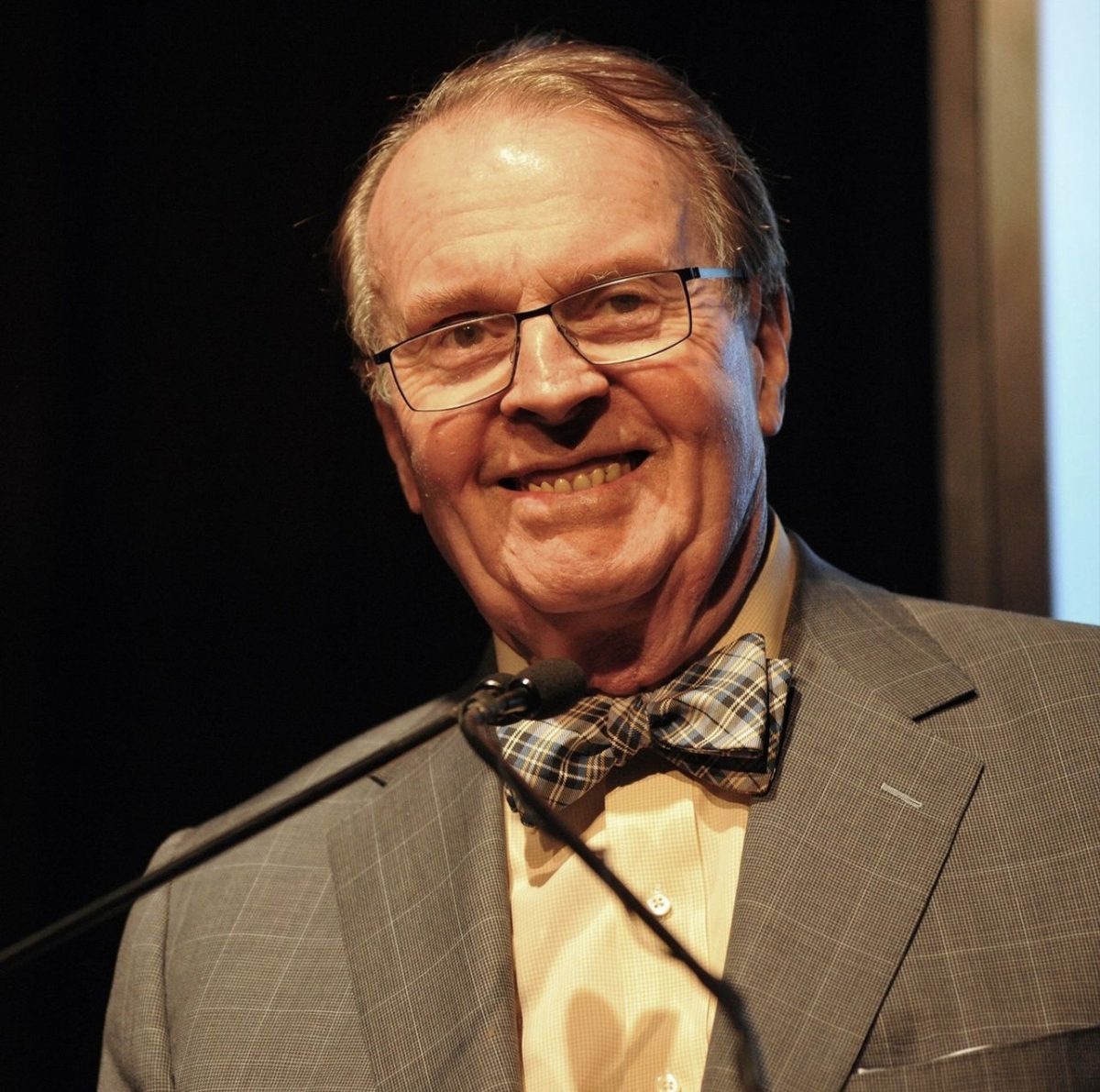








































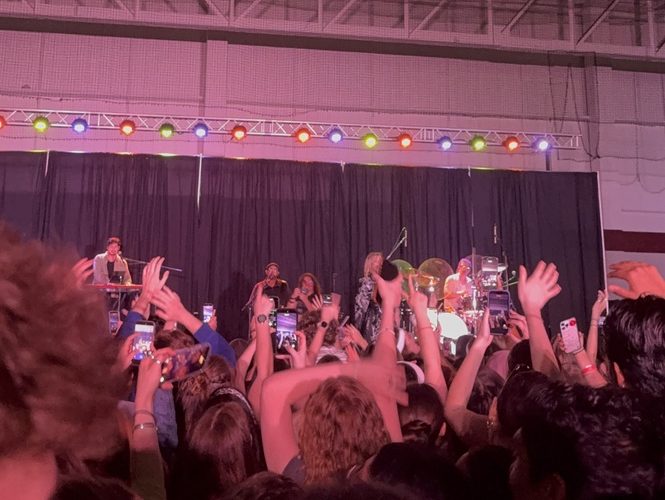





















































This past April, I had the opportunity of a lifetime: I went to a Barry Manilow concert. Yes, you read that right. Barry Manilow. Not Bad Bunny. Not Billie Eilish. Manilow. The singer who brought you “Copacabana (At the Copa),” “Mandy” and “I Write the Songs,” to name a few. I had been joking with my friend about her getting me Manilow tickets for my birthday, and we joked about it for so long that we eventually bought the tickets. Each ticket — in the mezzanine, mind you — cost $115.84. Looking back, I can’t believe we spent that much money on Manilow tickets, but we did! And honestly, the concert was phenomenal. For an 82-year-old man, he can move. Luckily for us, the orchestra was not sold out, and we arrived at Radio City so early that we were upgraded to orchestra seats. $115.84 for an orchestra seat in Radio City Hall is not that bad. An artist more popular than Manilow would definitely charge far more for these seats. In general, I think concert tickets have become far too expensive.
For example, a ticket to an Elton John concert was $10 in 1975 ($58 when adjusting for inflation). A ticket to see Bruce Springsteen cost $6.75 in 1976 ($37 today). In 1996, the average concert ticket cost $25.81. Of course, back then, concerts were a way for artists to promote and sell albums. Now, with the rise of streaming platforms, like Spotify, Apple Music, and Pandora, physical album sales have fallen so artists rely on the fractions of a cent from song streams to make money. The average payout per stream of a song on Spotify is $.00318, a huge amount when compared to Pandora’s average of $.00133, but both amount to almost nothing.
Back in the days of vinyl, this was different. In the first half of 2023, Taylor Swift sold 358,000 vinyl records and earned $1,610,000 from these sales. It would take 402,750,000 streams on Spotify to earn the same amount of money that she did from vinyl sales. Lana Del Rey sold 216,000 vinyl records in the first half of 2023 and earned $972,000 from these sales. To earn the same amount of money through Spotify, she’d need a song to be streamed 243,000,000 times. These numbers are astounding. But with vinyls only accounting for 8.2% of recorded music sales in 2024, some artists have had no choice but to increase the costs of their tickets in order to make a living in the music industry.
Artists themselves, though, don’t control every facet of the ticket prices for their concerts. The biggest offender in this ticket-pricing debacle has been Ticketmaster, which has often been accused of monopolizing the concert ticket sales market. After Ticketmaster merged with Live Nation, a venue operator and event promoter, in 2009 to form Live Nation Entertainment, it gained outsized influence over the concert ticket market. Ticketmaster today sells 70% of tickets for major concert venues in the United States. Some of Ticketmaster’s business practices, like dynamic pricing, have caused ticket prices to surge immensely in response to customer demand. In the case of Swift’s The Eras Tour, 3.5 billion customer requests caused Ticketmaster’s website to crash, prompting the company to temporarily suspend ticket sales. Swifties spent hours waiting in line for these tickets, only to be left ticketless.
Multiple lawsuits have been filed against Ticketmaster by the Federal Trade Commission (FTC), the Department of Justice and others, all alleging that the company is using illegal tactics to force customers to pay more. The FTC’s lawsuit claims that Ticketmaster is allowing ticket brokers to circumvent Ticketmaster’s ticket-purchasing limit and buy up millions of dollars’ worth of tickets. Once purchased, brokers resell these tickets at a substantial markup on the Ticketmaster platform, and the platform benefits from the additional fees it imposes on these marked-up tickets.
The Department of Justice’s lawsuit argues that Ticketmaster is monopolizing the ticket-sale market by acquiring competitors, retaliating against venues that work with rivals and prohibiting venues from using multiple ticketing services. There were even congressional hearings in which the Senate Judiciary Committee subpoenaed Ticketmaster and Live Nation to investigate their potential market manipulation, though, ultimately, Congress did not take action. In Minnesota, though, Governor Tim Walz signed a so-called Taylor Swift bill into law, which requires ticket sellers to disclose fees upfront and prohibits resellers from selling more than one copy of a ticket. Although legislation isn’t occurring on the federal level, some government officials are doing their part to end the madness.
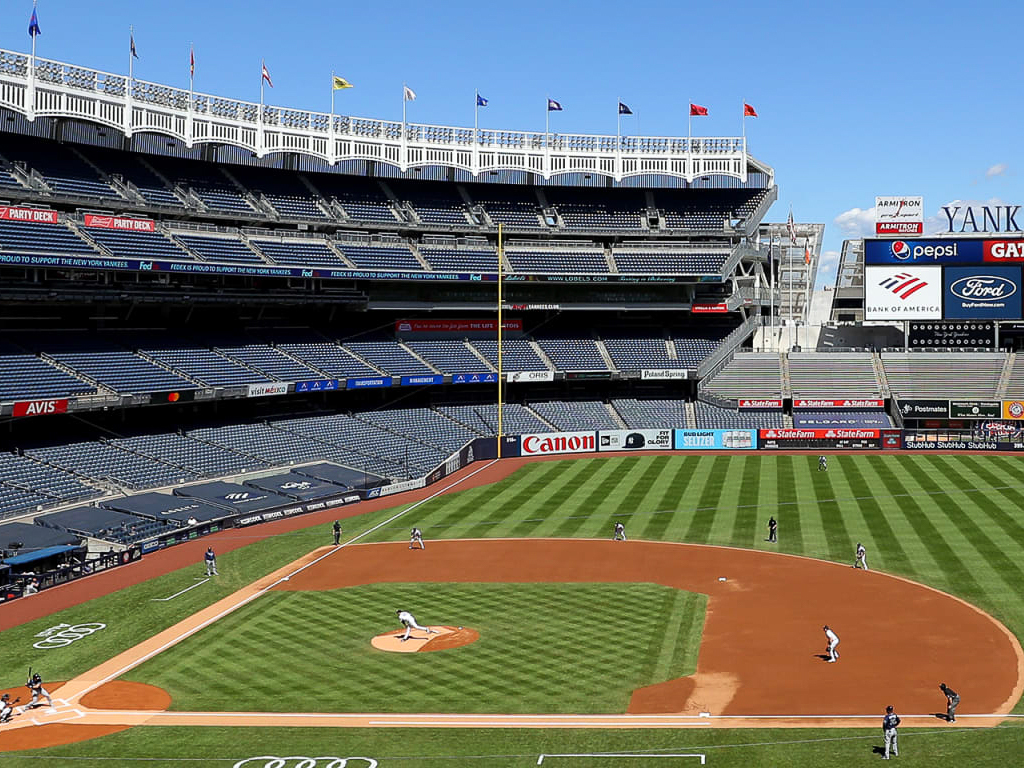
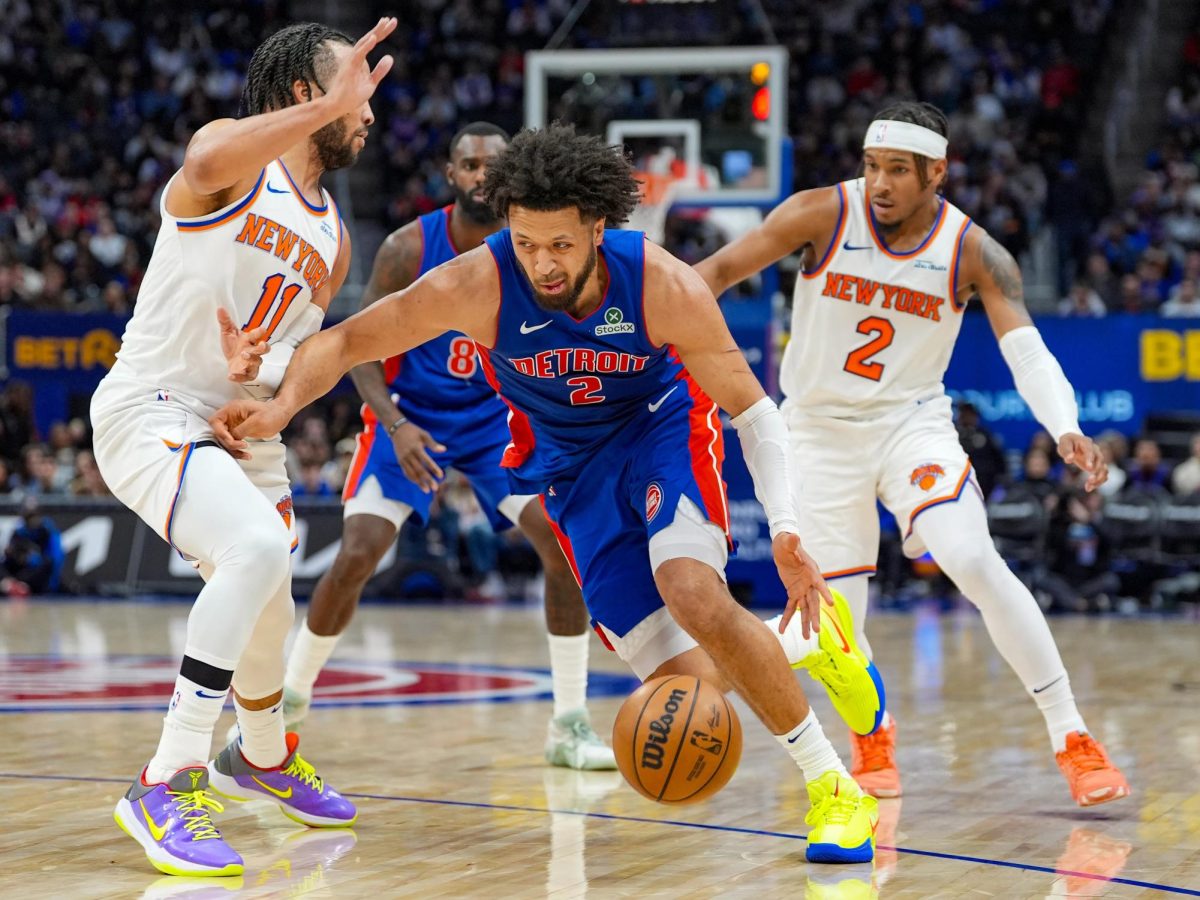
Speaking of madness, Michael Rapino, Live Nation’s CEO, believes that concert tickets aren’t expensive enough. He says, “In sports, I joke it’s like a badge of honor to spend 70 grand for a Knicks courtside [seat]. They beat me up if we charge $800 for Beyoncé.” As an avid Rangers and Knicks fan myself, I would not say that I enjoy spending exorbitant amounts of money on tickets to watch either of those teams in person, especially considering that the Rangers are currently 6-5-2 and the Knicks are 3-3. In addition to being an avid sports fan, I am also an active member of Rangers Twitter, and no one there wants to spend more money on tickets to a sporting event, either. The average ticket price for a New York Rangers game is $383.36. That’s more than triple what I spent to see Manilow! When will the madness end?
Of course, sports fans continue buying tickets to watch their favorite teams play, just as concert-goers continue to buy tickets to see their favorite artists perform. The median ticket price to see Swift perform in 2024 was $1,550, yet every single show sold out. The conclusion I’m drawing from this information is that more people should be going to watch Manilow; again, my ticket was $115.84, and I didn’t have to wait in any Ticketmaster lines to buy it! But Manilow aside, the wise Taylor Swift once said that the “haters gonna hate,” and clearly, even with these exorbitant ticket prices, I believe that consumers gonna consume.
Emma Kelner, FCLC ’29, is an undeclared major from Staten Island, New York.