















































































































































































All too often, I find myself opening Instagram between classes to a headline that makes it seem like the world is ending and then spending the entirety of my next class anxious. News is everywhere. In today’s media-saturated world, it feels nearly impossible to escape. There are clear benefits to this — being able to access information about events across the world within seconds is, in many ways, a privilege. As college students studying the very issues that dominate the news, staying informed feels necessary. But it can also feel like a burden, as constant exposure exacerbates fears about catastrophic events and escalating tensions. Our generation is repeatedly told that staying informed is important, yet we are rarely taught how to do so sustainably. The only way to consume news in a healthy and productive way is intentionally, by balancing awareness with mental health boundaries, seeking out diverse sources and engaging actively rather than passively.
The issue is not just anecdotal; it is backed by research. According to Pew Research Center, over half of U.S. adults report getting their news from social media “often” or “sometimes.” While this accessibility keeps us informed, it also contributes to stress and anxiety. The American Psychological Association explains that “though there is no formally recognized disorder or diagnostic criteria, many psychologists are seeing patients suffering from news-related stress and seeking guidance on how to help them.” Media overload is not just overwhelming; it also has real mental health consequences, especially for college students who use social media multiple times a day.
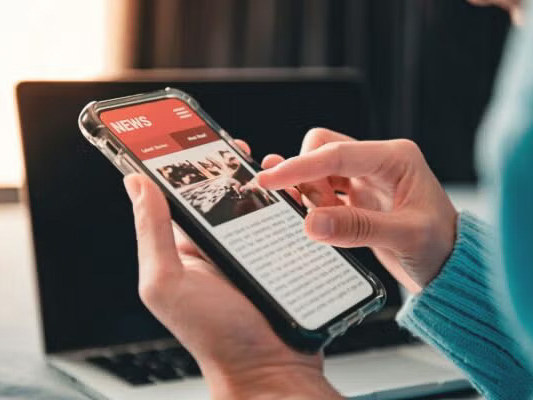
Many college students are not consuming news intentionally but passively through social media. When platforms like Instagram, TikTok and X become default entry points, news is often mixed with both entertainment and personal opinion. As a result, students encounter information while scrolling, often only reading headlines or captions instead of full-length articles. News organizations are not naive to this dynamic, and often rely on attention-grabbing or exaggerated headlines to capture clicks. With only a surface-level of information, people are usually left with nothing but incomplete or misguided interpretations.
In addition, algorithms track user engagement and prioritize similar content, reinforcing existing beliefs instead of challenging or expanding them. This creates a false sense of being well-informed, which is built on constant exposure rather than meaningful understanding. In reality, this pattern of passive consumption often leads to increased anxiety, confusion and a shallow understanding of complex news topics.
To combat this pattern, we must begin consuming news more intentionally, starting with clear mental health boundaries. Nobody knows better than ourselves about what our mental health needs are and how much news consumption we can handle. Knowing those limits and setting boundaries around them are essential.
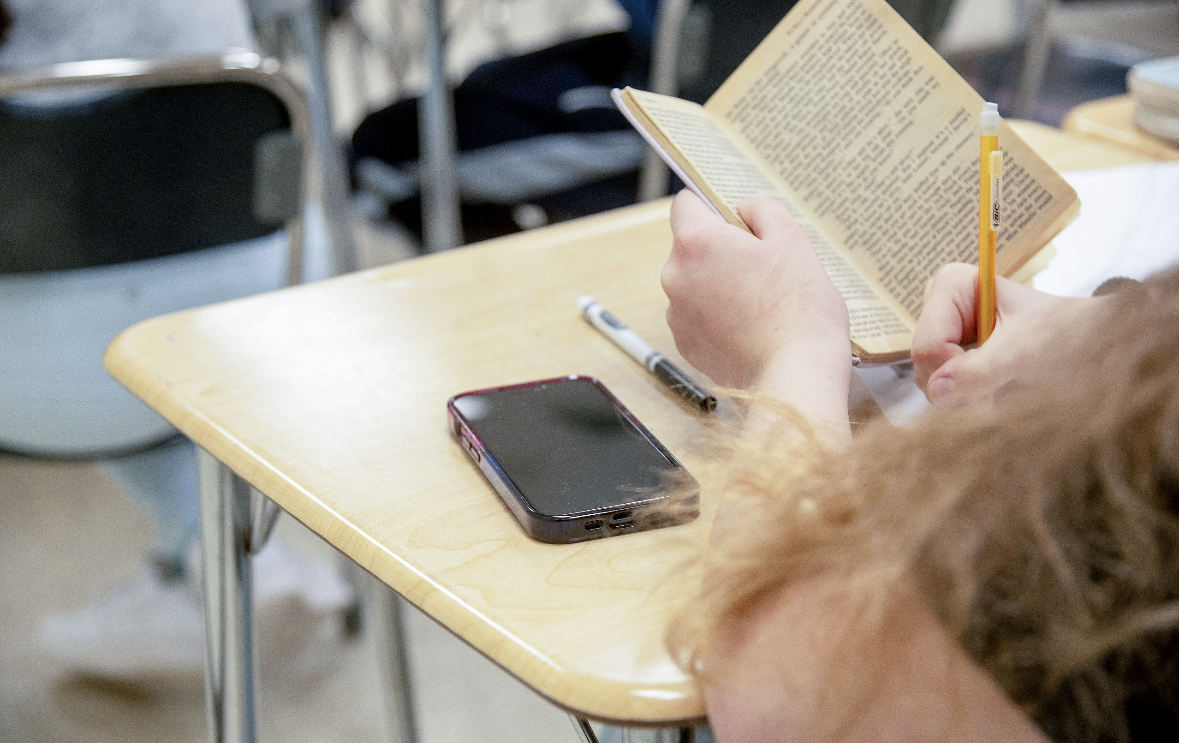
At the very least, I think we should limit how often we receive news. I have found that constant notifications usually stress me out, often distracting me from more important obligations or even from being in the present moment to have fun with friends. Thus, I have social media and news notifications turned off, so that I can more intentionally choose when I am consuming media. While I could always be better with it, I try to stay off of my phone as much as possible when I am with my friends. I think it’s important to keep in mind that setting boundaries is essential to productive mental health, and does not make someone more ignorant or less informed than another person who is constantly consuming news. The people who do set boundaries and limit their exposure are often more informed than those who do not, as they tend to intentionally read full-length articles and take time to process content before consuming more.
Another major factor of intentionally consuming news is seeking diverse sources and breaking out of echo chambers. Given how algorithms show similar content and reinforce beliefs, it is essential to expand sources. The Cable-Satellite Public Affairs (C-SPAN) is a great news source, as it shows full unedited hearings in the U.S. House of Representatives, U.S. Senate, White House events, campaign coverage, Supreme Court oral arguments and other important political events. Its coverage is also free. When learning about important events, it is critical to examine multiple sources to avoid falling into partisan-heavy traps and biased information.
There are multiple reputable newsletters like Axios, The Pew Research Center and POLITICO, which provide quick and easy access to information from multiple sources in one email. Gaining exposure to varying viewpoints from across the political spectrum allows for a better understanding of news and the ways in which various demographics perceive them.
As students at a Jesuit university that calls us to be “men and women for others,” it is important to stay engaged with the news so that we can acknowledge those in need and the state of the world. However, in order to effectively care for others, we must first take care of our own minds by being intentional about the information we consume and the ways in which we consume it. Being informed is not about volume and quantity; it is about consuming news in a way that allows for clarity, balance and real understanding. All in all, news should inform and educate, not overwhelm.
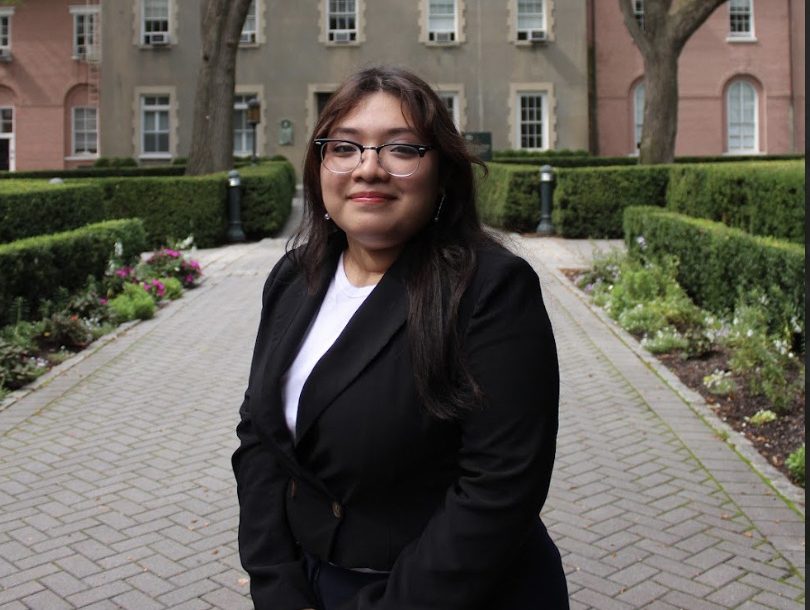
Hailey Baker, FCRH ’27, is a political science major from Gaithersburg, Maryland.
