

























































































































































































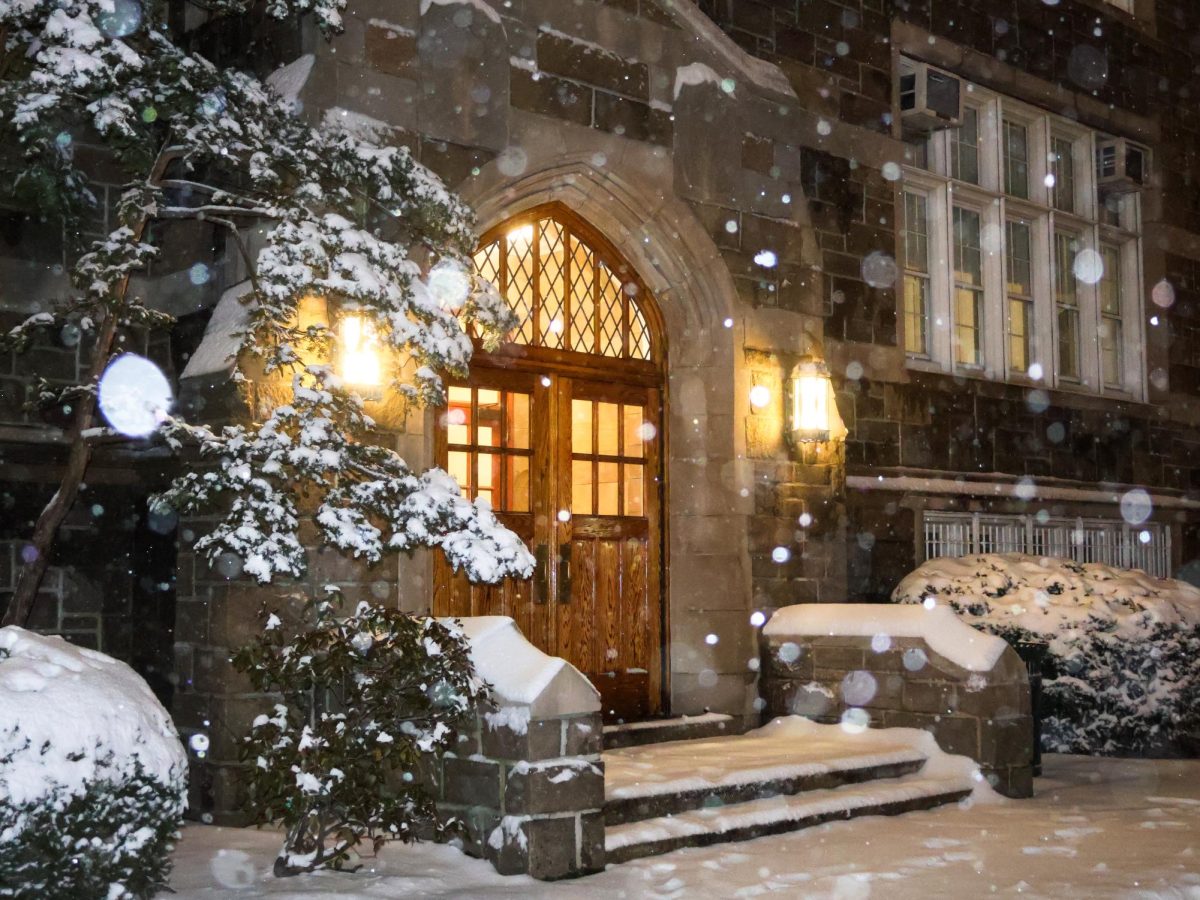
You can’t really go anywhere. The ground is covered in snow and ice and the temperature is well below freezing. This is the perfect opportunity to get ahead on some homework, yet many college students still can’t fully focus.
Well, my lovely readers, that’s what I like to call the “winter blues.” No, it’s not a super-hip jazz tune; it’s a term for the feeling of lethargy that overtakes you in the winter months. I, too, suffer from the occasional lapse in my desire to be productive. While this is a completely normal reaction to wintertime, I know that we can rise above it!
Of course, that is easier said than done: As humans, our bodies react strongly to the natural world around us. Our circadian rhythms, or our innate sleep schedules, rely on cues from the sun. Your pineal gland relies on sunlight levels to regulate your body’s melatonin, or “sleep” hormone, concentrations. This means that as the sun sets, your pineal gland gets to work making melatonin. This is then shipped out to your hypothalamus, and once it receives the message, it begins its nighttime preparations. Your body temperature and blood pressure drop and you start feeling calmer. Melatonin doesn’t stop there: It also makes your retinas less responsive to light, helping you wind down and feel less alert.
This reliance on the sun doesn’t always work in our favor. In the summer, the sun rises early in the morning and sets late in the evening, so our pineal glands don’t start producing excess melatonin until much later in the day. As a result, we feel energized almost the whole day. During the winter, however, the sun rises later and sets earlier, so our pineal glands have no choice but to begin this process much earlier in the day. That’s why, during the winter, we feel exhausted the second the clock hits 6 p.m.
This exhaustion makes things difficult. Normally, if your body is telling you to rest, I’d recommend winding down and enjoying a quiet evening in. But resting after 6 p.m. every day is a little excessive, especially when you have extensive assignments to submit, dense academic prose to read and long essays to write. This may seem hopeless, but it’s not! I swear! I’ve done my research and I’ve compiled a list of tips and tricks you can implement whenever the winter blues stop by and say hi.
First, you can go outside. I know, I know, it’s cold and icy and windy and just generally terrible outside. But sunlight, especially in the morning, can help control your brain’s internal clock and increase production of serotonin, your body’s natural “feel good” chemical.
If you want to get really crazy, try exercising! Exercise has been proven to boost brain functions and improve sleep as well as reduce the risk of cognitive decline, certain cancers, heart disease and diabetes. I mean, it doesn’t get any better than that! I understand that going to the gym, especially one on campus, can feel awkward and a little frightening, but once you start looking — and focusing — like Arnold Schwarzenegger, you’ll thank me!
Second, eat winter foods. By that, I mean two things: one, eat foods that are in season. Foods that are in season typically contain more nutrients than foods that are not in season, and eating seasonally ensures you get a variety of foods throughout the year. Perhaps most importantly, eating foods in season is usually cheaper than eating those that have to be flown in from elsewhere.
Two, eat warm foods. I love Dunkin’s iced drinks as much as anybody — perhaps more — but winter is a time to drink warm beverages, like hot teas and coffees, and eat warm foods, like soups and hot sandwiches. My personal recommendation is a grilled cheese sandwich with a tomato soup dipper from Freshens, but eat it sporadically, as it unfortunately has little to no actual nutritional value.
Last but not least, sleep. It may seem counterintuitive to productivity, but sleeping a little more will help you feel more energized during the day. Studies show that people need more sleep in winter than in summer. At St. Hedwig Hospital in Berlin, scientists found that patients slept about an hour longer in winter than in summer. Not only that, but participants in the study also got 30 more minutes of rapid eye movement (REM) sleep in the winter than they did in the summer — and more REM sleep has benefits that will last the whole season as well as your entire life, including improved learning, better mood regulation, faster brain development and protection against dementia.
By making time to go outside, eating well and giving yourself time to sleep, you too can embrace these winter months ahead. So bundle up, go for a walk, eat a warm grilled cheese sandwich and get your rest; with these tips, you’ll be ready not just to stay awake in class, but also to submit all your homework days in advance (but don’t hold me to that). When in doubt, just remember what my elementary school principal said on the loudspeaker whenever it was applicable: “It may be snowing outside, but it’s always sunny inside!”
Emma Kelner, FCLC ’29, is an economics major from Staten Island, New York.