

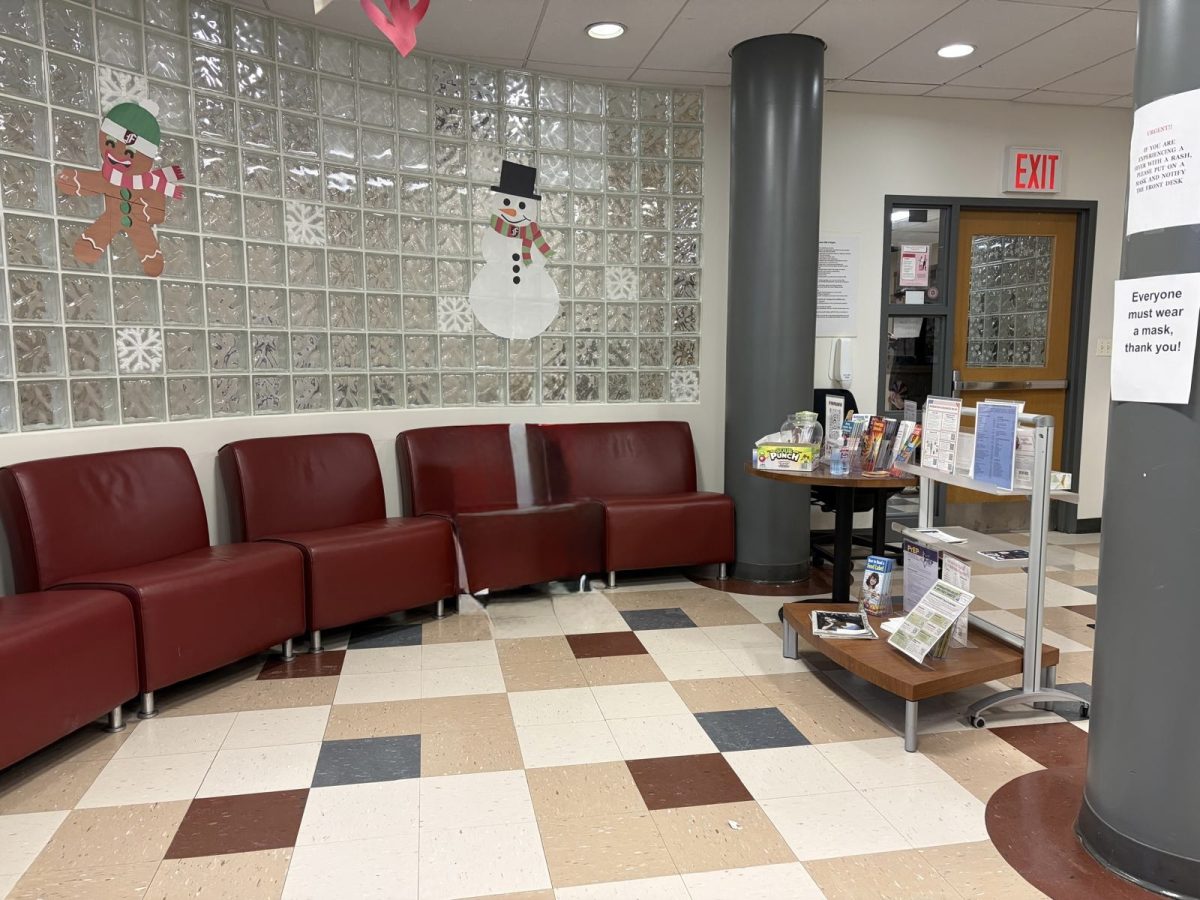






















































































































































About a mile from campus exists a small storeroom adjacent to a Catholic Church. The large, pantry-style space is filled to the brim with diapers, baby clothes, maternal health items and anything else a mom could need. The center, St. Phillip Neri Mommy Storeroom, opens its doors twice a week to local women to receive material and emotional support free of charge.
The storeroom is staffed by catholic sisters and sustained by assistance from lay volunteers, some of which are dedicated Fordham Respect for Life club members. The center’s atmosphere is quietly profound: women coming in to pick up items and converse with friends for support or a good laugh, their kids jumping up and down playing with toys, volunteers speaking in Spanish (or half-broken Spanish if I happen to be there) to quickly write down the mom’s requested items. People of all ages are organizing diapers, baby shoes and baby formula into a recycled Trader Joe’s bag to give to the women. With this vision of support before me, I can’t help but wonder why so many women are told that abortion is their only option.
I am pro-life because I am a feminist. Those two identities seem paradoxical in our current culture. Yet feminism with integrity demands support for the most vulnerable of women, if it aims to support any women at all.
Pro-choice feminist narratives often overlook a more uncomfortable question: Why has abortion become so common in the first place? The reality of nearly 1.1 million abortions occurring in the United States in 2024 ought to prompt reflection, not just quiet acceptance. How do these staggeringly high numbers intersect with the lives of the women we pass on Fordham Road or even in our own classrooms? In what areas of society is our culture failing to treat women with the dignity they deserve, instead of shoving them into cycles of individual and systemic abuse?
Abortion, especially in its increasingly privatized form, places women at greater risk rather than protecting them. Chemical abortions now account for 54% of all abortions and are marketed as safe, reliable and empowering. This is a two-pill system that allows women to have an abortion from the safety of her home. Yet the lack of governmental regulation or medical oversight can lead women to navigate the process alone. Women are able to order these pills online, and can consume them far past the 10-week requirements. In situations of unequal power dynamics, such as abusive relationships or family pressure, this deregulation can be dangerous. A terrifying 11% of chemical abortions lead to sepsis, hemorrhaging or other serious conditions for the mother. Rather than offering genuine care, the system often abandons women at their most isolated and vulnerable moments.
Abortion also contributes to the systematic devaluation of women in our society. Big businesses ignore women’s authentic needs by offering to pay for their female employees’ abortions, as it is cheaper to send them to a Planned Parenthood than it is to provide them with extensive paid maternity leave and financial support for childcare. Corporations can justify abortion funding in terms of productivity, arguing that because women constitute over half the workforce, limiting pregnancy-related disruptions prevents costly employee turnover.
At the same time, the abortion industry itself is a multi-million-dollar business, with both leaders and employees emphasizing profit over care. Within these systems, abortion does not operate as liberation, but as a function of our highly consumerist and individualistic society.
While researching for this article, I was immediately directed to hundreds of websites giving me information on how to obtain an abortion. These pages prompted me to order the pills in advance, “just in case.” This rhetoric treats women like robots, implying that we act purely on reaction rather than reflection. What if women do not actually want an abortion?
These frameworks transport us back to pre first-wave feminism, a society in which women were not regarded as rational beings capable of serious deliberation. By presenting abortion as the automatic response to an unwanted pregnancy, our culture subordinates women and their capacity for judgment.
Zoe Najmy, FCRH ’26, and Grace Baur, FCRH ’29, shared their pro-woman experiences with me at the March for Life and Cardinal O’Connor Conference in Washington, D.C., this past weekend.
“If we continue to tell women they are not ‘ready’ or ‘worthy’ or in a ‘good position’ for a child, we are dismissing what women are capable of,” Najmy said. “We are robbing women of their true choice as these narratives are fed to them. I believe that we must rise up and defend life as well as appreciate and value motherhood.”
Baur emphasized Najmy’s stance by saying that opposing abortion “is a true women’s rights issue.” With authentic support, women are not considered in a vacuum, but looked at as a whole person with inviolable dignity.
Abigail Adams, FCRH ‘26, is a philosophy major from Alexandria, Virginia.