




























































































































































































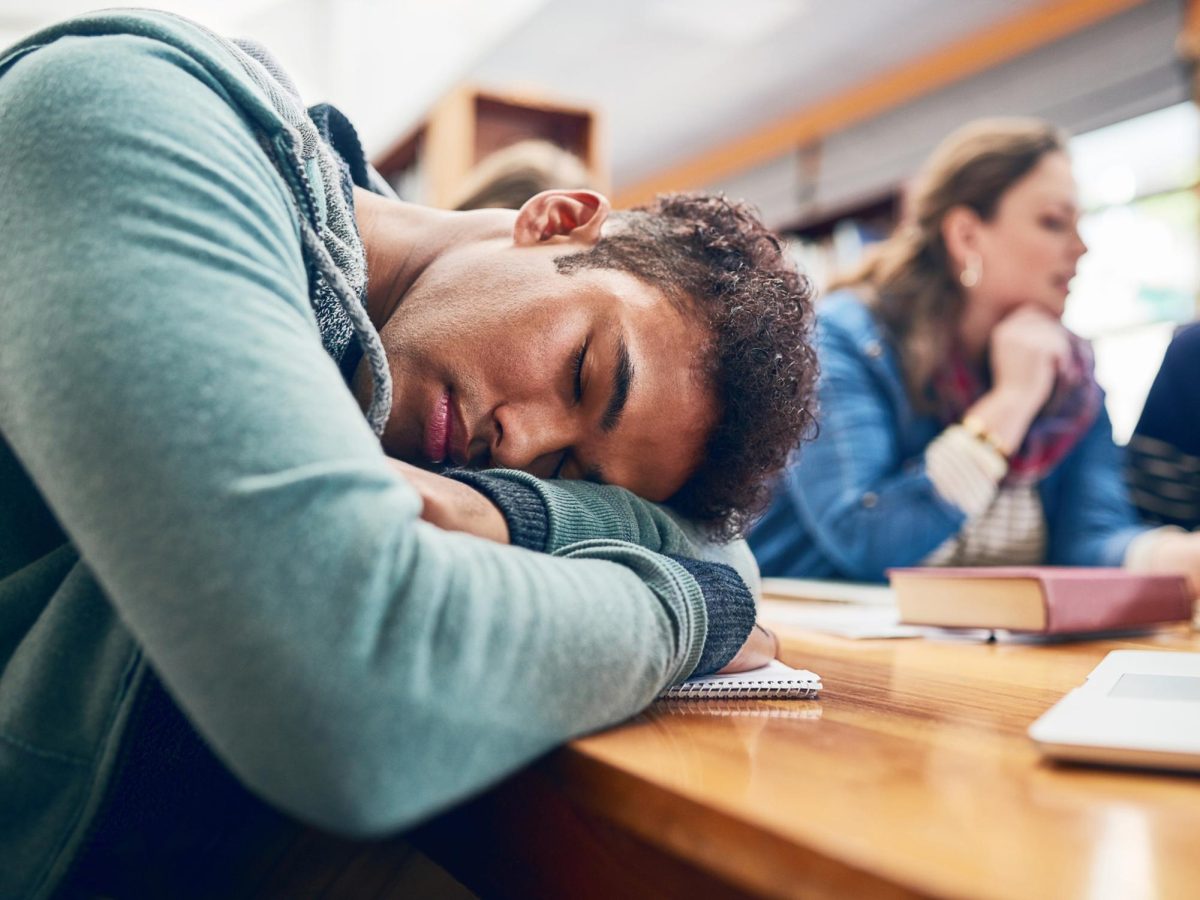
Sleep deprivation has become so normalized in college that being exhausted is almost expected. It comes up every day in conversations: before exams, after nights out and during early morning classes where someone may sit half-awake, running on caffeine. People compare how little sleep they get like it is something to be proud of. Saying you “only got three hours of sleep” has become a way of proving how hard you are working. This mindset is not harmless. College students are not too busy for sleep. We simply have accepted the idea that sleep is optional, when in reality, it is one of the most important factors in academic success, athletic performance, mental health and the overall ability to function.
Sleep directly affects how we think, feel and perform, yet it is often the first thing sacrificed when life becomes overwhelming. Adults are recommended to get at least seven hours of sleep each night, while college students average closer to six. Getting less than that (yes, even during midterms) can lead to increased stress, fatigue and overall difficulty concentrating. While the occasional night of little sleep can be okay, falling into the vicious cycle will result in the negative effects adding up. Students who consistently get more sleep tend to perform better academically, while those who are sleep deprived struggle to stay focused and retain information.
Personally, I have an Oura Ring that tracks how much I sleep each night. By collecting my data of awake time in the night, amount of rapid eye movement and deep sleep, I am able to understand how well I will be able to function day to day. When I get enough sleep, I feel capable of paying attention in class and am able to participate in discussions. I want to get exercise and my overall mood is better. But when I do not get enough sleep, everything is harder. It is hard for me to concentrate, my energy levels drop and my motivation disappears.
Students are aware of this pattern but still struggle to change their habits. Aeyla Sainsbury-Carter FCRH ’29 told me, “I know I function better when I sleep more, but if I have too much on my plate, I can’t just email my professor and say I couldn’t finish my essay because I needed sleep.” The need for sleep is something students feel they cannot control, and it just fits into their schedules when they can.
Consistency plays a major role in sleep quality. Going to bed and waking up at the same time each day helps regulate energy levels and improves overall function, but college life rarely encourages this kind of structure. Students adjust their sleep schedules based on what time they may have class or practices, focusing on the immediate demands rather than their long-term health.
There is this predetermined notion that college is supposed to be exhausting, which it very much is, but sometimes people mistake busyness for tiredness when assessing how productive they have been. When you push yourself to stay up to cram for an exam, it can feel like you are doing everything you can to succeed, even if your body and mind are no longer functioning properly. Mia Smith FCRH ’29, said, “I have stayed up all night studying before, and by the time I actually take the test, I feel like my brain isn’t even working.” This experience is common, as students convince themselves that sacrificing sleep will improve their performance, when in reality, it often does the opposite.
Social life also contributes to irregular sleep. College is a rare time when we’re always surrounded by our friends, and there is a nearly constant opportunity for interaction. As someone who went to boarding school prior to college, I have come to understand that while it is fun to stay up late with friends, losing that sleep during the week can be worth it in the moment but detrimental in the long run.
The normalization of sleep deprivation raises an important question: Is it rational to accept exhaustion as an unavoidable part of college life? While college is demanding, that does not mean sleep should be considered expendable. In fact, sleep is what allows students to handle those demands in the first place. Without enough rest, everything from learning to socializing to emotional stability becomes more difficult.
Sleep should not be treated as a luxury, as it is a basic requirement for functioning. Prioritizing sleep does not mean students are lazy or unmotivated. It means you are giving yourself all the necessary tools to perform in the best way possible. College is a time of independence, and part of that independence is learning how to take care of yourself. That includes recognizing the importance of sleep. Exhaustion does not have to define the college experience, even if it is normalized. If students want to function better, feel better, have high GPAs and perform better athletically, sleep cannot remain the first thing that is given up.
Kelly Buban, FCRH ’29, is a journalism major from Middlebury, Connecticut.