


































































































































































































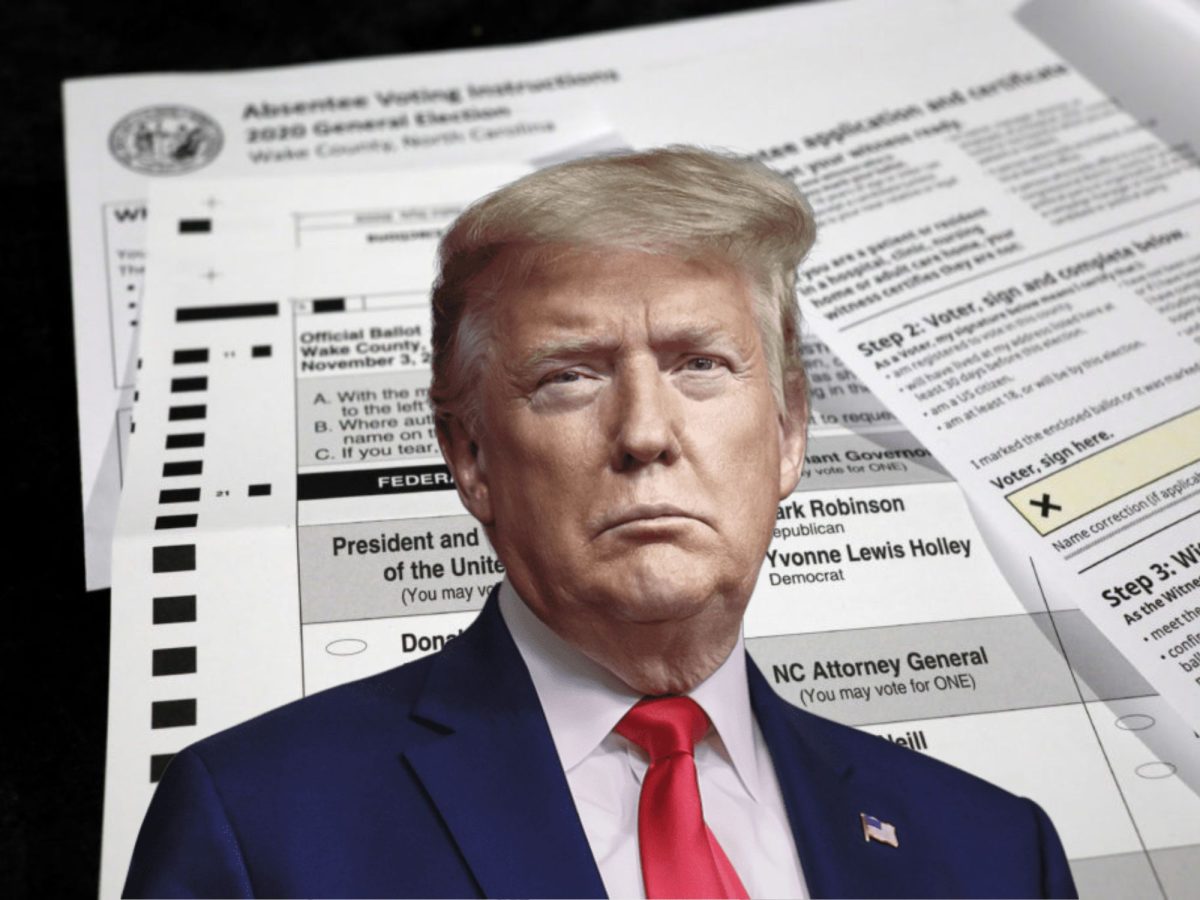
It is both well-established and beyond fair to say that President Donald Trump lost the 2020 election, despite his claims and the wildest fantasies of his supporters. This fact has been established in court, after the president’s sycophants announced repeatedly that the voting machines had been tampered with, the election was falsified and stolen and other such claims that, at their strongest, were highly dubious. In the case Dominion Voting Systems v. Fox News Network, Fox News was ordered to pay just upward of $750 million. Following the court’s decision, one can claim with complete confidence that the matter has been settled.
The president, of course, seems to think the opposite, and the FBI was utilized in such a manner to ensure that the president’s false word became legal writ. Two things can be true at once, regarding the significance of this: that using the FBI for this is a symbol of the president’s authoritarian tendencies and a symbol of the erosion of that power. By this, I mean that if the president believed his legitimacy and popularity among the American people to be sufficient, this action would have been, at the very least, unnecessary. It is clear that this administration does not trust its own people in the slightest. In order for there to be secure elections, the executive branch cannot and must not act as a guardian: it is in the state and people’s interest that the elections are unmeddled with, and they have the resources to do so.
There is something at play in this administration that affects the actions that it takes. It is absolutely imperative for authoritarians to establish an enemy within the state as a way to cement their own power. To that end, there are two aspects of this practice of scapegoating. If anything can be found suggesting that the election was tampered against the administration, then it will be used as evidence of that enemy within. Secondly and more importantly, however, it presents an image of strength and untouchability: indeed, who would want to tango with the FBI? Presenting that front serves as a sort of political pornography for the political base in the same way that superhero movies or war movies can. Maintaining an image of strength is absolutely necessary for a riled up base which is rather boorish in its understanding of nuance. Much of what is done by this administration seems to depend on the calculus of what looks good on TV or Instagram Reels rather than any proper political prudence. One only needs to look at instances such as the Attorney General lashing out in her hearing or the Homeland Secretary’s photo-ops in the El Salvadoran prison to realize why this is the case.
As far as why these actions are a cause for concern, I believe that there are two contradictory ways to look at them that, again, can both be true at the same time. These actions, and many of the actions of this administration, reflect that of a toddler throwing violent tantrums when told “no.” As a result, independent of whether or not they are authoritarian tendencies, this administration’s temper tantrums can and do hurt enormous amounts of people. Now, if we view these actions as having both authoritarian tendencies — which do, in fact, cause harm — and being childish, there absolutely is room to worry, both on account of their attempts to manufacture a narrative, as well as bulldoze resistance to that manufacturing.
At the same time, however, I do not believe there is reason for excessive worry. The president’s actions regarding the voting machines resemble grasping at a rope that is running thin rather than an active cementing of governmental power, with the grasping becoming increasingly more desperate as the midterm elections and the possibility of a Democratic majority in Congress draw nearer.
All this is to say is that the actions of the current administration are those of a group of authoritarians trying to cling to the shreds of legitimacy and confidence they do have rather than establish anything new. As tends to be with authoritarians, they eat themselves alive by eviscerating their own nervous system.
Kat Rossi, FCRH ’27, is a philosophy and economics major from Arlington, Virginia.
