


























































































































































Politics bleed into everything. From sports, to morning shows, to the brands that we buy and the ones we choose not to, political issues have become as invasive in our lives as termites in wood.
However, it’s sometimes unavoidable, and in many ways it’s unnaturally unavoidable.
The easiest way to explain this is to think about this from an economic perspective. For example, after lengthy tirades are given on major news networks or on the floor of the House, Congress decides how much of your paycheck is taxed. Then, after the government generously allows you to keep a portion of your paycheck, you hold onto it tightly in your back pocket in case of a rainy day.
However, where it gets more political is when you realize that it doesn’t matter if you have five bucks or $5,000 in your pocket. What does matter is that at any point, that amount you hold can be worth more or substantially less than face value when you go to spend it.
If you think this is the extent of how politics affects your savings, you’re wrong. How your savings can be worth one amount one day and something significantly different the next is because of how your hard-earned money is at the mercy of political decisions, or more accurately, one political decision.
That decision is the choice a president makes for who serves as Chair of the Fed.
In 2013, former President Barack Obama appointed Janet Yellen, Ph.D., to serve as the 15th chair of the Federal Reserve. She’d previously served as the vice chair of the Fed and was chair of the Council of Economic Advisors. Since then, she served in former President Joe Biden’s cabinet as his Treasury Secretary.
When Obama nominated Yellen, he said that nominating a Fed chair is “one of the most important economic decisions” that he would make as president. Obama also said that nominating the Fed’s Chair is “one of the most important appointments that any president can make.”
Just to put that statement in perspective, Obama nominated three people to the Supreme Court, and had it not been for what a writer at “The Hill” calls an “unconstitutional” decision to lock up the third nomination by Senator Mitch McConnell, Obama would have gotten more than just two nominees onto the Court.
If you think about this in today’s perspective, you need to ask yourself if you also equate Supreme Court nominations, with all their important duties and roles, as being on par with the Chair of the Fed.
If you know anything about the Fed like an economist does, you know that Obama’s assessment isn’t incorrect. The Federal Reserve is responsible for our country’s economic stability.
It’s accountable for keeping banks in line to make sure they don’t collapse overnight or lose the savings we trust them to hold. The Fed is also charged with keeping inflation at levels so affordability and financial stability are less of a dream and more of something that is achievable for all Americans.
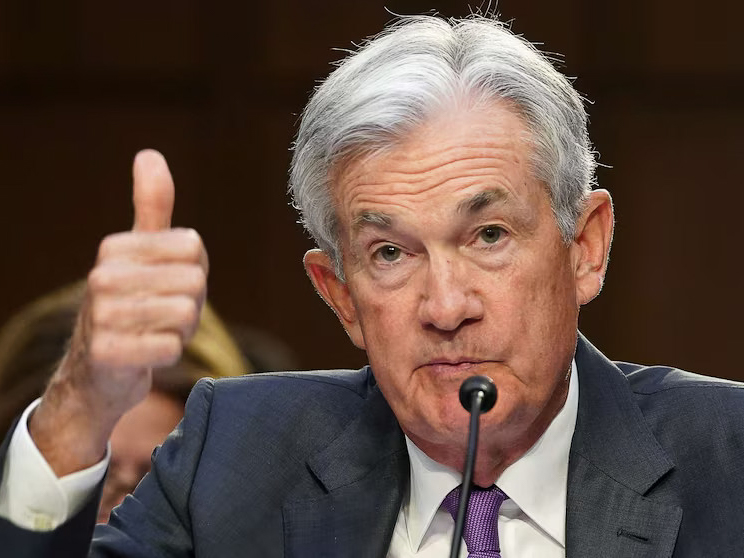
But, these things are fiercely impacted by whoever is the Chair of the Fed. Right now, Jerome Powell is in that seat. He was nominated twice; once by President Donald J. Trump in 2017, and then re-upped for a second term by Biden in 2021. A man named Kevin Warsh is going to run the gauntlet to take over when Powell’s term ends in May.
This is important for a host of reasons. If you’re an investor, or have any investments, you know that the second the Fed Chair says at a podium “good morning” and announces decisions on interest rates, the Dow Jones Industrial Average, S&P 500 and Nasdaq either plummet or skyrocket. Outside of crises, presidential addresses or works of God, there are very few other events that can impact the state of the market like how the Chair of the Fed does when he’s in front of a camera. That amount of power is almost too much for one person to have.To make things worse, 66% of people who lean towards the left say that the Fed favors Republicans, while 60% of people who lean right say it favors Democrats, as reported in a 2024 study from The University of Chicago.
Even worse, that study was released before people got up-in-arms about Trump putting pressure on the Fed to lower interest rates to stimulate economic activity and wrangle inflation. That study also came out before the New York Times stoked fear about how Trump mulled over the idea of firing Powell — something which is afforded to any president when they have “cause”-— in a July 2025 article
With all of this being said, we’ve yet again confirmed by our own actions that we’ve failed to look at things objectively. Like always, we’ve let pundits and politics evaporate our trust in the system. On top of that, it’s because we’ve allowed these things to happen that things seem to get worse.
At the end of the day, who cares about what Trump, or any politician for that matter, says about anything? Action beats talk.
When we’re talking about the impact of actions of the Fed, we’re really talking about people’s livelihoods: their savings, retirement plans, future payments on their kid’s college education and everything else that Americans save up for.
To acknowledge that politics looms over the Fed is one thing, but to let it is another. We can do better, and we must.
Michael Duke, GSB ’26, is a business administration major from Scottsdale, Arizona.
