
















































































































































































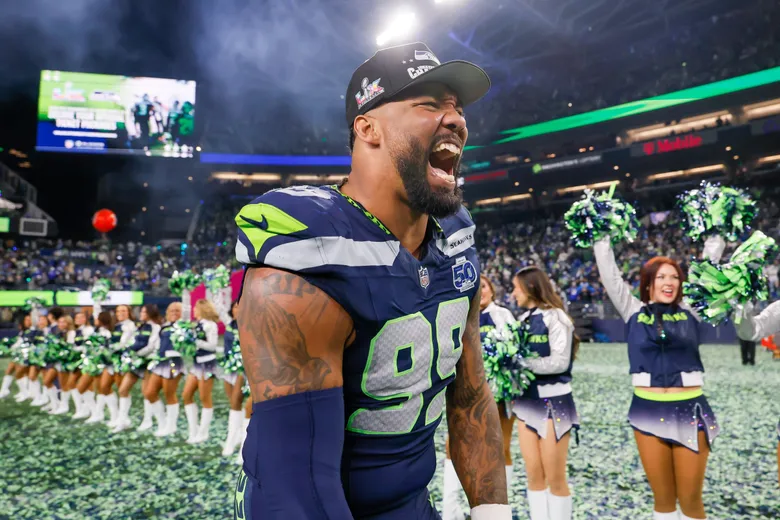
If you want to understand American culture and history in one night, don’t read a textbook — watch the Super Bowl. For a few hours on a Sunday night every February, more than 100 million Americans pause their lives to watch a football game. It’s as close to an American national holiday as you can get, excluding the Fourth of July. Group chats revolve around predictions of who will win the big game, with about $1.76 billion wagered through sports parlays. During the game, Americans consume millions of pounds of chicken wings and even more avocados — this year alone, an estimated 280 million pounds of avocados were used for guacamole.
The Super Bowl isn’t just a domestic ritual; it has gone international, with 60 million international viewers tuning in. In 2026, the Super Bowl is no longer simply a sporting event. It is a cultural phenomenon.
At its core, football is a reflection of American identity and culture. The sport evolved in the 1800s, when students at elite universities modified the rules of rugby to create something new. Walter Camp of Yale University helped formalize the modern structure of the game, earning him the nickname “father of football.” Since its creation, the sport has been about adaptation and reinvention. In 1922, the National Football League (NFL) was created. The popularity of the game carried into the 1950s with the sport at the collegiate and professional level becoming publicized by television streaming and growing commercial investment. The first Super Bowl in 1967 made professional football a defining American pastime. What had once begun as a college experiment turned into a billion-dollar institution.
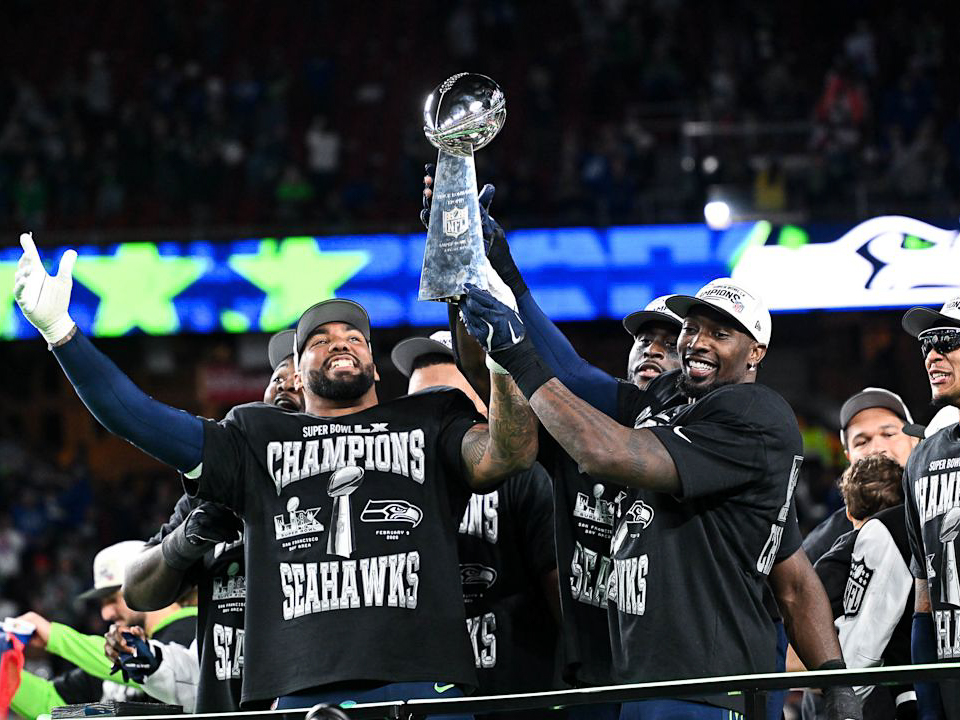
Now, the Super Bowl isn’t only about winning the Vince Lombardi Trophy, but also about the magnitude of the game. The halftime show is just as anticipated as the game itself, pulling viewers who put on the game for the sole intention of watching the show. For example, Bad Bunny’s 2026 show averaged 128.2 million viewers and generated 4 billion views within 24 hours of airing.
The commercials are equally as important. Companies like Budweiser spend millions of dollars for a one-minute long commercial in hopes that the ad will attract viewers to buy their product. The event reflects a culture that blends competition with entertainment, tying it all together with a bow of consumerism. Football itself mirrors deeper values, rewarding specialization and strategy. Every player has a defined role, yet no individual can succeed alone. While the sport glorifies a star quarterback, there’s a heavy dependency on coordinated teamwork. This balance between individualism and collective effort reflects the American image: independent, but ultimately reliant on cooperation.
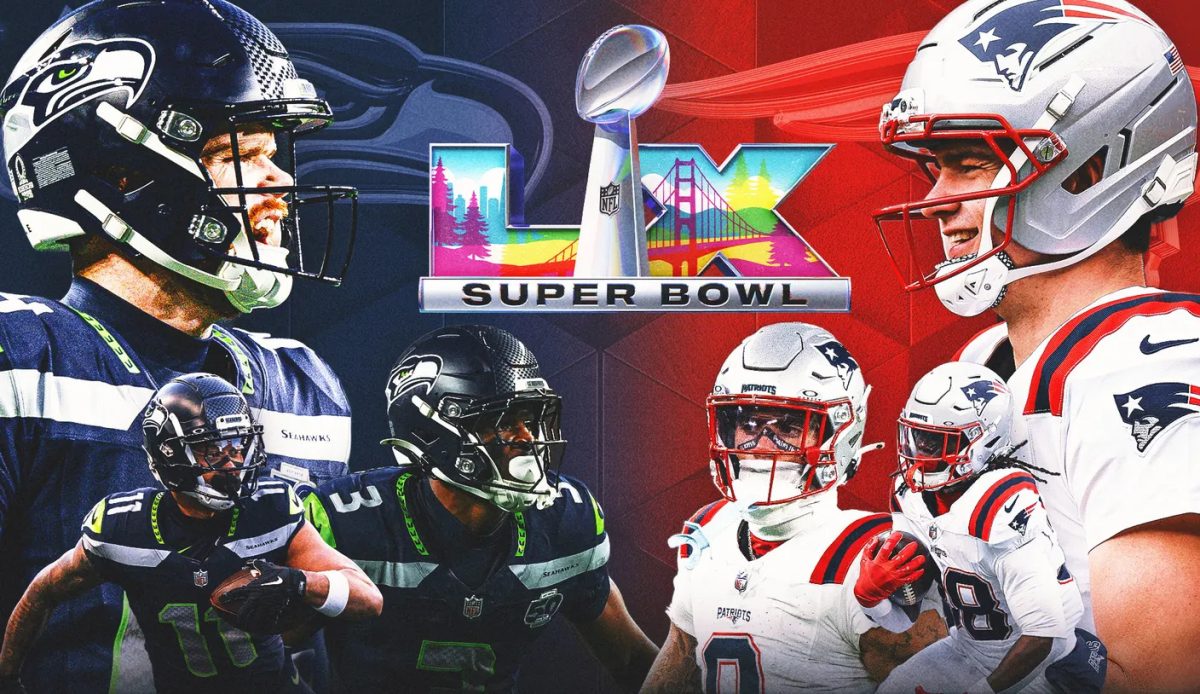
This tension between independence and cooperation is what makes the Super Bowl so entertaining to watch. Americans are drawn to moments where individual excellence is on display in a way that highlights the larger system that makes the small moments possible. As one FCRH ’29 fan put it, “as a New England fan, there is something so important about how even though I love Drake Maye, I know it takes the whole team.” We celebrate the individual, but we admire the structure that supports them, which ultimately captures the emotional contradiction that is at the center of the game.
It also explains why so many people tune in even if they have not followed the regular season games. The Super Bowl is not just the final game of a long schedule; it can be viewed as a culmination of a narrative that simplifies months of competition and hard work into one night. There is no redo or drawn out ending. One winner and one moment. One of my friends admitted “I didn’t watch a single game all year, but I’d never miss the Super Bowl.” Beyond the game itself, the event pulls this attention because it has become culturally unavoidable. You can care about any aspect of the event — the halftime show, the commercials, the betting pools or the food — as much as the score.The Super Bowl has mastered the art of being more than football through entertainment.
The Super Bowl has innovation with layers of tradition through new technology, new halftime productions and new storylines every year, but it’s always able to be framed as the biggest and boldest version of itself. Americans are connected to an identity focused on originality and self-definition. We admire reinvention. We celebrate extravagance. We gravitate towards how the Super Bowl is a once-a-year event. And, most importantly, in times of political, economic and social uncertainty, the Super Bowl is something reliable. It arrives every February, giving people a shared date on the calendar when, regardless of disagreement or division, we can all sit down to watch the same game. This consistency is what makes it a cultural anchor.
Americans care about how the game reflects how we see ourselves: inventive, independent, ambitious and determined to stand apart. It also reminds us that independence does not mean isolation. For one night, strangers cheer in the same bars, families and friends gather around the same TV screens, and conversations are able to stretch across differences. In a country that struggles with separation, the Super Bowl is a moment of togetherness. The world watches because for one night, all positive American traits are on display and concentrated into a single, uniquely American spectacle that manages to unite while celebrating being one of a kind.
Kelly Buban, FCRH ’29, is a journalism major from Middlebury, Connecticut.