































































































































































































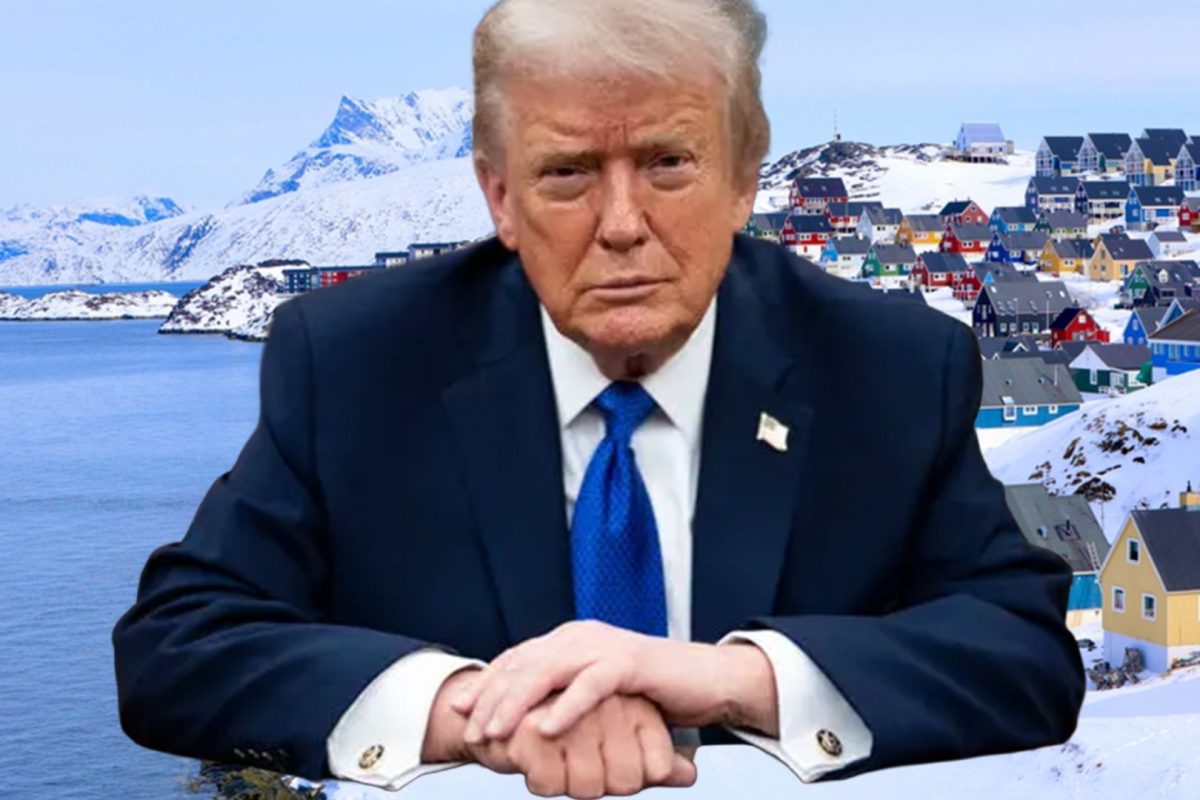
Trump’s interest in Greenland is primarily real-estate related. The number one factor considered when evaluating a property’s value is always location. On the surface, Greenland appears to be an ice sheet with a population below 60,000; however, Greenland also has a prime strategic location in the Arctic Circle. The island also contains many untapped natural resources, and if China’s interest in this Danish territory tells us anything, it’s that our adversaries know this as well.
Trump has expressed that gaining control of Greenland is a matter of national security, but realists recognize that this is extremely unlikely. A purchase of Greenland would be the largest real estate deal of all time and a military takeover would cause unprecedented damage to our relationships with allies in Europe.
Complicating things further, the idea of Greenlandic independence from Denmark has been gaining traction on the icy island. A 2025 poll found that 84% of Greenlanders want independence, but if achieved, independence would end a 1951 pact between Denmark and the United States that gave the U.S. military access to the island to build military bases.
Trump has a goal of bolstering security in the Arctic and gaining access to the island’s untapped resources. Despite the complexity of the situation with Greenland, Trump resorted to old tricks. In his book “The Art of the Deal,” Trump explains that his dealmaking tactics are simple: “I aim very high, and then I just keep pushing and pushing to get what I’m after.”
Trump’s apparent obsession with gaining total control of Greenland, complete with Truth Social posts, trips and other media statements, was the first phase: aim high. By repeatedly expressing his interest in the public sphere, he made it known and credible to world leaders and the public.
Of course, this threat to Greenland’s sovereignty sparked condemnation from people in Greenland, Denmark and their National Atlantic Treaty Organization (NATO) allies alike. Additionally, the successful Operation Resolve to capture Venezuelan dictator Nicolás Maduro, when combined with several statements by Trump, seemed to suggest that obtaining Greenland by using military force was not off the table. Clearly, Trump has a strong position to negotiate from on the global stage, but that does not change the complexities of the situation.
Aiming high is a setup to gain favorable outcomes in deals. In “The Art of the Deal,” Trump also wrote, “sometimes I settle for less than I sought, but in most cases, I still end up with what I want.” As it pertains to Greenland, the outcome of the deal could be viewed in two ways: Trump settled for less than he sought (complete control of Greenland) but got the things that he wanted (more military bases in Greenland), or Trump aimed high and never intended to fully control Greenland, only using full control as a negotiating strategy to gain favorable terms. I argue that he was only aiming high to secure favorable terms due to the undeniable realities of the situation and the precise objectives of security and resources.
Trump’s strategy has had the effect of causing accelerated action, which is essential for business and national security. Much of the Greenland drama culminated at the Davos summit, where Trump secured a deal — or at least a framework — with NATO. In a speech, he threatened tariffs towards allies who stood in his way, which was the final nail in the coffin. By the evening, Trump announced he had reached a deal with the Secretary General of NATO Mark Rutte.
While nothing is set in stone, the proposal is very favorable to the U.S. and its allies, as well as its shared security interests in the Arctic. The plan would increase the NATO presence in the Arctic to counter Russia. The 1951 pact with Denmark would be updated, essentially granting the U.S. sovereignty over pockets of land via bases in the territory. Most importantly, Russia and China would be restricted from resource extraction on the island.
If this deal, or anything like it, fully materializes, then Trump will have triumphed once more. Through his negotiation, he will have gained all his national security interests, economic interests and additional territorial interests at no cost.
Of course, some people will criticize his negotiating tactics as being strongman tactics or detrimental to international relations. However, one cannot deny that his tactics are effective. They must be effective so we can counter our adversaries abroad, namely China and Russia. These adversaries are shared with our allies; the deal the president is working on will benefit our allies and promote peace, stability and economic development in Greenland and the world.
So, while Greenlanders may not be reciting the pledge of allegiance any time soon, Trump should be happy with the outcome of his negotiations so far.
Jayson McArdle, GSB ‘29, is a finance major from West Orange, New Jersey.
