
























































































































































































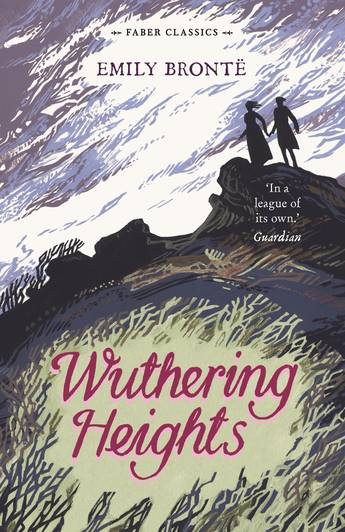
“Wuthering Heights” by Emily Brontë is one of those books that people are hesitant to read. It has a reputation for being tough to like, dark and emotionally intense, and in many respects, that reputation is well-earned. However, that caution frequently obscures the novel’s true strength, peculiarity and memorability. “Wuthering Heights” is neither a neat Victorian morality story nor a cozy romance. Rather, it is an unvarnished examination of socioeconomic class, obsession, loneliness and the enduring effects that love and cruelty may have on generations.
One of the book’s most notable features is its mood, which is set on the desolate Yorkshire moors. The characters’ emotional lives are shaped by the landscape, which is more than just a setting. The idea that this drama takes place outside the bounds of civility is reinforced by the harsh, untamed environment, which reflects the unpredictability of the people who live there. Because of Brontë’s vivid, and frequently cruel, writing, the reader is drawn into the same emotional storms that shape the characters’ decisions. The story feels tense even in the absence of dramatic action, as though something is constantly about to break.
The absence of conventionally “likable” characters is one of the story’s most noticeable features. Instead of asking the reader to condone their actions, Brontë asks us to simply comprehend them. Despite their extreme flaws, selfishness and cruelty, the characters are never superficial. Rigid social hierarchies, emotional neglect and an intense need for control and belonging all influence their goals. The novel’s intricacy is what makes it so captivating; it defies easy categorization and forces readers to sit back uneasily.
The way love is handled in the book is rather unusual. Brontë depicts love as devouring and destructive when unbridled, as opposed to kind or redemptive. In “Wuthering Heights,” love is tightly associated with pride, power and identity, making it difficult to distinguish between dominance and devotion. This strategy may seem disturbing to readers who are hoping for a traditional love classic, yet it is precisely this intensity that has made the book survive as a classic. Brontë suggests that love can be just as harmful as it is passionate, challenging the notion that it is necessarily moral or healthy.
Equally important is the novel’s exploration of social class and inheritance. Status dictates nearly every relationship in the book, influencing how characters see themselves and one another. Brontë exposes how rigid class structures can warp emotional development, turning resentment into legacy. The consequences of early choices do not fade with time. Instead, they ripple outward, affecting people who had no part in the original conflicts. This generational weight gives the novel a sense of inevitability that feels almost tragic.
Despite being published in 1847, “Wuthering Heights” feels remarkably modern in its emotional honesty. Its focus on trauma, emotional repression and cyclical harm resonates strongly with contemporary readers. This relevance may explain why the novel continues to attract new audiences and adaptations. With a new film adaptation set to be released in February, “Wuthering Heights” is once again entering the cultural spotlight. The upcoming movie offers an opportunity for audiences unfamiliar with the novel to encounter its story and message, but the book itself remains unmatched in its psychological depth. Brontë’s language allows readers access to inner lives that no visual adaptation can fully capture.
That said, “Wuthering Heights” is not a novel for everyone. It demands patience and emotional resilience. Readers looking for clear heroes, moral resolutions or comforting messages may find it frustrating. But for those willing to embrace its darkness, the novel offers a profound examination of human nature. It asks difficult questions about responsibility, desire and whether people are capable of escaping the worst parts of themselves.
Ultimately, “Wuthering Heights” is a novel that lingers. It does not aim to please, it aims to unsettle and provoke thought. Its endurance as a literary classic lies in its refusal to simplify emotion or offer easy answers. Whether revisited through its pages or encountered for the first time before seeing the upcoming film that comes out on Valentine’s Day, “Wuthering Heights” remains a challenging and deeply rewarding work — one that proves some stories are meant to haunt us rather than comfort us.