

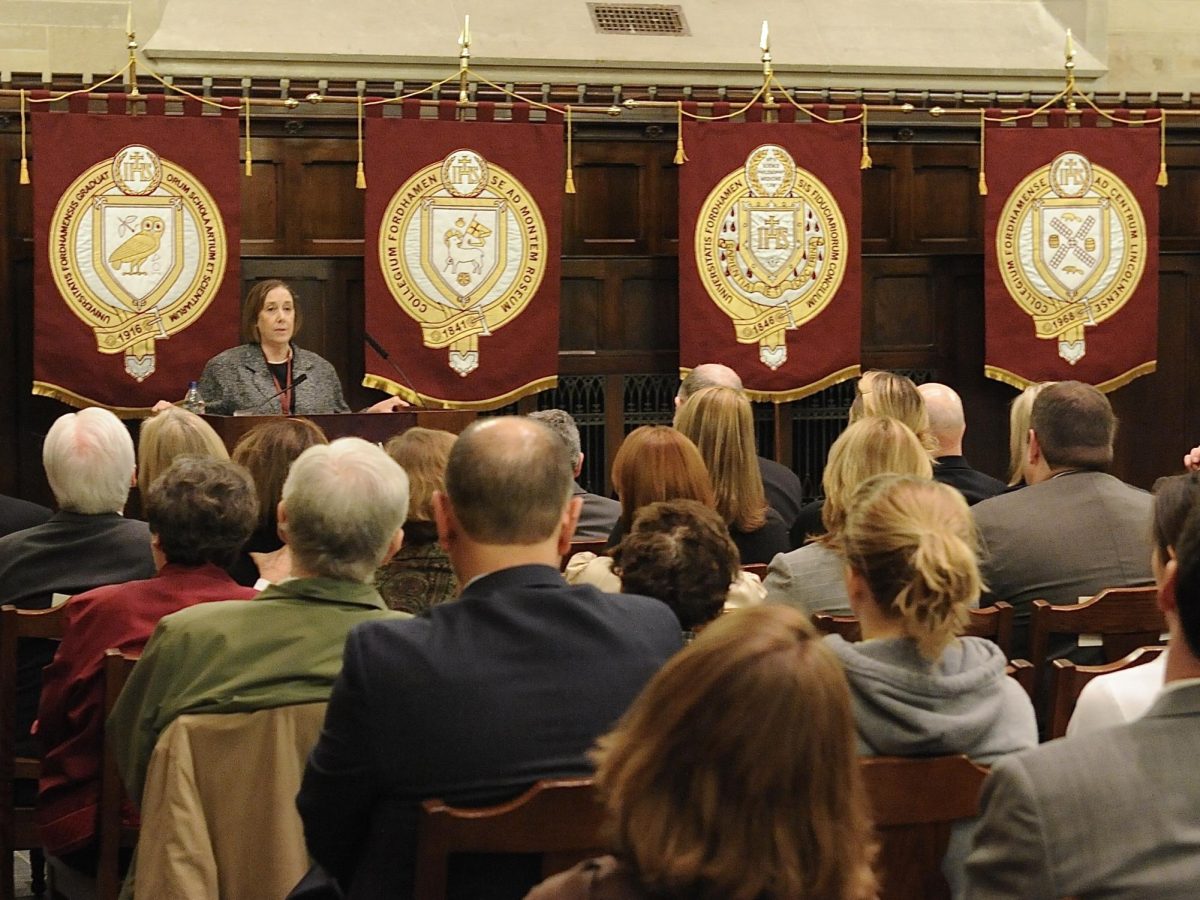

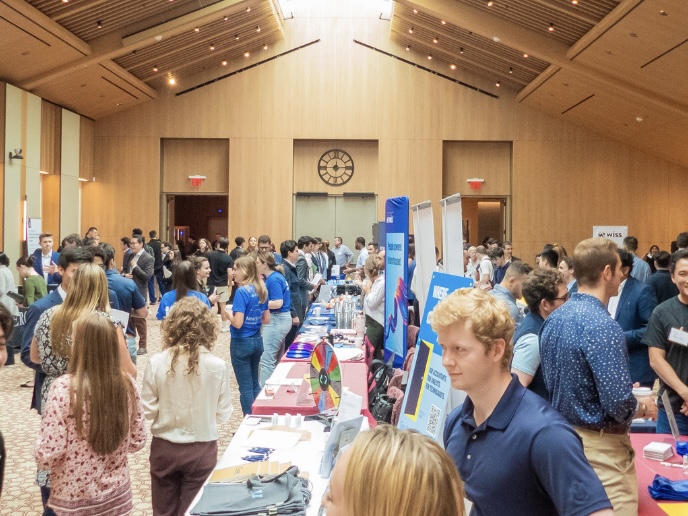








































































































































































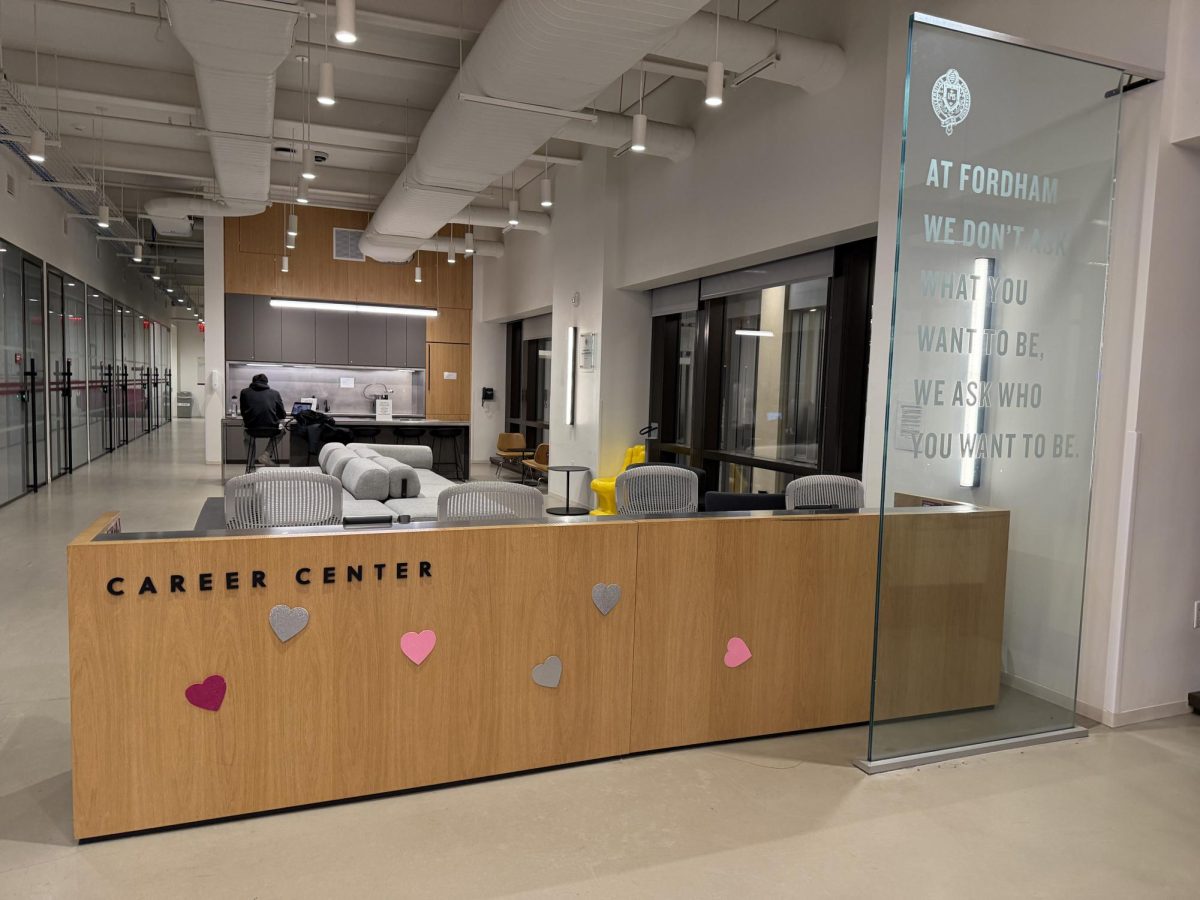
Fordham University’s Career Center held an event for language majors and minors on the transformation of a language education into careers on Feb. 11. The event featured Fordham alumni working in fields ranging from journalism and international affairs to healthcare and education, and featured a panel discussion followed by small groups for individual questions and networking.
Alumni panelists provided concrete examples of how language skills shape career trajectories. Madeleine Hilf, FCLC ’22, who works in media relations, said that her proficiency in Spanish allowed her to secure coverage with major Spanish-speaking outlets such as Univision and Telemundo, which enhanced her professional profile. She credited her language education and study abroad experience as foundational to her career path.
Joe Kottke, FCLC ’23, currently works as a panelist for NBC at their Western Hemisphere desk. They noted that the language skills they gained are paramount for their work, in terms of both gathering stories from the ground and translating stories from other news outlets.
“I use my Spanish daily …even in coverage of events that aren’t directly related to a country or a group of people that exclusively speak another language,” Kottke said. “You never know when there’s going to be a critical voice telling a story that you don’t have access to speaking in English.”
Another alumna, Megan Sluzhevsky, FCLC ’21, currently works in research on foreign influence operations at Microsoft. She said during the panel that her knowledge of Russian and Japanese plays a central role in her work in analyzing disinformation campaigns and international media ecosystems. Even when technical skills are the main aspect of a job, she explained, language proficiency enables access to original sources and cultural context that would otherwise remain inaccessible. She also noted that on her team language skills were the primary criteria for hiring.
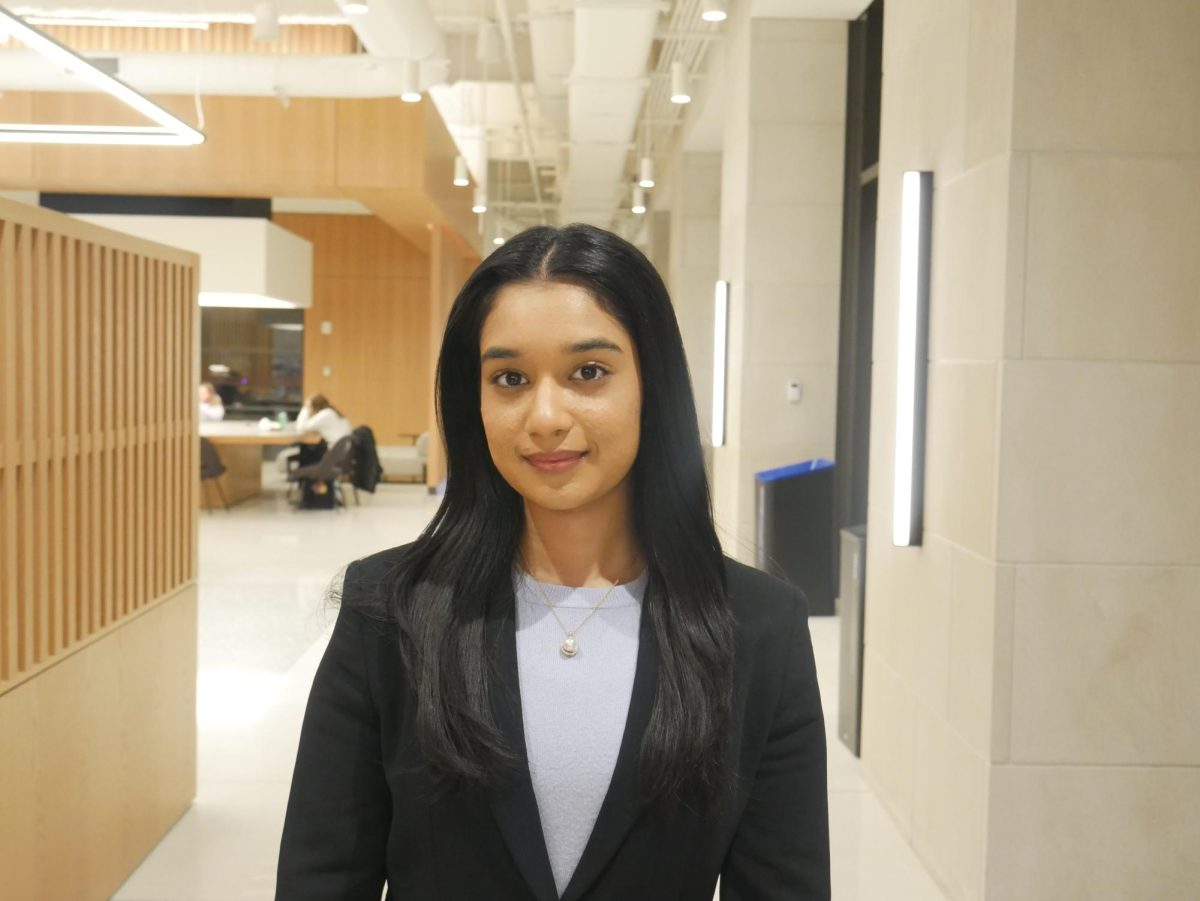
Allyson Blatz, FCLC ’20, assistant director of Student Engagement, organized the event. She reinforced this idea from the perspective of professional development, and observed that more and more students have been incorporating languages into their education.
“I believe a lot of students are realizing what we strived to highlight throughout the panel, which is that knowing another language or gaining [a] meaningful insight into another culture through language learning gives you a competitive edge in the job market,” Blatz said.
The event was a part of a broader effort by the Career Center to provide services to humanities students, for whom a career path is less directly embedded in the curriculum, according to Blatz. For the past few years, the Career Center has held a panel event called Humanities Day, the most recent of which occurred on Feb. 18.
Michael Ossorgin, Ph.D., a professor of Russian at Fordham’s Lincoln Center campus, provided faculty input for the request of the Ram. Ossorgin said he had noticed that studying a language allows students to develop skills that they otherwise might not have been able to develop.
“Learning a language like Russian … trains students to tolerate complexity without panic, to find [a sort of]structure beneath apparent chaos and to suspend [their]judgment long enough to understand something[which is] genuinely foreign to their experience,” Ossorgin said in an email to the Ram.
Both speakers and faculty also challenged the perception that advances in translation technology would reduce the importance of language study. Sluzhevsky said that, in this environment, language, as a soft skill, is best paired with a hard skill, as there is much more to a language than simply speech but proper marketing to employers requires other skills beyond language.
“Just saying that you speak a language is almost like selling yourself too short. You can probably do a lot more with that language than just speak it,” Sluzhevsky said in the panel.
There was agreement on the importance of not only knowing second languages, but the act of studying them as the world becomes increasingly interconnected. Despite this automation, the world’s interconnection and dependence on technology has led to language skills becoming more important than ever.
“We live in an era of algorithmic translation … which creates the illusion that language barriers have collapsed,” Ossorgin told The Ram. “The students who distinguish themselves are those who understand that real communication [is] the kind that builds trust … I’ve seen students who began simply wanting a language requirement emerge with a fundamentally different relationship [with] precision, ambiguity and meaning, all skills that serve them everywhere.”