










































































In collaboration with the Assistant Provost for Corporate Relations Holly Curtis FCRH ’13 and the Office of Alumni Relations, Fordham University hosted the second installment of the “Essential Insights” webinar series, aimed at exploring data science and humanistic thinking and how their combination is important in the workforce. This online event took place on April 21.
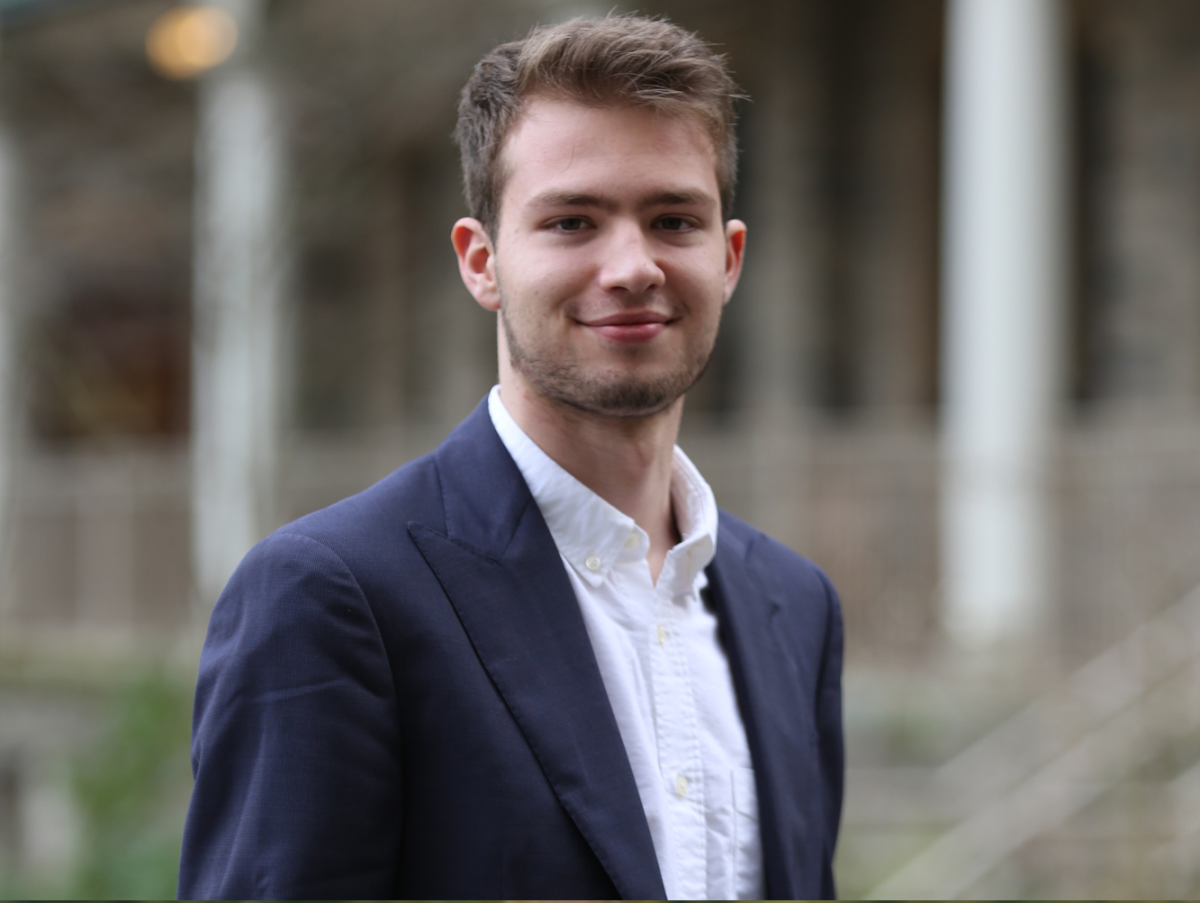
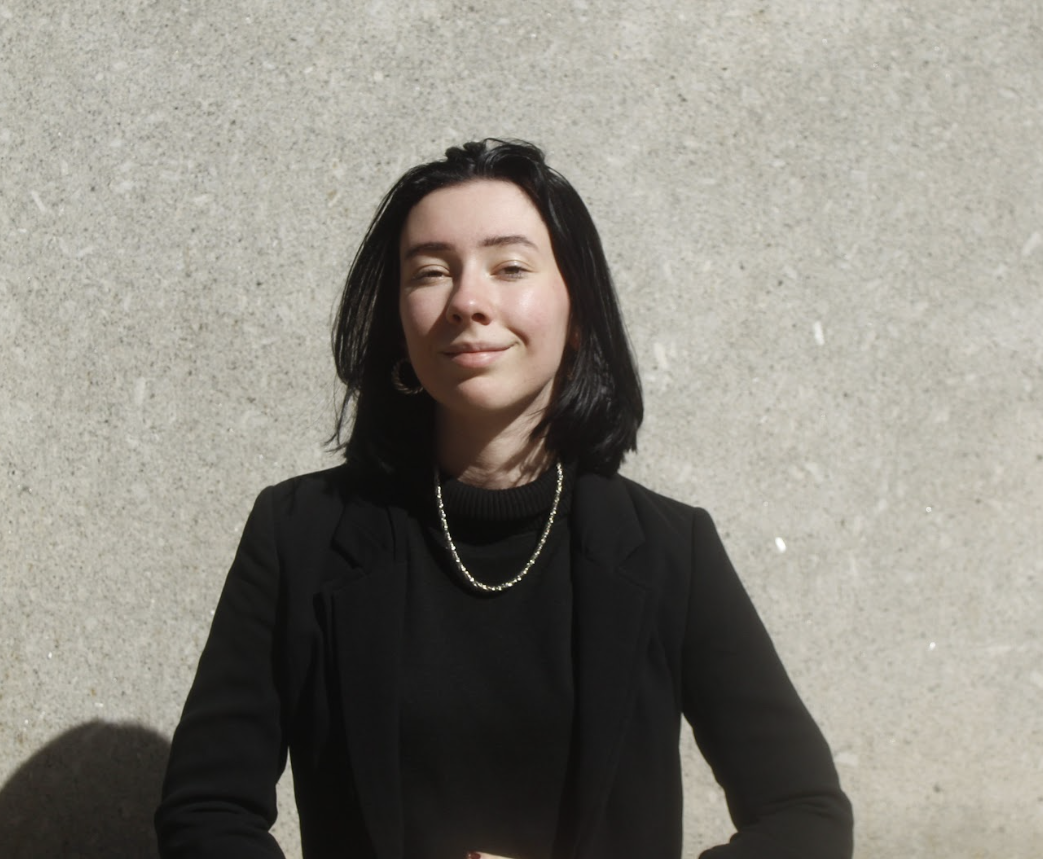
The event was titled “Using Data to Tell Better Stories and Ask Better Questions,” and featured the Director of the Center for Medieval Studies Brian Reilly and LIT Technology Consultant Ivy Raff, FCRH ’03. This session was the second in a four-part series organized by Curtis, in partnership with the Office of Alumni Affairs, and was intended to help alumni, staff and students develop skills that are in high demand in various industries.
“So, what we wanted to create with ‘Essential Insights’ is something a bit more grounded, and a space where you can hear from Fordham faculty who are studying these shifts, and also from Fordham alumni who are navigating them in real time,” Curtis said.
During the event, Reilly was featured as a Fordham faculty member, and used his 20-minute presentation to introduce Fordham’s new Advanced Certificate in Data Humanities: a 15-credit program designed to train humanists, or someone who is devoted to human welfare, in computational methods without turning them into software engineers.
Reilly argued that treating texts as data opens doors to insights that neither discipline could reach alone, and that the certificate was built to address a false choice long imposed on students.
“So, when many of us were in college, the academic world demanded a choice of us. You either majored in the sciences or you majored in the humanities,” Reilly said. “But, as those data humanities stories about Shakespeare and the novel show, such a dividing line today is obsolete.”
Reilly drew on a 2010 study in which an algorithm unexpectedly grouped Shakespeare’s Othello with comedies rather than tragedies. Scholars used this to uncover how the villain Iago manipulates language at the sentence level, which is something humans had missed.
“It is the data scientific approach to texts that calls our attention to Iago’s genre-troubling pronouns, and it is our humanities domain expertise that allows us to make sense of the results,” Curtis said.
She also pointed to the concept of “Great Unread” and how it relates to current knowledge in archives.
“To tell the story of, say, the 19th-century novel, machines can process the language not just of a dozen canonical works, but of the thousands of what Franco Moretti, who pioneered this work, calls the Great Unread,” Curtis said. “The digital humanities, the data humanities, allows us to account for the lost 99% of our archives. Texts that sit on shelves never to be read … that is, by humans.”
Raff spoke about her work guiding nonprofits and arts organizations through digital transformations. She focused on one residency where she implemented a Salesforce system that unified siloed departmental records into a single database.
“Before that, each department held a piece of the puzzle that never got assembled,” Raff said. “Now, they’re all using a single database that holds the whole portrait of each of their constituents.”
She also described implementing an AI-powered facial recognition system for a client with a large archive of event photos, enabling automatic linking of images of the same donor across decades.
“That’s data telling a human story,” Raff said. “That’s how we use these tools, which are not going anywhere, for non-dystopian purposes.”
During a moderated conversation with Curtis, Reilly and Raff addressed the ethical dimensions of AI adoption. Raff said data security should come before an organization uses AI or automated agents, while Reilly raised broader concerns about the environmental costs of AI development and its integration into military applications.
On the question of human versus AI creativity, both speakers pushed back against the idea of cognitive offloading.
“If we’re allowing these large language models to produce our language for us, we’re allowing them to think for us,” Reilly said.
Reilly said that the chance to share Fordham’s data humanities program with alumni was what drew him to participate.
“It’s a really unique program,” Reilly said. “The other universities in our area don’t offer quite something like this, where humanities is really being totally combined on equal footing with data, scientific approaches to cultural objects.”
Curtis noted that the response to the series has exceeded his early expectations for the events.
“Initially, we were conceptualizing this as something really only for early career professionals, but the appetite was so strong from alum across the board that let’s not pigeonhole ourselves,” Curtis said. “People are looking to reskill or just engage in a thoughtful conversation no matter where they are in their career.”
Each series event costs $15 for alumni, $35 for external attendees and is free of charge for Fordham students. Revenue is distributed among the participating faculty’s academic departments.
Reilly concluded the event with closing advice to graduating students considering careers in the humanities.
“Keep learning, keep the open spirit and hopefully your path will be nonlinear,” Reilly said.