
































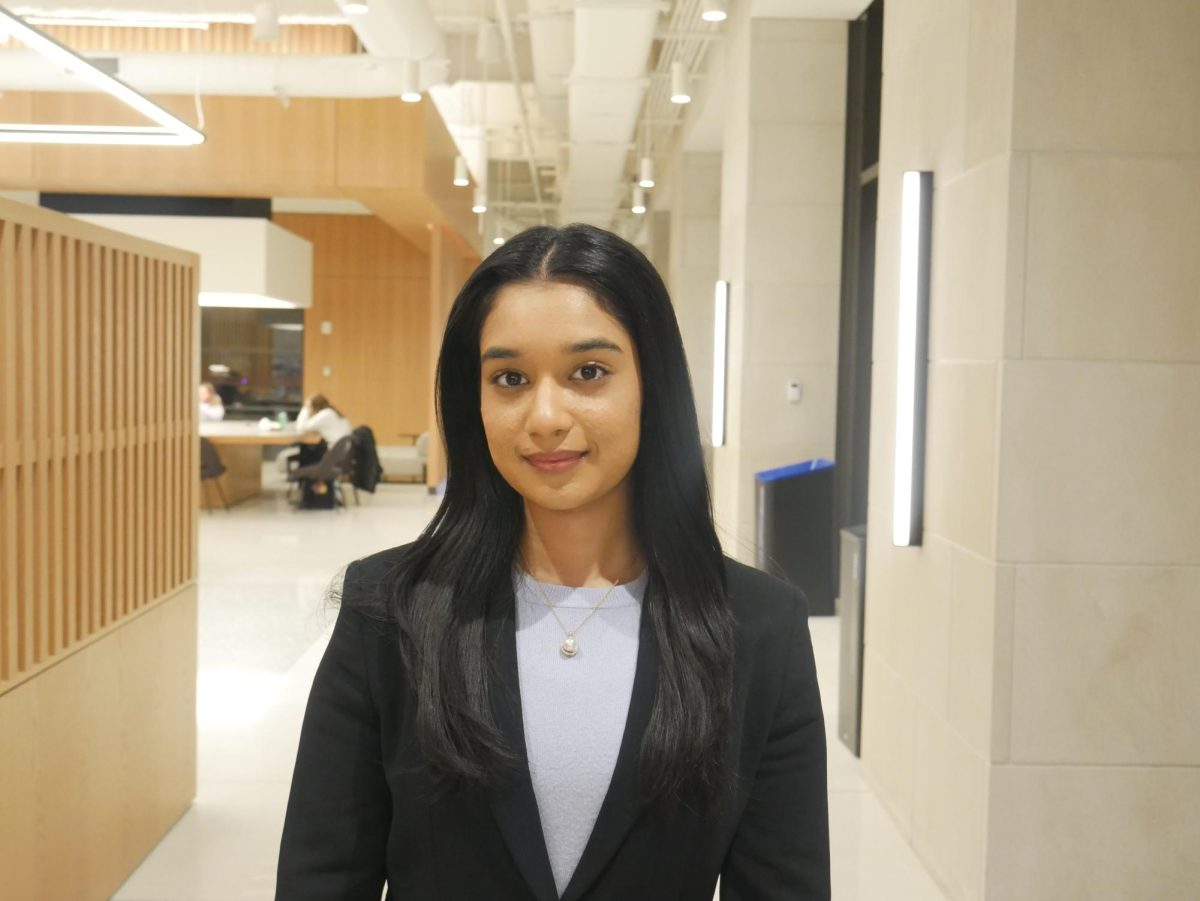
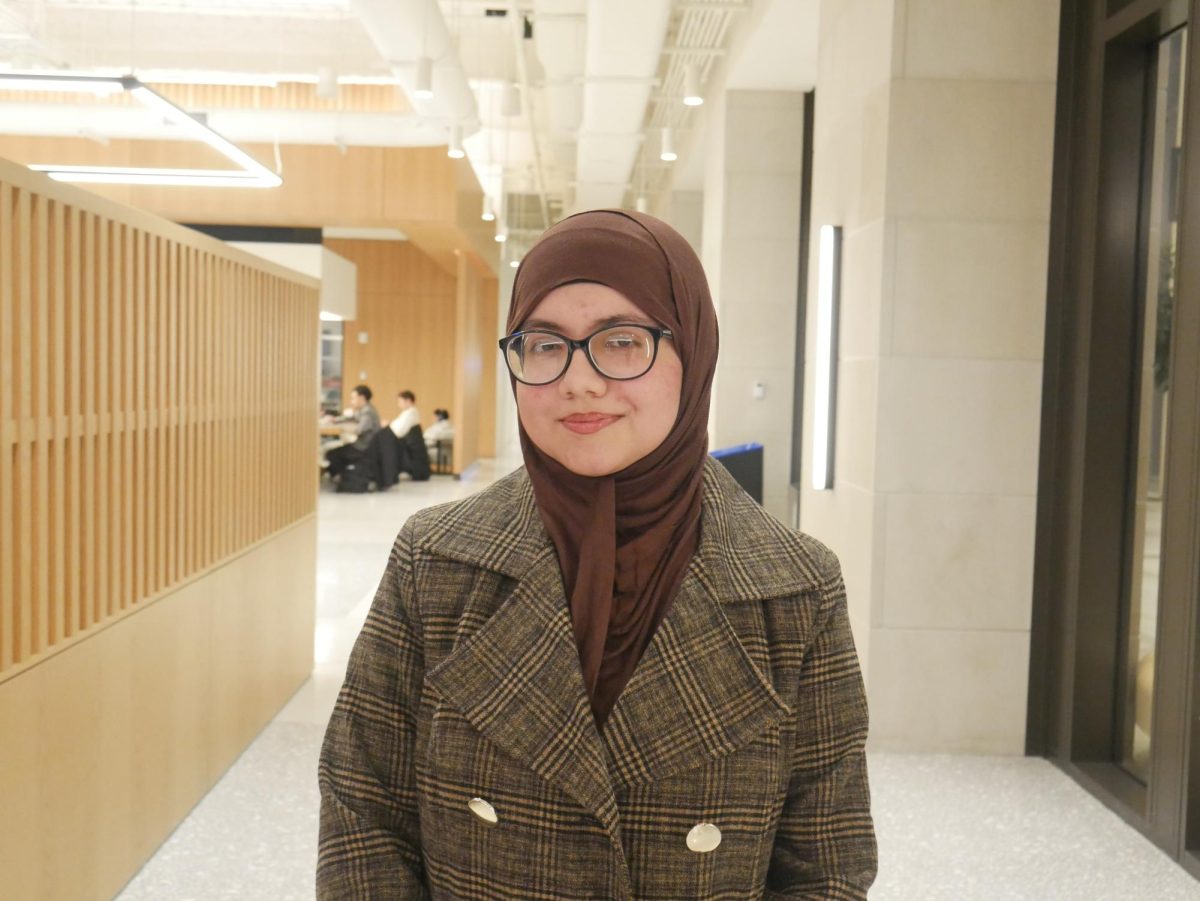





















































































































































When Kellen Zeng, GSB ’25, the former president of Fordham University’s Commuting Students Association, told Grace Shin, FCRH ’28, about how she had been sleeping overnight in the library during finals week because her commute home wasn’t worth the lost study time, Shin, a former 2028 United Student Government (USG) Class Senator, realized Fordham’s commuter students needed more support.
The conversation, which occurred in November of 2024, sparked an initiative that culminated this month when Fordham introduced its first napping pod, located in the McShane Campus Center at Rose Hill. The pilot program represents a new approach to addressing wellness concerns among the university’s commuter population.
Commuter students, who make up a significant portion of Fordham’s student body, face unique challenges that residential students don’t. Long commutes, compressed schedules and limited access to private rest spaces create barriers to academic success and overall well-being.
Shin’s involvement began when she reached out to Counseling and Psychological Services (CPS) in November of 2024, proposing a wellness room for students facing hardships. Her timing proved fortunate.
“To my blessing, Jeffery Ng [director of CPS] informed me that some alumni had made a large donation to CPS, and Jeff wanted to use it for my proposal,” Shin said in an email.
After discussions with the Office of Student Involvement, facilities and CPS, the team decided to start small and focus specifically on commuter wellness. The napping pod concept emerged from months of research conducted alongside members of the Commuting Students Association.
The team considered multiple locations, including a dance room in McShane, a library space during 24/7 finals and midterm hours and other campus areas, before settling on the current McShane location.
“After doing months of research, in the month of February we had a couple of places we could place it,” Shin said. “We had also reached out to some vendors, asking if they were willing to do a pilot program before actually purchasing it, and they were more than happy to come along.”
The current napping pod requires advance booking on Room 25Live and a signed waiver before use. Since its September launch, the pod has attracted users beyond its intended audience.
“I’ve personally seen it being used by members of faculty in which I think says a lot for itself,” Shin said.
For Shin, seeing the project come together in under a year shows that campus change is possible. “I personally think that this is a big step for the Fordham student community as a whole. Commuter students especially!” she said. “I’m proud of the work and time that I have put into this initiative, and seeing it play out in under a full year can hopefully show people that making change on campus is completely possible.”
The future of the napping pod program remains uncertain. Plans for additional pods or expansion to Fordham’s Lincoln Center campus depend on feedback from the current pilot program.
“Currently, I’m unsure as to what the future of these nappods will look like,” Shin said. “We’re going to see how the one nap pod plays out for the community and based on the feedback, we will compensate as necessary.”
Student reactions to the napping pod have been largely positive. Commuter students, in particular, see the initiative as addressing a long-standing need on campus.
“As a commuter student for the past four years I believe that it is extremely important for commuters to have these personal spaces,” said Heidi Lucero-Camano, FCRH ’26.
Genesis Alcantara, FCRH ’26, shares similar enthusiasm for the program’s potential. “I hope to see more of these spaces around campus in the future and I think it is a great start,” she said.
Their sentiments reflect the challenges faced by commuter students who do not have the luxury of returning to a dorm room between classes. For commuters like Lucero-Camano and Alcantara, Fordham’s campus becomes their temporary home for extended periods, making access to private rest spaces crucial. Initial reactions from other students have been positive, though limited, according to Shin.
As midterms and finals are approaching, Shin hopes to see the pod fulfill its intended purpose. “I’m hoping to see it used for its purpose later on during midterms and finals,” she said.
The napping pod initiative represents more than just a place to rest — it is a recognition that commuter students face distinct challenges and deserve specialized support and it marks an important first step toward addressing commuter wellness at Fordham.