





























































































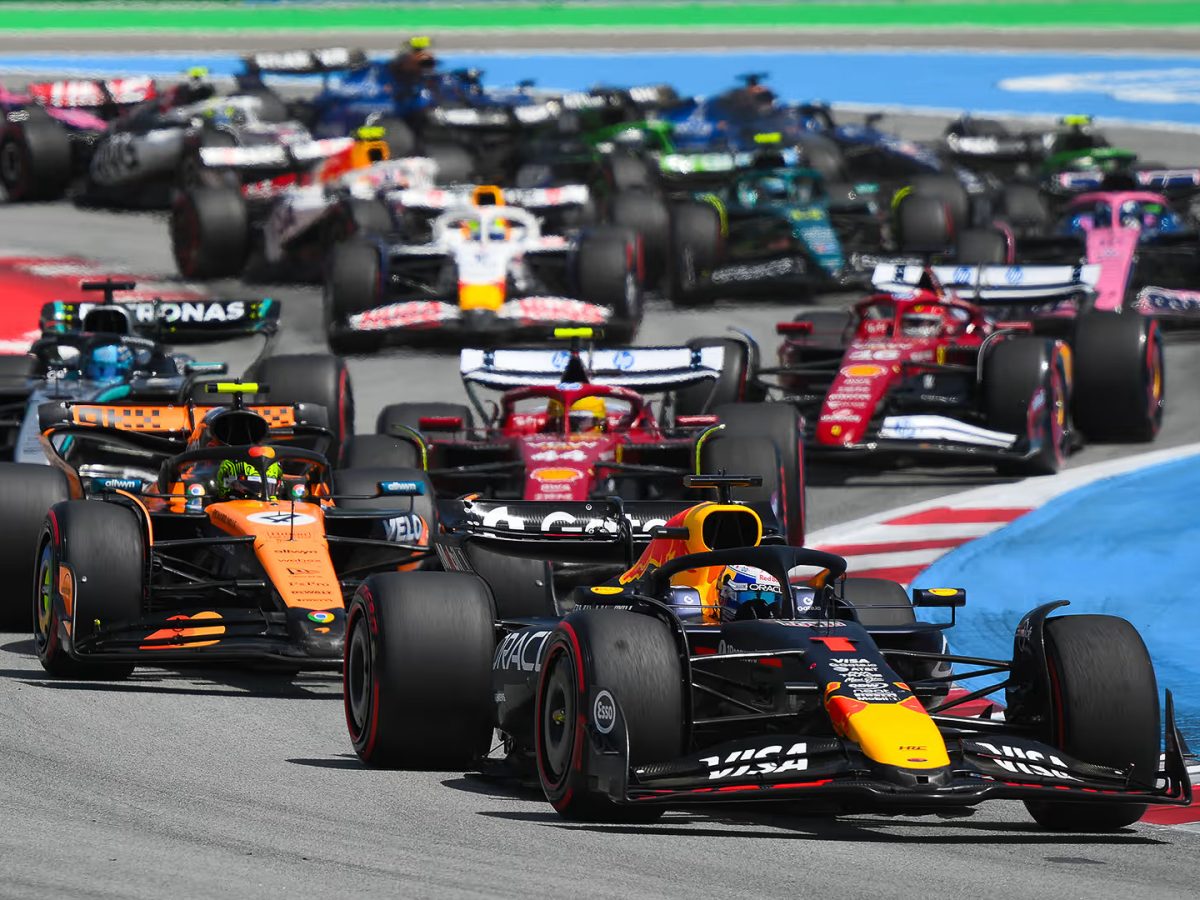
Formula One in 2026 is not just a regulation change. It’s a full reboot with new engines, new teams, returning drivers, teenage rookies and enough off-track drama to fill a streaming series.
This isn’t one of those quiet rule adjustments where the cars look slightly different and everyone pretends it’s revolutionary. This is the kind of shift that scrambles the grid, resets reputations and gives half the paddock a second life. Let’s get into why 2026 matters.
At the center of everything is the new engine formula agreed upon by the Fédération Internationale de l’Automobile (FIA) and Formula One.
The headline is that roughly 50% of the car’s power will come from electric energy. The complicated MGU-H system is out, fully sustainable fuels are in. Energy deployment becomes a strategic weapon. Drivers will have to think like battery managers while going 200 miles per hour.
This matters for two reasons.
First, it makes the sport more attractive to global car manufacturers who care about electrification and sustainability. Second, it resets competitive order. Every team is guessing. Every engine department is sweating. Every technical director is pretending they’re confident. When regulations change this dramatically, dynasties wobble; that’s when Formula One is at its best.
Then, Audi arrives, Ford returns and Cadillac shows up. Audi joins as a full works team, taking control of Sauber and building its own power unit from scratch. This is not a marketing sticker exercise. Audi is going all in. Ford Motor Company returns to Formula One through a partnership with Red Bull Racing, lending hybrid expertise as Red Bull builds its own engines. It’s ambitious. It’s risky. And it’s very on brand.
And then there’s the most American plot twist of all. Cadillac has entered the grid backed by General Motors. After months of politics and negotiations involving Liberty Media and the FIA, Cadillac gets its shot. A proper American manufacturer in a sport that has exploded in popularity in the U.S.
Cadillac went as far as to reveal their livery during the Super Bowl. What’s more American than that?
Three heavyweight brands entering or returning at the same time is not normal. But new teams also mean new seats.
Then, there’s fan-favorite Scuderia Ferrari. Every regulation reset feels like it could be Ferrari’s year. Every winter testing session brings optimism. But this time, there’s something extra in the air.
Charles Leclerc has reportedly been lighting up timing screens with blistering long-run paces in early development simulations. Fast laps are one thing. Sustained race pace is another. But whispers from Maranello, Italy, suggest the 2026 package might finally suit his ultra-precise driving style.
And then there’s superstar Lewis Hamilton. Hamilton in Ferrari red already feels like motorsport fan fiction that somehow became real. Seven-time world champion. The most historic team in the sport. A full regulation reset. It’s cinematic before the season even starts.
But now? Now we’ve added Hollywood-level chaos.
Hamilton is rumored to be dating Kylie Jenner, which means Ferrari won’t just be trending on the racing side of X, it’s trending everywhere. The paddock suddenly feels like a crossover episode between Monaco qualifying and the Met Gala. The pit lane might need a glam squad.
Ferrari used to dominate headlines because of engine upgrades and tactical disasters. Now they’re competing in two championships: Constructors’ and cultural relevance.
It’s the kind of storyline only modern Formula One could produce. High fashion meets high downforce. And honestly? If Ferrari starts winning while Hamilton walks into the paddock in designer sunglasses with paparazzi trailing behind, the 2026 season might break the internet before it breaks lap records.
In one of the more entertaining twists of the silly season, both Sergio “Checo” Pérez and Valtteri Bottas are back in competitive roles.
Checo returns with something to prove. After being overshadowed during Red Bull’s peak dominance years, 2026 offers him a clean slate in a brand-new competitive environment. And Checo with a chip on his shoulder is usually a dangerous version of Checo.
Bottas, meanwhile, feels almost inevitable. He’s experienced, technically sharp and somehow both serious and completely unserious at the same time. In a season full of new engines and fresh teams, a veteran who understands development feedback is valuable.
Then we swing from veterans to teenagers.
Rookie Arvid Lindblad represents the other side of the 2026 story: young, aggressive and completely fearless. Lindblad has been moving through the junior ladder at a speed that makes team principals nervous and fans excited. Dropping a rookie into a brand-new regulation era is either brilliant or chaotic. Possibly both.
Historically, rookies benefit when everyone is learning new machinery. If the car characteristics change dramatically, experience gaps shrink. That opens the door for a breakout moment.
The cars themselves are changing in ways that should actually improve racing performance. They’re smaller, lighter, shorter wheelbases and less bulky on tight street circuits.
Active aerodynamics are being introduced in a controlled format. Drivers will switch between high downforce and low drag modes. Instead of relying only on Drag Reduction System cars will be able to manage airflow more dynamically.
Energy deployment becomes tactical. Drivers will decide when to harvest and when to attack. Overtakes might not just come from slipstreaming but from smarter electrical deployment. In theory, this creates more unpredictability.
Every new era is a gamble. In 2014, Mercedes-AMG Petronas Formula One Team nailed the hybrid formula and built a dynasty. In 2022, Red Bull mastered ground effect first. In 2026 there could be another runaway team. Or the field could be compressed in ways we haven’t seen in years.
With Audi building from scratch, Cadillac trying to establish their credibility, Ford backing Red Bull’s engine experiment, Ferrari chasing redemption, veterans returning and a teenage rookie ready to cause chaos, the grid feels unstable in the best possible way.
Formula One didn’t merely tweak the rulebook. It pressed reset. And when the lights go out for the first race of 2026, we won’t just be watching new cars. We’ll be watching reputations on the line, manufacturers proving a point, veterans chasing redemption, rookies chasing glory and maybe a Ferrari driver setting the fastest lap while his teammate trends on social media.
If this era delivers even half of its potential, it won’t just matter. It’ll be unforgettable.

