





















































































































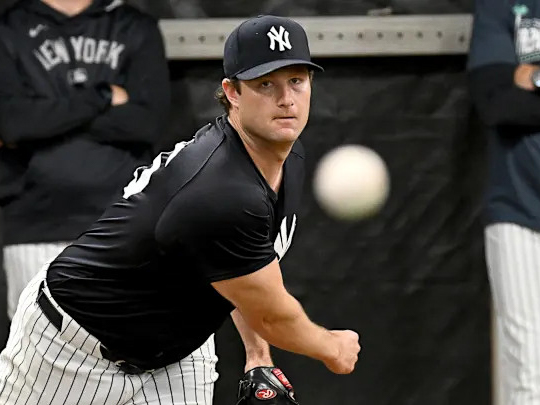
When a baseball pitcher suffers a serious elbow injury, the solution is almost always Tommy John surgery. Officially known as ulnar collateral ligament (UCL) reconstruction, the surgery involves replacing the damaged ligament with a tendon graft taken from elsewhere in the body. While the procedure has helped countless athletes return to the mound, it also comes with a long recovery process that can sideline players for more than a year.
However, in recent years, a different surgical approach has come to the forefront of the baseball world. It is known as UCL repair with an internal brace, and it offers a faster return to play for the right athletes.
According to Dr. Josh Dines, an orthopedic surgeon at Hospital for Special Surgery (HSS), the internal brace is best understood as a way to reinforce the body’s natural ligament rather than replace it. Instead of harvesting a graft, surgeons repair the existing UCL and strengthen it using a heavy-duty suture tape anchored between the humerus and the ulna. The added support acts as a stabilizing structure while the ligament heals.
Dines explained that while the materials themselves are not new, the innovation lies in how they are used. The internal brace functions much like a “belt-and-suspenders,” preserving the ligament an athlete is born with, while adding an extra layer of protection to increase resistance to reinjury. In practice, the ligament is repaired back to the bone, and the suture tape reinforces the repair, effectively thickening the construct and reducing strain during early recovery.
The results have been promising. Not only have outcomes been strong, but recovery timelines have shortened considerably. While pitchers undergoing traditional UCL reconstruction typically require around 14 months before returning to competition, those who undergo a repair with an internal brace often return in six to eight months. For pitchers, that difference can amount to an entire season of missed time regained.
For this reason, the procedure has become increasingly common. Dines noted that repairs now account for a significantly larger share of UCL surgeries than they did just a few years ago, particularly in certain patient populations. Still, reconstruction remains the gold standard for MLB pitchers and high-level collegiate athletes with poor tissue quality or extensive ligament damage.
That distinction is critical. The internal brace is not a universal solution and Dines emphasized that surgical decisions depend heavily on the condition of the ligament. Athletes with acute injuries, partial tears or avulsions — where the ligament pulls away from the bone — tend to be better candidates for repair. In contrast, chronic degeneration or complete breakdown of the ligament often necessitates reconstruction.
In recent years, surgeons have also begun incorporating the internal brace into reconstructions themselves. If reinforcing a repaired ligament improves strength, the same logic applies to reconstructed ligaments. As a result, the internal brace is now being used not only as an alternative to Tommy John surgery, but also as an adjunct to it.
Despite growing public attention, Dines cautioned against oversimplifying surgical choices. High-profile cases can be misleading, as details of procedures are often unclear unless operative reports are made public. Surgeons may also differ in techniques based on experience, comfort and prior outcomes. There is no single “right” way to perform UCL surgery; there is only what works best for a given patient, based on tissue quality, tear pattern and the surgeon’s judgment.
Ultimately, return-to-play success rates are similar between UCL repairs with internal bracing and reconstructions, with one recent study by Dugas et al. finding that 98% of athletes in the repair group and 99% in the reconstruction group returned to their preinjury sport. However, the key difference lies in timing. When repair is appropriate, the shorter recovery window makes it a more appealing option, provided the ligament can withstand it.
Beyond surgery, nonoperative treatments such as platelet-rich plasma (PRP) injections also continue to play a role, particularly for athletes trying to avoid the operating room altogether. Their effectiveness varies widely depending on the severity and location of the tear, as well as the athlete’s level of play. While PRP may be highly effective for younger or lower-level athletes with mild injuries, it is far less reliable for professionals with complete tears.
As throwing velocities increase and elbow injuries remain prevalent across all levels of baseball, the internal brace represents a shift toward more individualized care. Rather than choosing from a fixed menu of options, surgeons are increasingly tailoring treatment to the athlete in front of them.
For pitchers facing an uncertain future after a UCL injury, the internal brace is not a shortcut. For the right candidate, though, it may be the difference between losing a season and getting back on the mound sooner than expected.



Ohm Sharma • Feb 13, 2026 at 7:58 pm
Hi Anand!
Thank you for sharing the article.
I like how you took the time to explain what a Tommy John surgery is before diving in and talking about the latest medical innovation that gives pitchers more choice and autonomy over their careers. Although you stated that the UCL Repair is not a universal choice that is right for everyone, the fact that there is evidence showcasing that repair leads to faster recovery times for those with more acute and partial tears seems to suggest that that such principles may be applied to speed up recovery times from reconstruction processes. Aside from pitchers and other athletes, the innovations described in this article would also be immensely helpful for non-athletes who suffer from injuries such as falling on an outstretched hand, suffering a direct blow to the elbow, or performing exercises improperly such as weightlifting and tennis.
It seems that over the course of time, it is highly likely that athletes-and non-athletes where such procedures described in the article would be applicable-will see faster recover and have more choices for treatment, allowing them to have more autonomy over the trajectory of their careers and their own well-being.
I look forward to seeing more progress made in speeding up the recovery times from UCL injuries.