





































































































































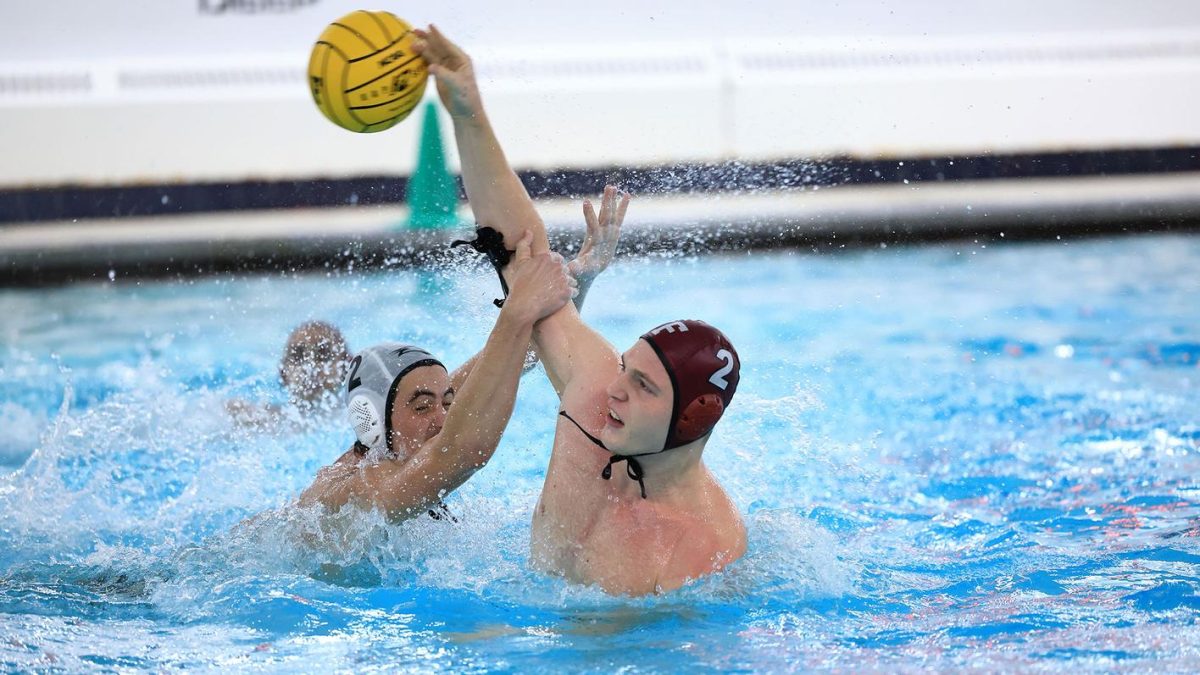












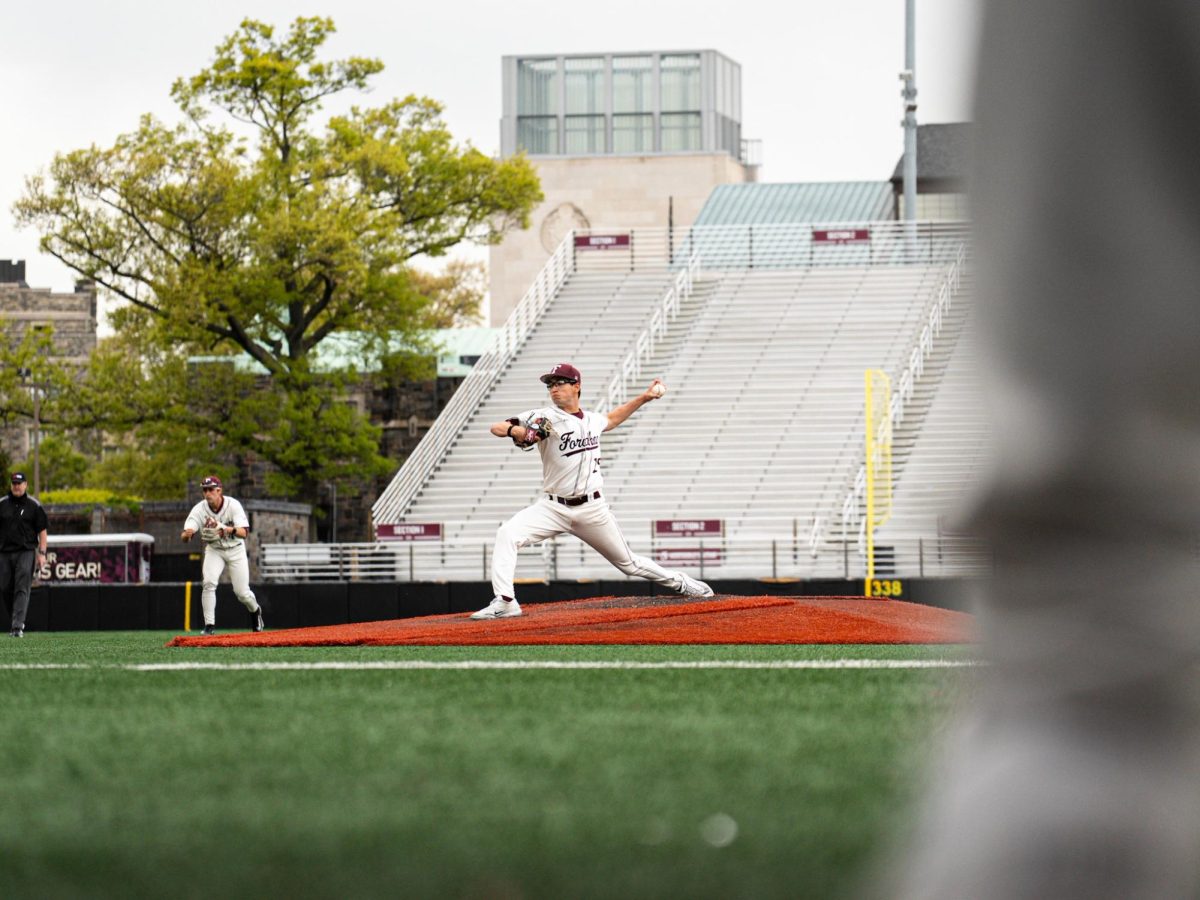













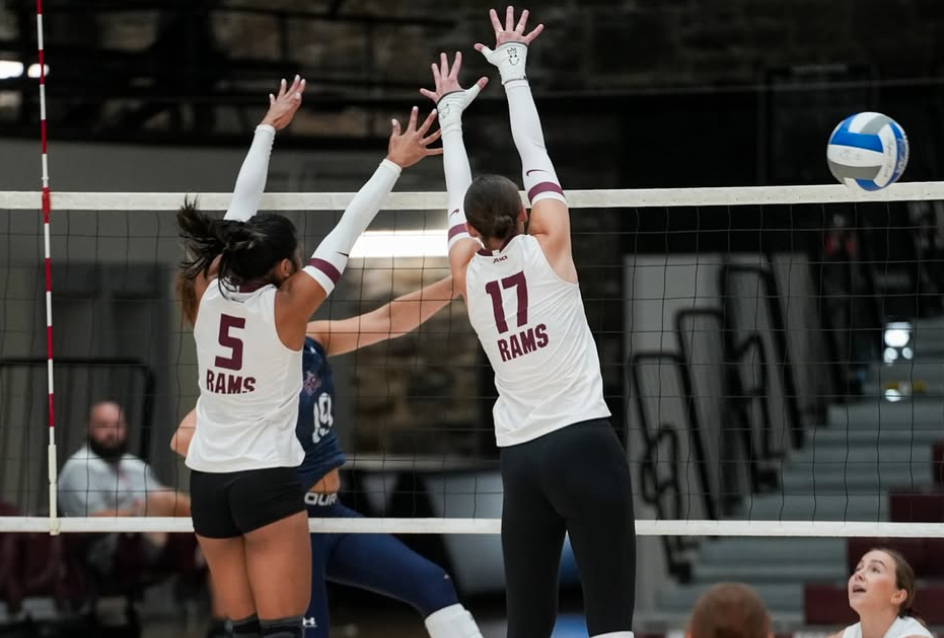

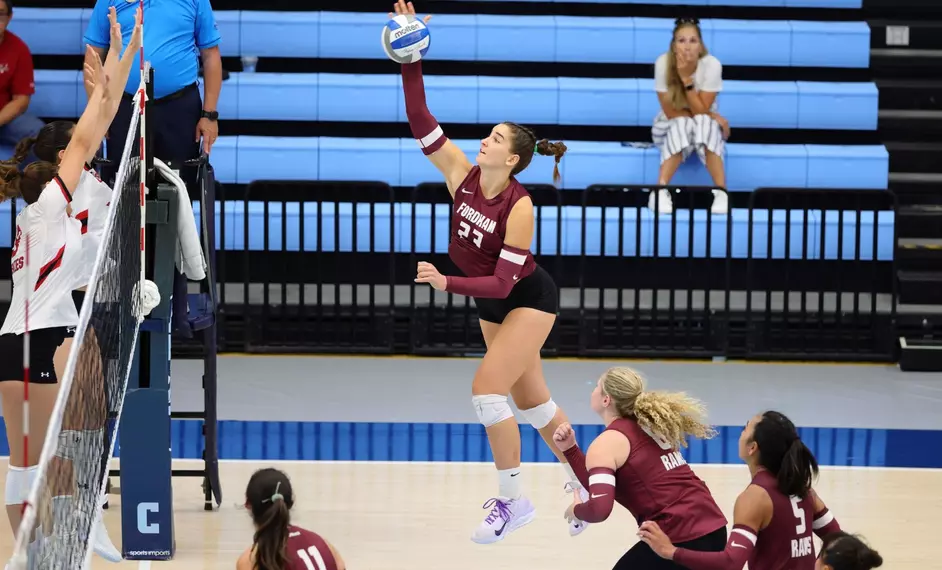























Pain is your body’s desperate cry for you to stop and allow time for rest and recovery. However these days, it is common for athletes to push through overwhelming amounts of pain to continue competing in their sports. Their stories are then celebrated in the media for their determination and mental fortitude. This cycle of praise could be reiterating a negative feedback loop, encouraging athletes to constantly put themselves at risk. This perceived grit may ultimately force athletes to retire due an exacerbation of their injuries.
This pattern can be observed all throughout sports history. The most recent example is Lindsey Vonn’s turbulent downhill ski racing career. For those who do not follow ski racing as closely as I do, let me offer a brief overview of her timeline. Vonn has been on the Alpine World Cup Circuit since 2000 and competed in her first Olympics in 2002 in Salt Lake City. She found incredible success in the speed events (Downhill and Super-G) and earned a reputation as a risk-taker and extremely aggressive skier. Vonn won multiple medals in the 2010 Vancouver Olympics, including the gold in the downhill. However, following her Olympic success, Vonn began to struggle with a multitude of knee injuries that kept her in and out of the circuit. In 2019, she announced her retirement following an irreversible knee injury. Vonn was leaving her professional ski racing career holding multiple records. She had won four overall World Cup Titles, eight World Championship medals and 82 World Cup wins, the most of any female ski racer at the time. After five years vacant from the World Cup competition, Vonn returned in the 2024 season to prove herself yet again on ski racing’s biggest stage. She found herself on the podium at the 2025 World Cup Finals in Sun Valley, Idaho. This season, Vonn made history as the oldest woman to ever win a World Cup race at 41-years-old in Zauchensee, Austria. By qualifying for the 2026 Milano Cortina Winter Olympics, she has now attended the most Olympic Games of any U.S. female ski racer of all time.
The week before this year’s Olympics, Vonn crashed in a downhill race, rupturing her left ACL again, and was airlifted from the race course. Very soon after this news broke, she made it clear that this injury would not prevent her from competing in the upcoming Olympics. In the wake of this news, Vonn received overwhelming support from fellow professional athletes and fans around the world. Vonn successfully completed two downhill training runs prior to race day. She was adamant that she felt strong and that her knee felt stable in a brace while skiing. With all of these positive messages coming from her team, many were confident that success was still a possibility.
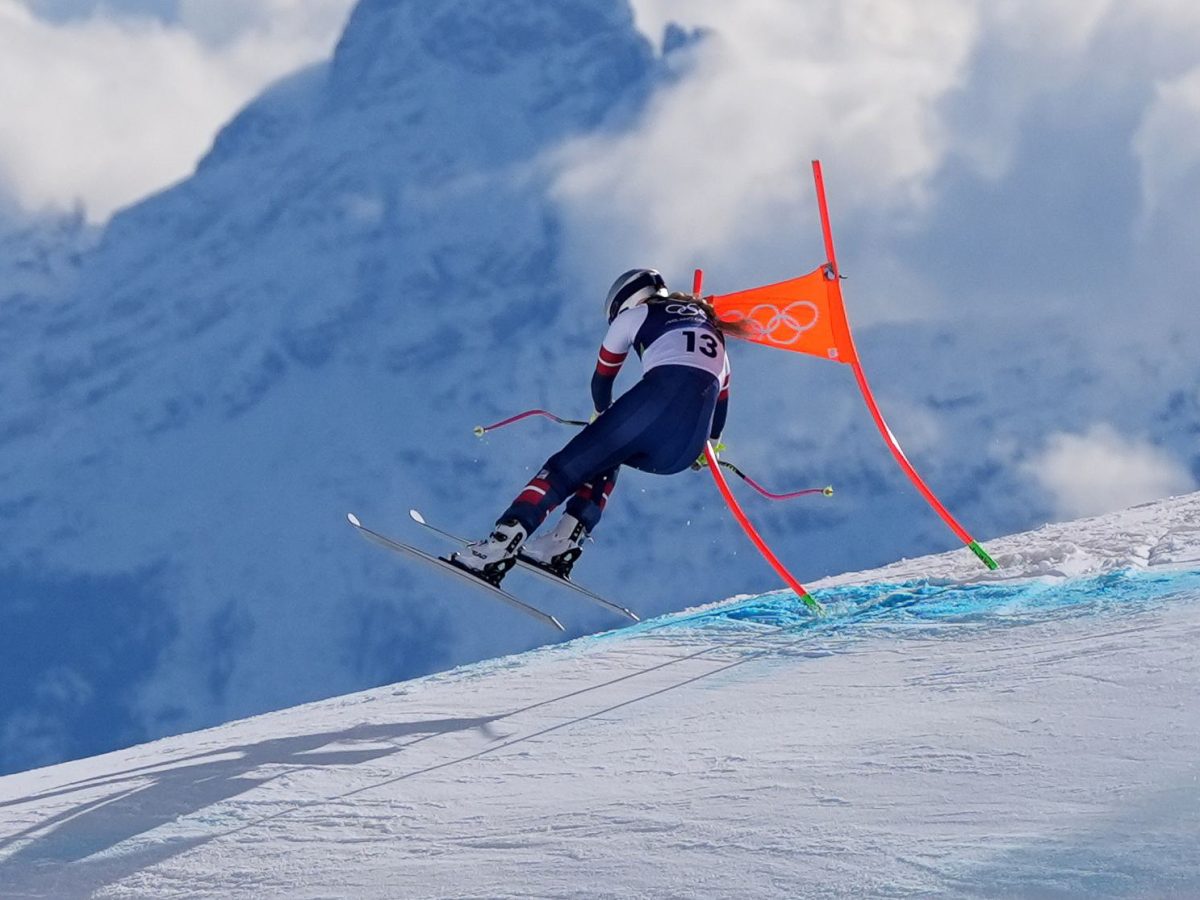
Unfortunately, Vonn’s dreams of a triumphant return came to an end 13 seconds into the women’s downhill race in Cortina d’Ampezzo. Due to the lack of support and stability, she was unable to handle the terrain of the hill, which would usually be easy for her. She caught far too much air off a roller, clipped a gate with her arm, got twisted around in the air and came down hard with her skis still attached to her legs. It is far safer for a racer’s skis to come off when they fall, as it minimizes injury risk. Vonn then came to a stop on her back with both legs splayed at awkward angles. Her screams of pain could be heard over the broadcast, which was truly gut-wrenching as a viewer. The crowd, which had been waiting in anticipation, quickly fell silent. Vonn was airlifted from the course for the second time that week.
Later that day, her team shared that Vonn had suffered a fracture in her left leg but was in stable condition. It’s hard to believe she will return to professional ski racing following these traumatic events.
The path of forced retirement has been seen repeatedly in sports such as figure skating and gymnastics, especially among young female athletes. Both of these sports encourage high levels of competition at extremely young ages, often before athletes reach puberty. In figure skating, the window for athletes to reach peak performance is extremely short, leading to high training loads and repetitive motions that can cause many injuries. Hip labral tears, stress fractures and ligament degradation are common among young figure skaters from repetitive jumps onto the hard ice. For many competitive gymnasts, elite training starts before puberty, so growth spurts during puberty can weaken their condition and increase injury risk.
The tough-it-out culture of playing through pain has been preached to young athletes for decades. It is now widely accepted in sports to replace rest and rehab with pain medication and short-term solutions. This is creating a toxic environment for athletes who will not speak up about their injuries until it is too late, so as to not risk their position or standing. It is common for athletes to compete while injured and then have to face the consequences later in life.
Vonn’s story of forced retirement is not unique. The honest truth is that there are hundreds of stories similar to her own. Professional athletes have been praised their whole lives for their natural talent and hard work. Having the things you have built your self-worth around ripped away from you is unimaginable. Athletes will do whatever it takes to get back to that stage. This narrative is encouraging young athletes to work themselves into the ground. It must be rewritten, and longevity must be prioritized; they’re too young to throw their lives away for mere minutes of glory.