




































































































































































































A Fordham professor of biology is spearheading the first study to examine the biological effects of menopause on mental health and brain chemistry. The study, funded by a $2.8 million grant from the National Institutes of Health (NIH), primarily aims to understand the molecular and cellular changes that take place in the brain during this period of transition.
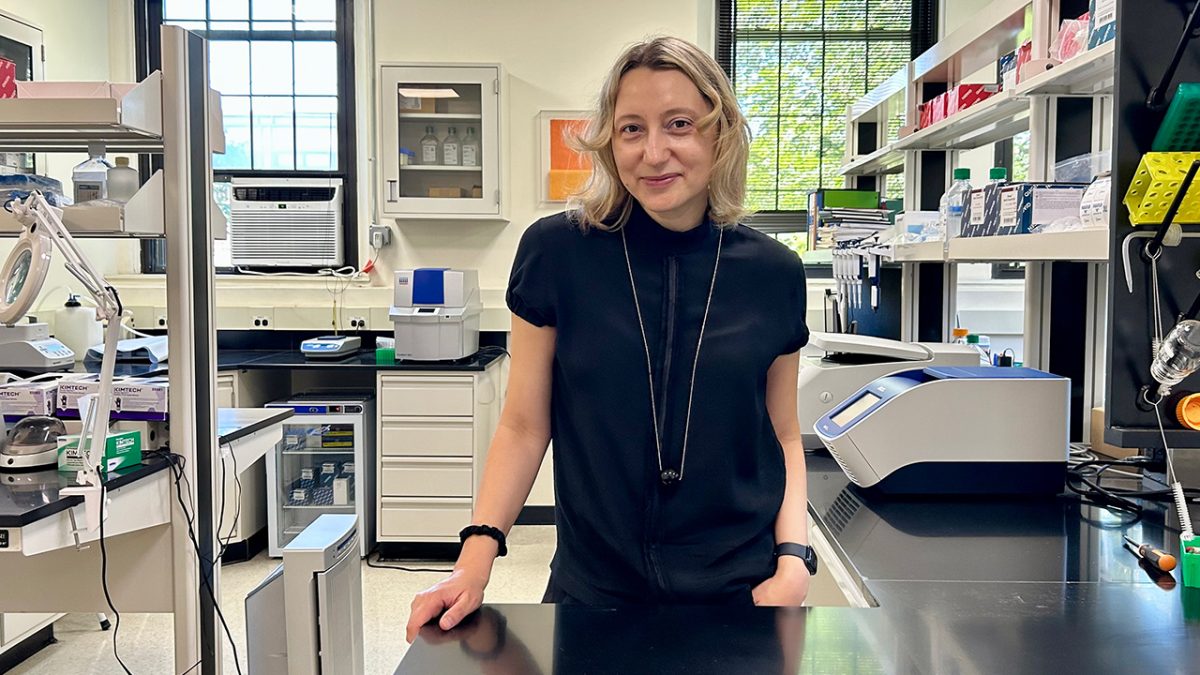
The five-year study is led by professor Marija Kundakivic, Ph.D., who said that mental health has always been an area of great interest for her, which is what motivated her to pursue this project. She said that there is very little known about the transition into menopause and how it impacts mental health, which can be affected by a wide variety of symptoms.
“We know very little about this period that is called menopausal transition,” she said. “This period can be up to 10 years, and it is characterized by different symptoms. One of the characteristics of it, which has been so under explored, is that there’s increased risk for mental health disorders … particularly for depression.”
As the first person to conduct a research project aimed specifically at studying the connection between the menopause transition and mental health, Kundakovic said that she is excited to lay the foundation for a most groundbreaking study.
“It feels really exciting,” she said. “I’m glad to be one of the pioneers in the field … and I feel this is exactly what we need to do .… I really [think] this whole menopausal transition period is so understudied, and the data are very strong on mental health problems. I just felt strongly that I should do this.”
In order to champion this project, Kundakovic said that she had to conduct several experimental trials so that she could receive the NIH grant, which was conditional on providing preliminary sets of data. She noted that her situation was rather rare, as she received the funding on the first trial she submitted to the NIH.
“I think it not only reflects the quality of the study, but also that people understand that it’s a very important area,” she said.
Prior to conducting the study, Kundakovic said that she used mice to examine the impacts of ovarian hormonal changes during the estrous cycle, which is very similar to menopause in humans, on the brain specifically focusing on how these hormonal fluctuations impacted the packaging of DNA in the brain. Kundakovic said her discoveries from these studies were fundamental in laying the groundwork for her current project.
“We were previously able to show that these ovarian hormone chances that we see across the estrous cycle are actually changing the brain in many different levels,” Kundakovic said.
Having uncovered the fact that ovarian hormones can impact gene expression and organization, Kundakovic said she was able to determine that it can also impact one’s chromatin organization, which is the way cells pack strands of DNA into the nucleus, particularly within the brain and in neurons.
Utilizing similar methods as that of her previous study, she launched this study by obtaining 40 post-mortem brain samples of the anterior hippocampus from the NIH brain bank of people who had been assigned female at birth. The anterior hippocampus, Kundakovic explained, is the region of the brain crucial to the regulation of emotional recollection and stress response.
“We are looking into this brain region and are trying to understand what exactly happens across the menopausal transition […]and whether we are going to see some changes in cell composition of this area as hormones are changing,” Kundakovic said.
One year into her five-year research project, Kundakovic said she and her team have discovered some biological markers within this particular region of the brain that can indicate which menstrual stages the subjects of the post mortem brains were currently in at the time of their death. She noted that the ages range from 40-55 years old.
Within the next four years of this study, Kudnakovic explained that she hopes to be able to utilize her cutting edge technique that she said is “rich in data” to examine the results of her studies and then “actually find possible new targets for treatment.”
She detailed the potential future impact she hopes her findings could have on future research and remedies.
“I think overall, the legacy of this study might actually be really big and I always like to say, ‘Knowledge is power,’” she said. “I think the more we know about [the transition], the easier it will become.”