

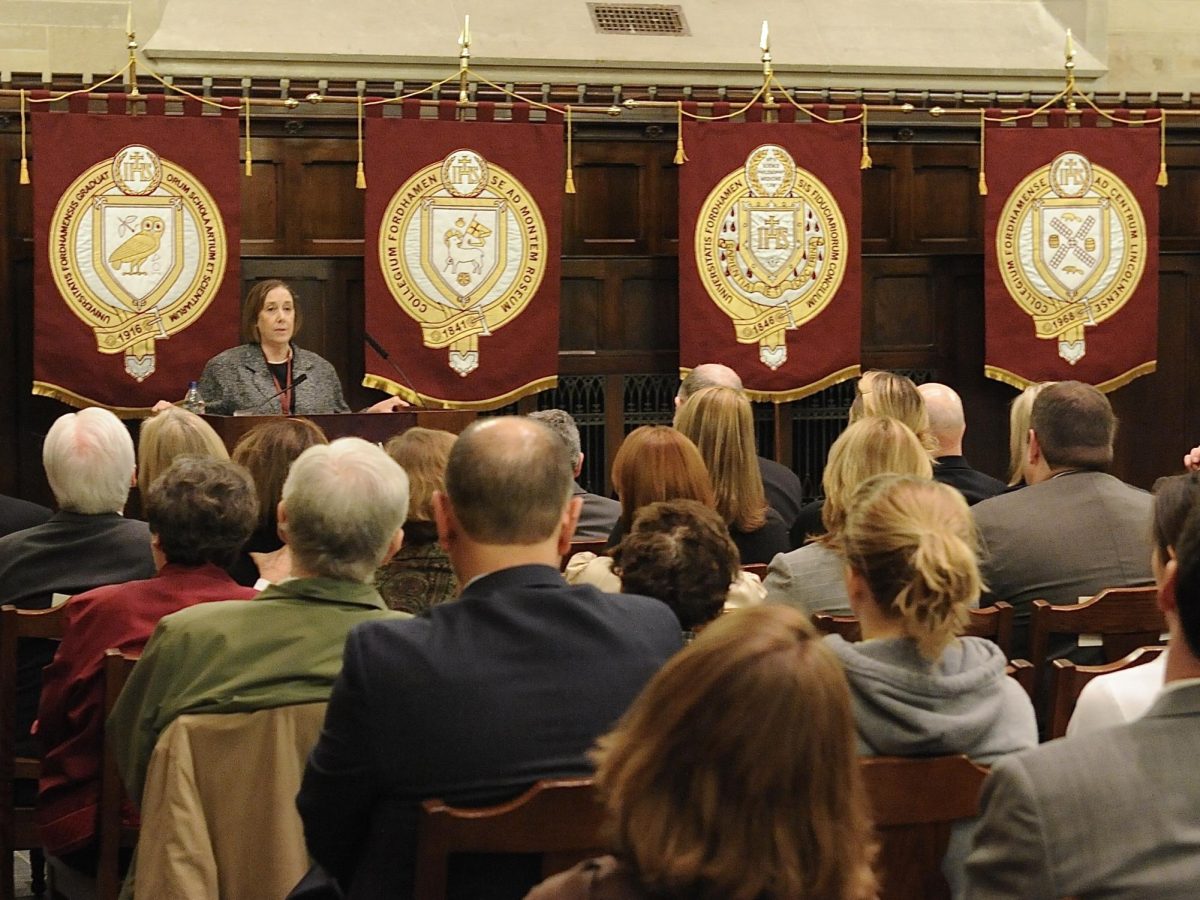

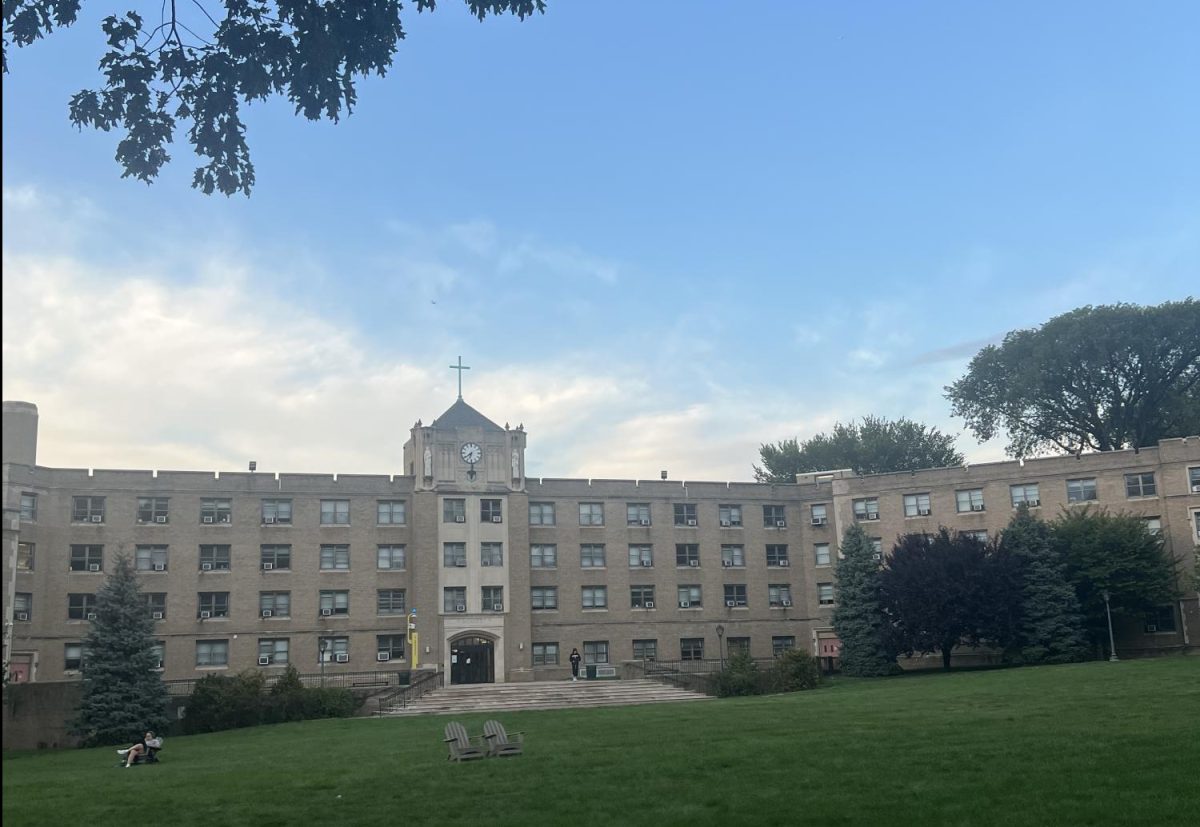












































































































































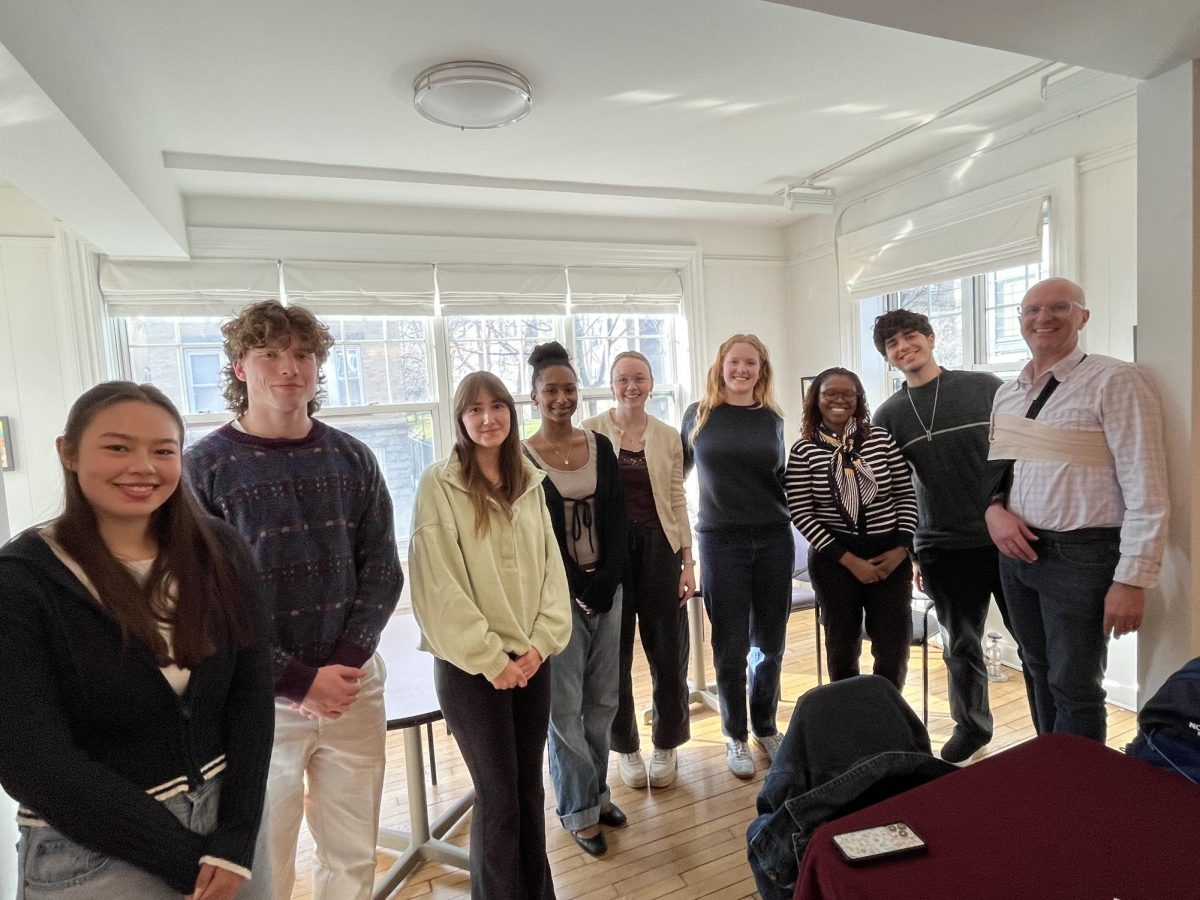
The Fordham University Institute of International Humanitarian Affairs (IIHA) held a talk with Fordham students at Canisius Hall to discuss job opportunities in humanitarian aid on March 25.
Hosted by executive director of Good Shepherd Volunteers (GSV) Thomas Hollywood, and Ruth Mukwana, director of Graduate Studies at IIHA and a Helen Hamlyn Senior Fellow, the event was part of a series known as “Conversations with Humanitarians.”
Hollywood first worked at GSV from 2002 to 2004 after graduating from Stonehill College. GSV is a humanitarian organization founded in 1992 to support women and children affected by poverty or violence and provide volunteer opportunities for people with religious backgrounds. Upon receiving his master’s degree in international peace and development studies from Jaume I University in Spain, he joined Catholic Relief Services (CRS) in 2007, where he worked until March of 2025, when he returned to GSV.
During his senior year at Stonehill College, Hollywood said he went on a spring break trip where he worked at a project site in Lima, Peru. He described how this experience influenced him to get involved in humanitarian aid.
“That was very transformative for me because I saw the impact, the solidarity [and] communities coming together,” Hollywood said. “Just really interesting work, and it motivated me to consider this for a profession, a career trajectory.”
The goal of the IIHA event was to connect undergraduates with job opportunities after graduation, according to Hollywood.
“It’s great to know that there are so many different opportunities that if someone wants to do humanitarian aid, wants to get involved in the development sector, that the opportunities are plentiful,” Hollywood said.
The Conversations with Humanitarians event lasted from 4 to 5:30 p.m., and centered mostly on Mukwana and Hollywood’s advice to students interested in entering a humanitarian-related field. Mukwana also highlighted the significance of CRS.
“I don’t think that’s an organization that comes up a lot in conversation, but I felt like with all the things they’re doing, they’re doing really interesting and meaningful work, and more importantly, they offer really great opportunities for students … who have just finished their degrees,” Mukwana said.
Christine Vogel, FCRH ’25, currently works at Good Shepherd International Justice and Peace (GSIJP), which operates under GSV. Vogel explained how the GSIJP engages with Good Shepherd programs around the world, as well as the UN.
“That’s just kind of the event planning side, creating presentations and research and that sort of thing, but then also being engaged in these different commissions and [trying] to learn from that and bring that back to the broader Good Shepherd community,” Vogel said.
Later on in the event, Hollywood and Mukwana disagreed about students’ preparedness to visit dangerous areas of the world after graduation. Hollywood mentioned Darfur, a war-torn region of Sudan that is experiencing an ongoing genocide, as an example. Based on his own experience working in Darfur, Hollywood cautioned against visiting dangerous parts of the world without proper experience.
“Those sites are for those that are a little bit more seasoned experience, those that have had some frontline work when it comes to project management, acute scenarios where you’re dealing with a lot of difficult circumstances such as the aftermath and the recovery efforts at that time from the genocide,” he told the crowd.
For Mukwana, the focus of the talk was on flexibility and the different paths a career in humanitarian aid can take.
“I think anyone can go and work in any context,” Mukwana said. “For me, I feel like people’s careers and journeys are very different and we’ve all channeled and navigated those differently.”
Caroline Donnelly, FCRH ’27, said that the information she learned at the event helped inform her about humanitarian organizations with religious affiliations and how to find opportunities after graduation.
“I learned a lot about how to properly investigate somewhere you wanna work,” Donnelly said. “He pointed me in the right direction with that, which I appreciated a lot.”
Donnelly said she will continue attending these events because of the community that they’ve built.
According to Vogel, some foreign aid workers have been laid off due to recent spending cuts to the United States Agency for International Development.
“There’s so many great qualified individuals, but no money for them to continue their work,” Vogel said.
Despite the layoffs and budget cuts, Vogel remains optimistic about humanitarian aid.
“I feel like the people on the ground, people doing the work, and people in my sphere of civil society are still very hardworking,” Vogel said. “They know what needs to be done and aren’t going to give up that fight.”
Hollywood encouraged students to remain optimistic about the future in general.
“I wouldn’t give up,” Hollywood said. “I think we need to fight the good fight [and] to stick within the struggle. These sectors have obviously taken a beating, but we need to figure out [how] to become more resilient and continue the necessary goals.”