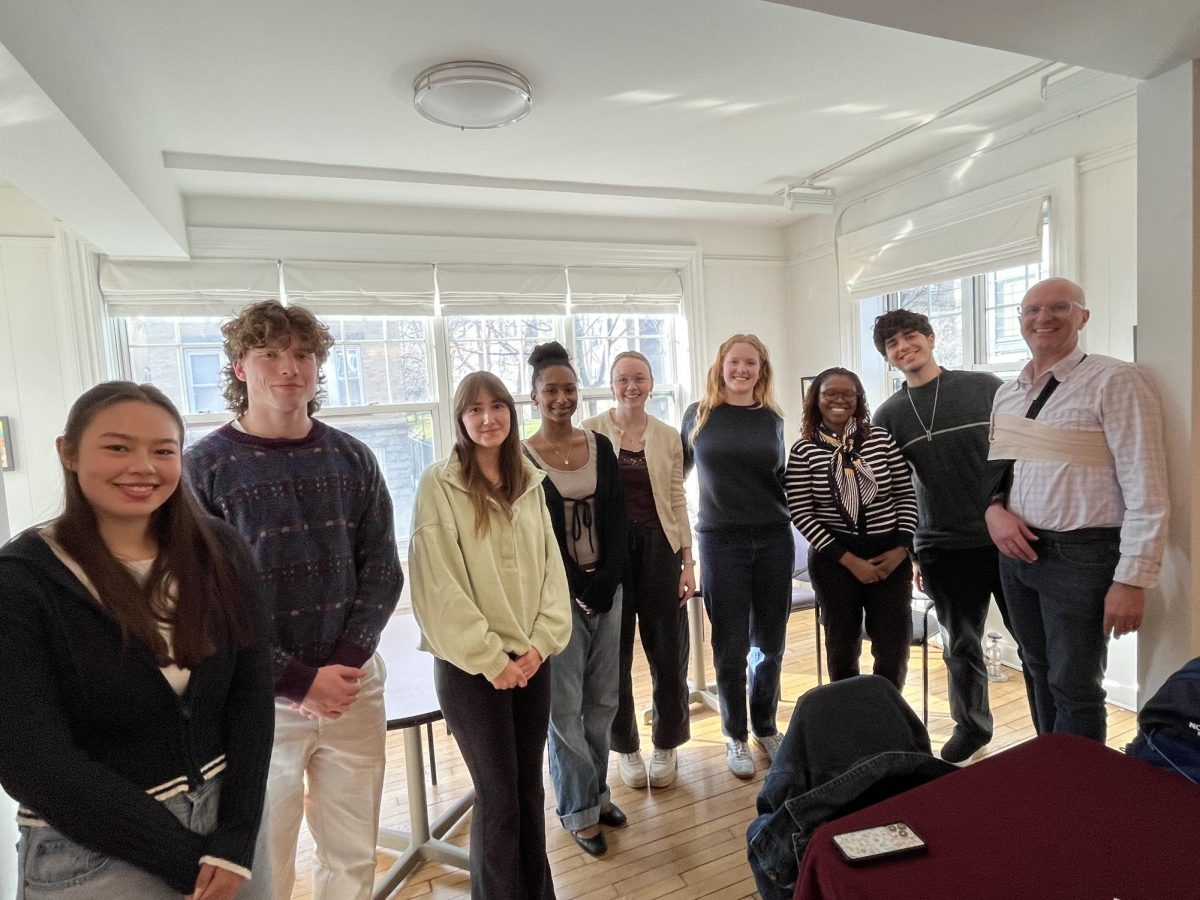


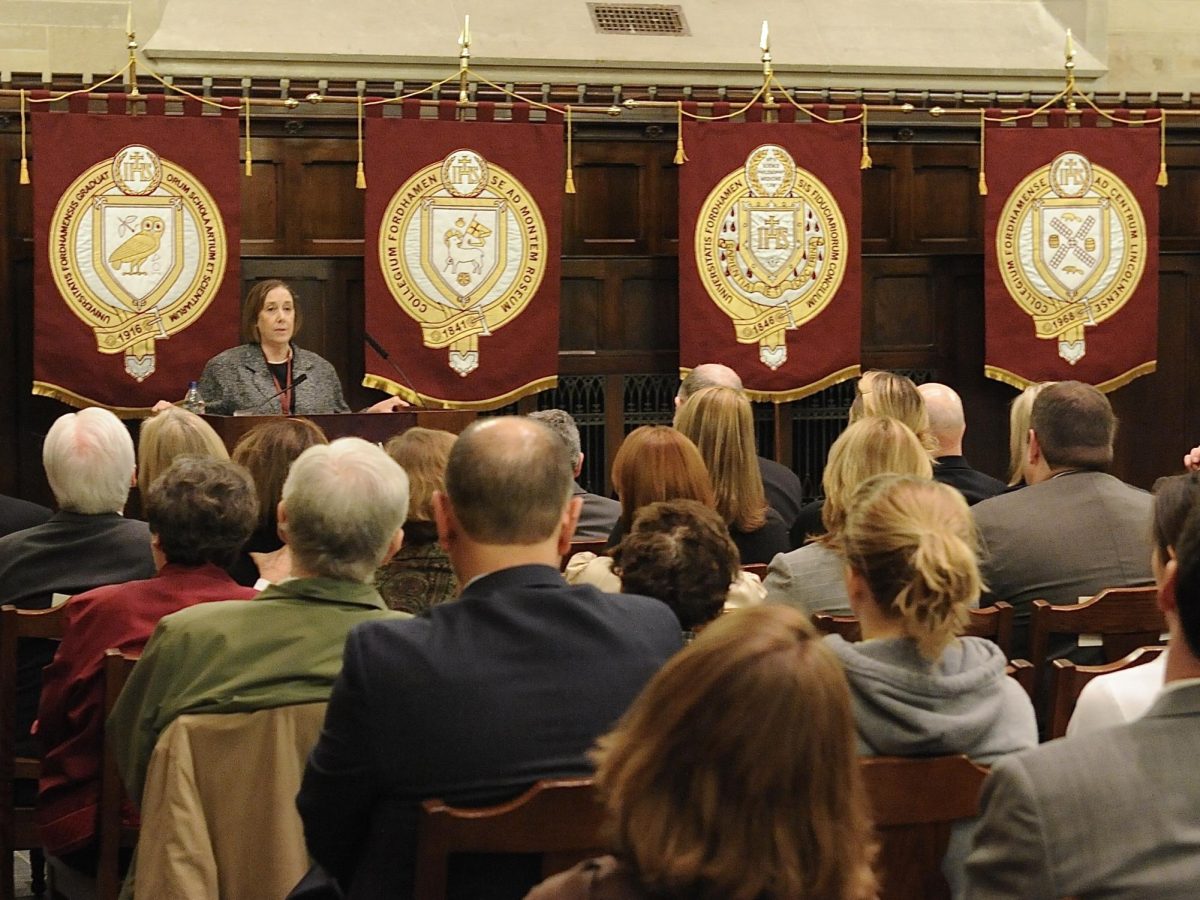





























































































































































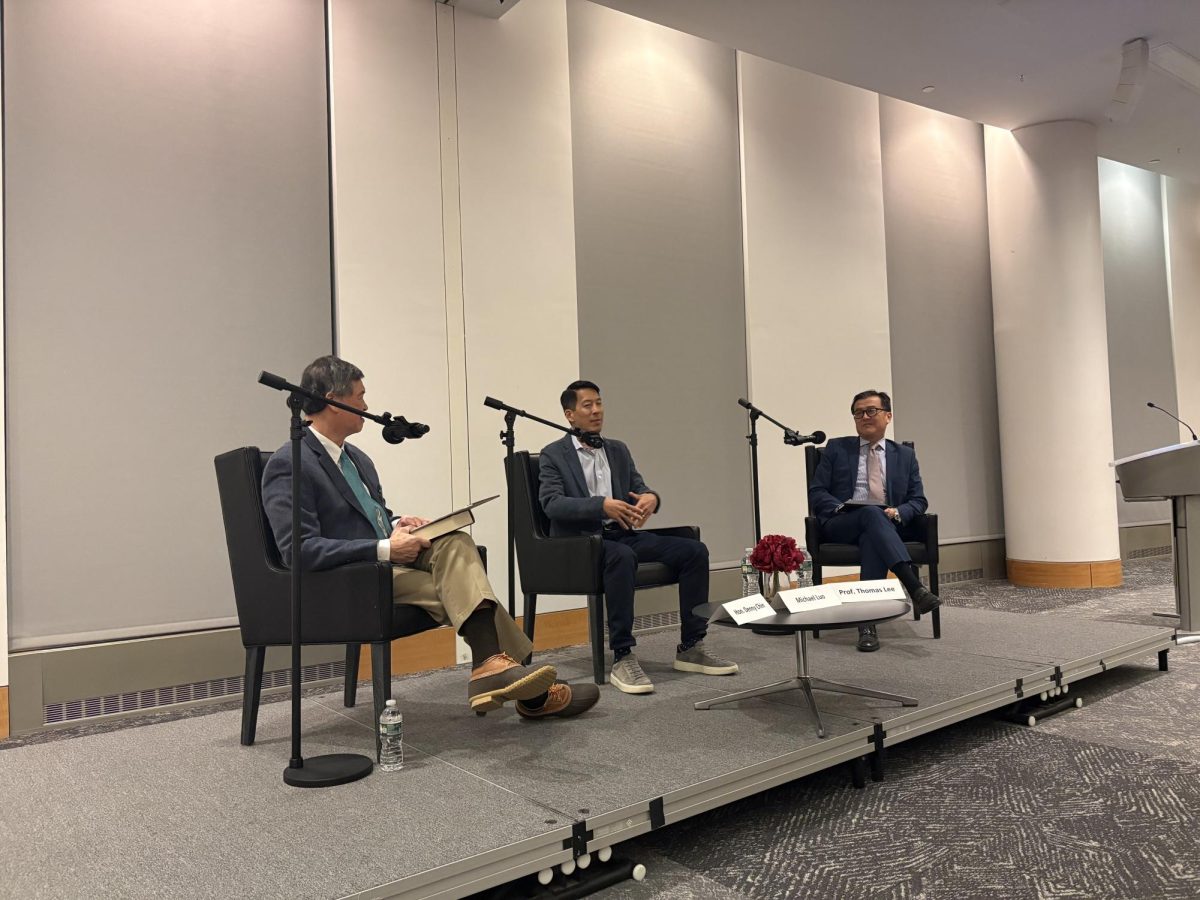
The Fordham Law School’s Center on Asian Americans and the Law hosted Michael Luo, an executive editor of The New Yorker and former investigative journalist for The New York Times, on Feb. 10 to speak about his 2025 book documenting Chinese and American history, titled “Strangers In The Land: Exclusion, Belonging, and the Epic Story of the Chinese in America.”
The event was moderated by the center’s co-directors, Senior Judge Denny Chin of the United States Court of Appeals for the Second Circuit, Lawrence W. Pierce, distinguished jurist in residence, as well as Thomas Lee, Leitner Family professor of international law at Fordham Law, who co-founded the center in 2022.
The center is the first of its kind in the United States according to former Vice President Kamala Harris in her dedication address to Fordham Law. Their website mentions that their curriculum inspired approximately 15 other law schools to begin teaching Asian American legal studies.
The event consisted of Chin and Lee asking Luo questions concerning why he wrote this book, its relevance today as well as how his journalism background has informed his historical narrative.
Luo explained that he began to write the book after he had experienced anti-Asian harassment in New York City, about which he wrote a piece for The Times titled “An Open Letter to the Woman Who Told My Family to go Back to China” in 2016.
Luo described the book — which covers pivotal events in the history of Chinese immigrants in America from the Chinese Exclusion Act to the 1871 Los Angeles Massacre — as a “narrative history.”
“This is not a textbook,” Luo said. “I should kind of posit that I’m a storyteller by training, and I, as a journalist, I think I bring something different to the telling of history.”
In an interview with The Ram, Chin reflected on the importance of hosting Luo at Fordham Law amid recent debates over immigration law.
“There are many issues that are very similar to what we’re seeing today,” Chin said. “Mass deportations, raids, warehousing of folks to deport them and similar things going on. And so the way the government handled these matters, 100 years ago, is still instructive and relevant. And that’s why we wanted to do it.”
“Strangers In The Land” is particularly relevant from a legal perspective — in fact, the title references the characterization of Chinese immigrants given by Supreme Court Justice Stephen J. Field in his justification for the Chinese Exclusion Act in 1889’s Chae Chan Ping v. United States.
Luo explained that the Chinese entered legal battles in response to a series of anti-immigration legislation, including about 10,000 habeas corpus petitions, to the extent that the federal courts became overwhelmed. The litigation demand forced the federal government to create one of the first iterations of a federal immigration detention agency.
Notably, the 1892 Geary Act required Chinese immigrants to register for “certificates of residence” attested to by a “credible white witness,” or face deportation, according to historical records.
Well-funded Chinese legal teams challenged the ruling all the way to the Supreme Court, and even though they ultimately lost, their tenacity set a precedent for future immigration law — a theme Luo aimed to demonstrate throughout his book.
“It’s the story of resilience, it’s [the] resilience of a people, and the Chinese persisted, and you know, we are sitting on this stage today because of it,” said Luo.
Luo touched on the question of assimilation and who gets to be an American as a running theme throughout his book.
“That kind of question is still something that trails Asian Americans,” Luo said. “I say that this is not just the story of Asian Americans, but the story of any number of people and ethnic groups and immigrant groups that have felt like — and are currently being treated — as strangers in the land.”
Sophie Lamb, FLS ’27, and president of the Asian Pacific American Law Students Association who had attended the event also discussed the importance of understanding Asian American legal history, especially as deportations and detentions of immigrants are increasing across the U.S.
“I would say that history repeats itself if you don’t know it,” Lamb said. “So, I think there’s a lot of things that we can take away from the past that we can relate from and apply to today.”
The center’s unique angle of legal scholarship offers a number of opportunities to research, learn and apply legal history to modern contexts.
When speaking with The Ram, co-director Lee discussed the research he has been conducting for the center as a constitutional law scholar, specifically the 1898 United States v. Wong Kim Ark case, in which an American-born child of Chinese parents was denied naturalization.
The ruling invoked the 14th Amendment and solidified birthright citizenship in the United States — a right which President Donald Trump signed an executive order to terminate on Jan. 20, 2025.
“So, that case is obviously still relevant. I think the important thing is, this is history, but these cases are still alive and important,” Lee said.
Luo also expressed his appreciation for Chin, who is an alumnus from Fordham Law, as a “pioneer” in law for Asian Americans and for the ongoing academic inquiry that Fordham Law invests in through the center.
“[Fordham does] these re-enactments of famous Asian American legal cases, and I’ve read some of them myself,” Luo told The Ram. “I’ve gone deep on the history, and so, it was a really natural fit to do this event.”