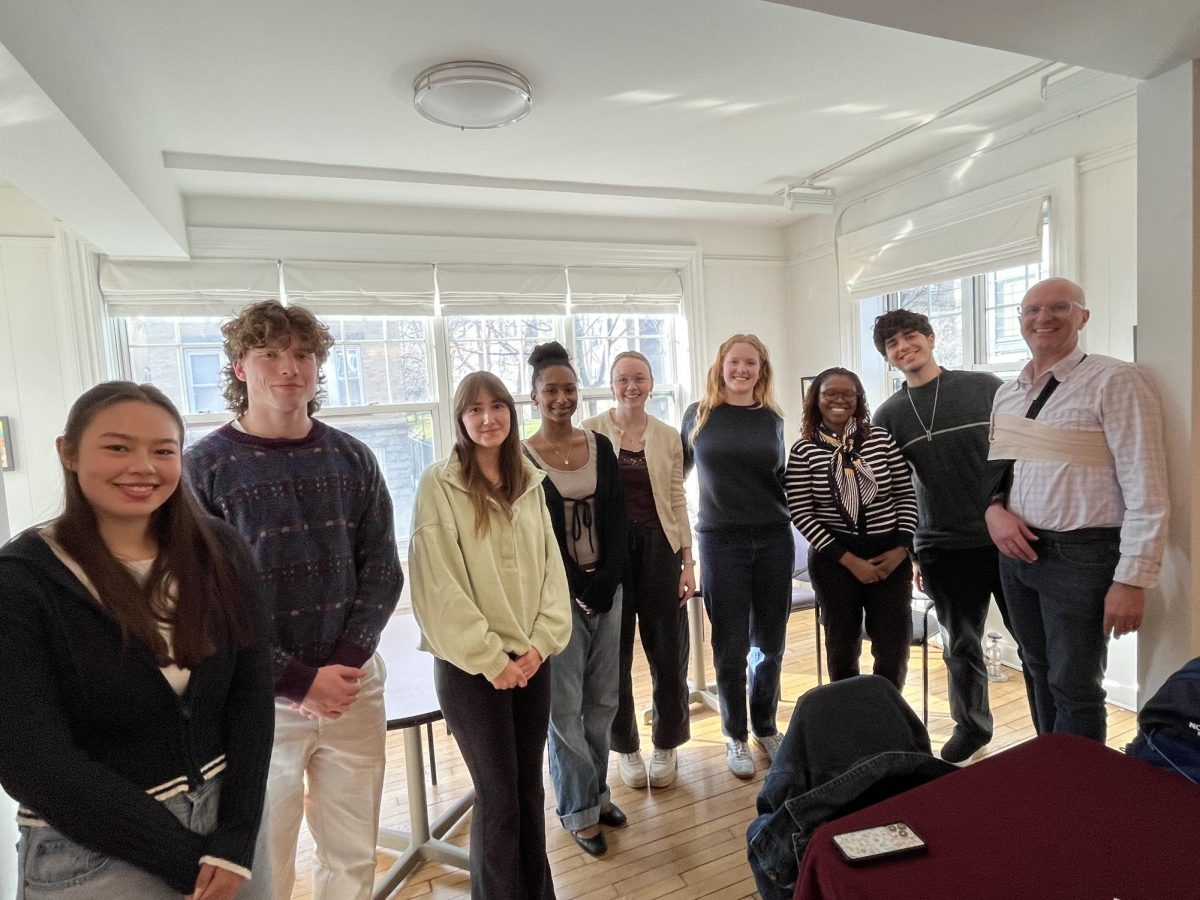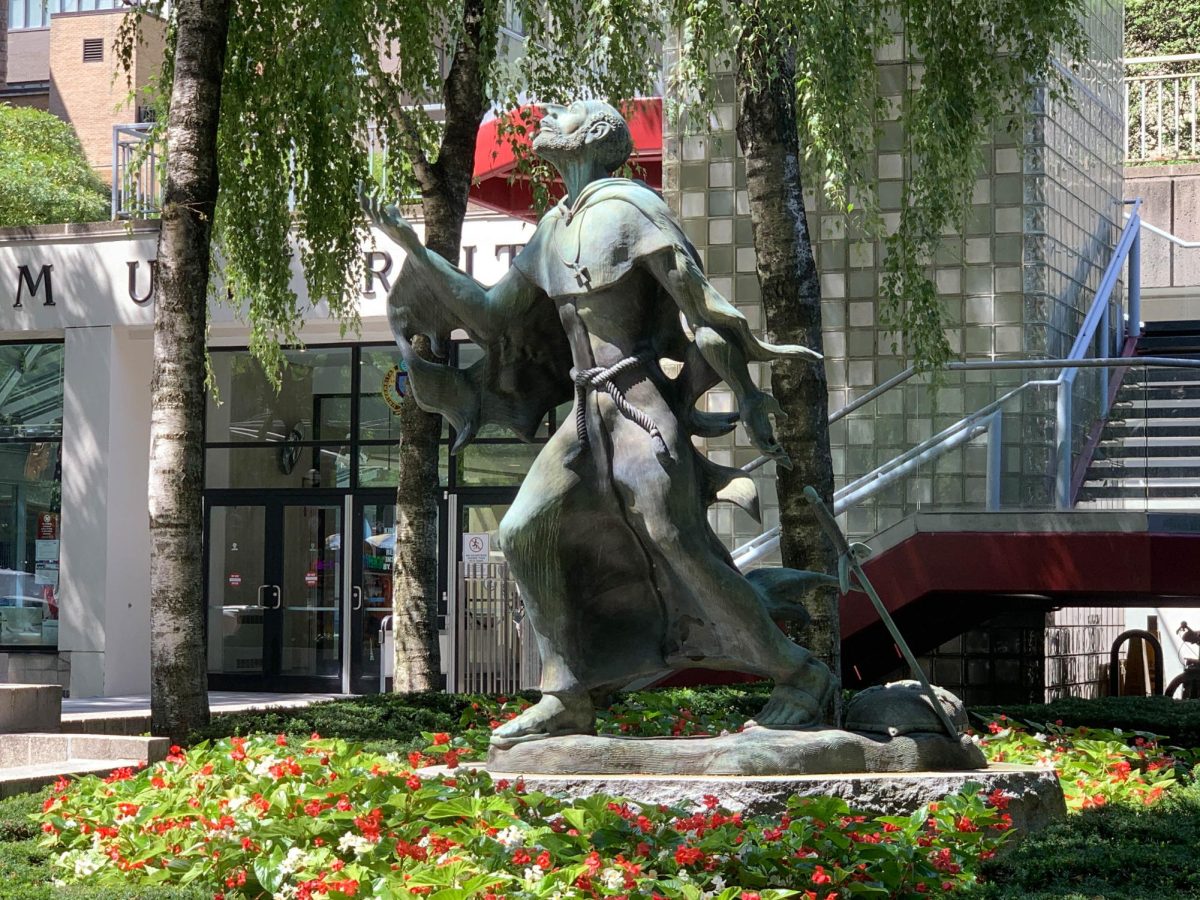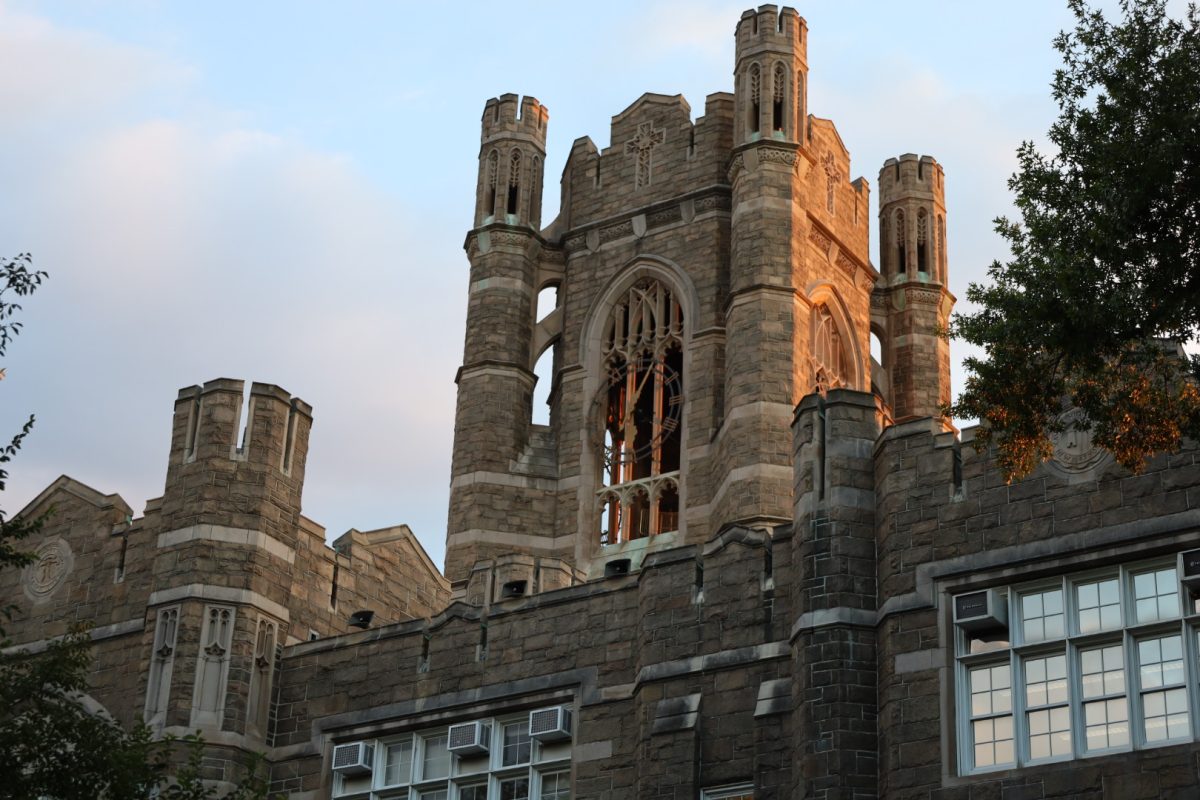


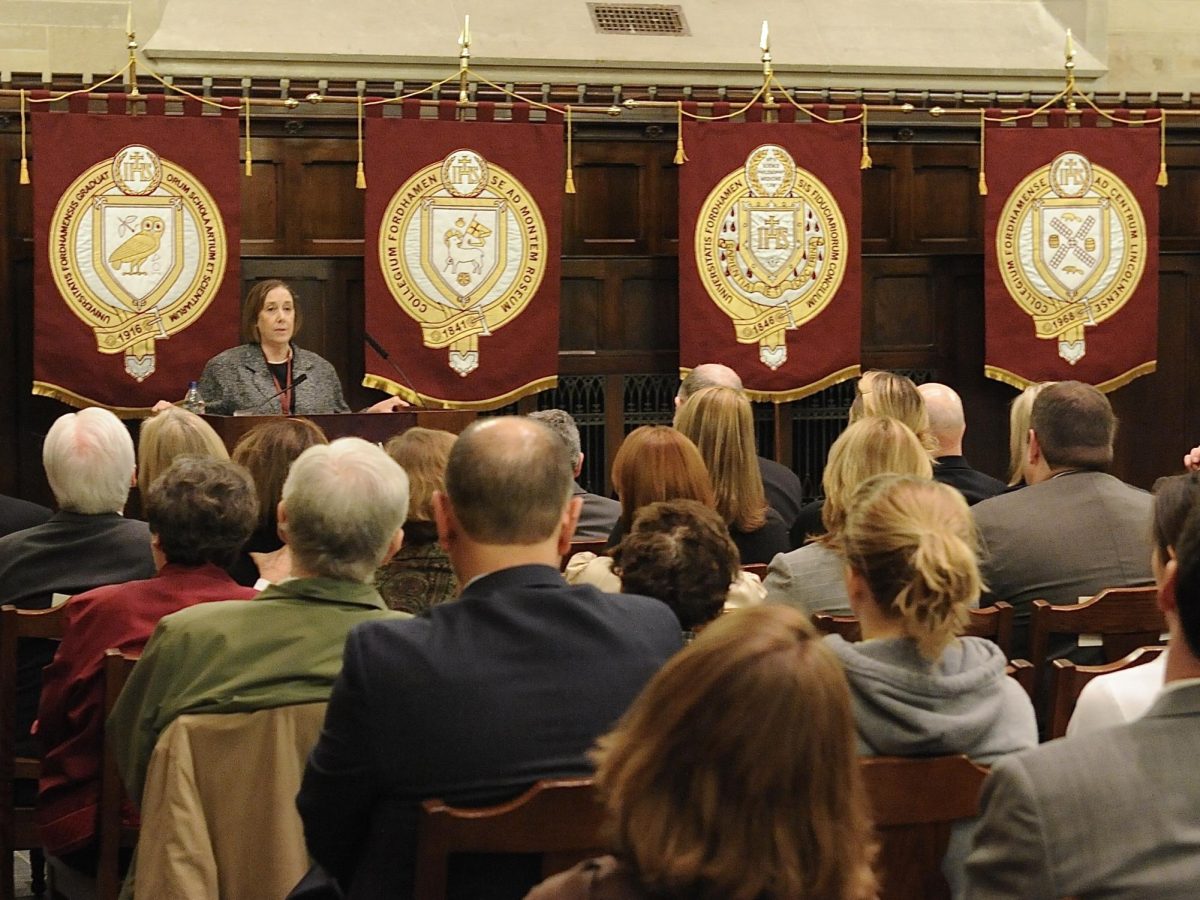



























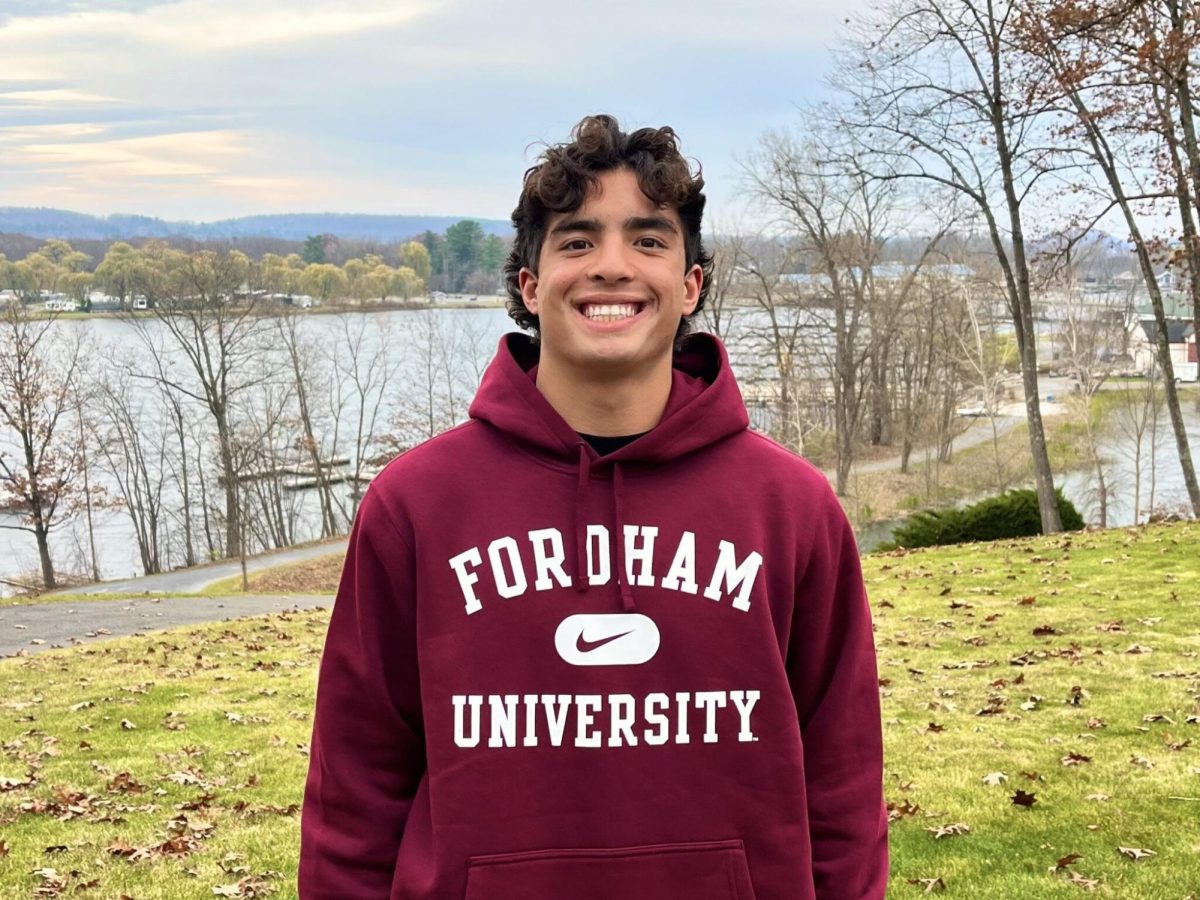






































































































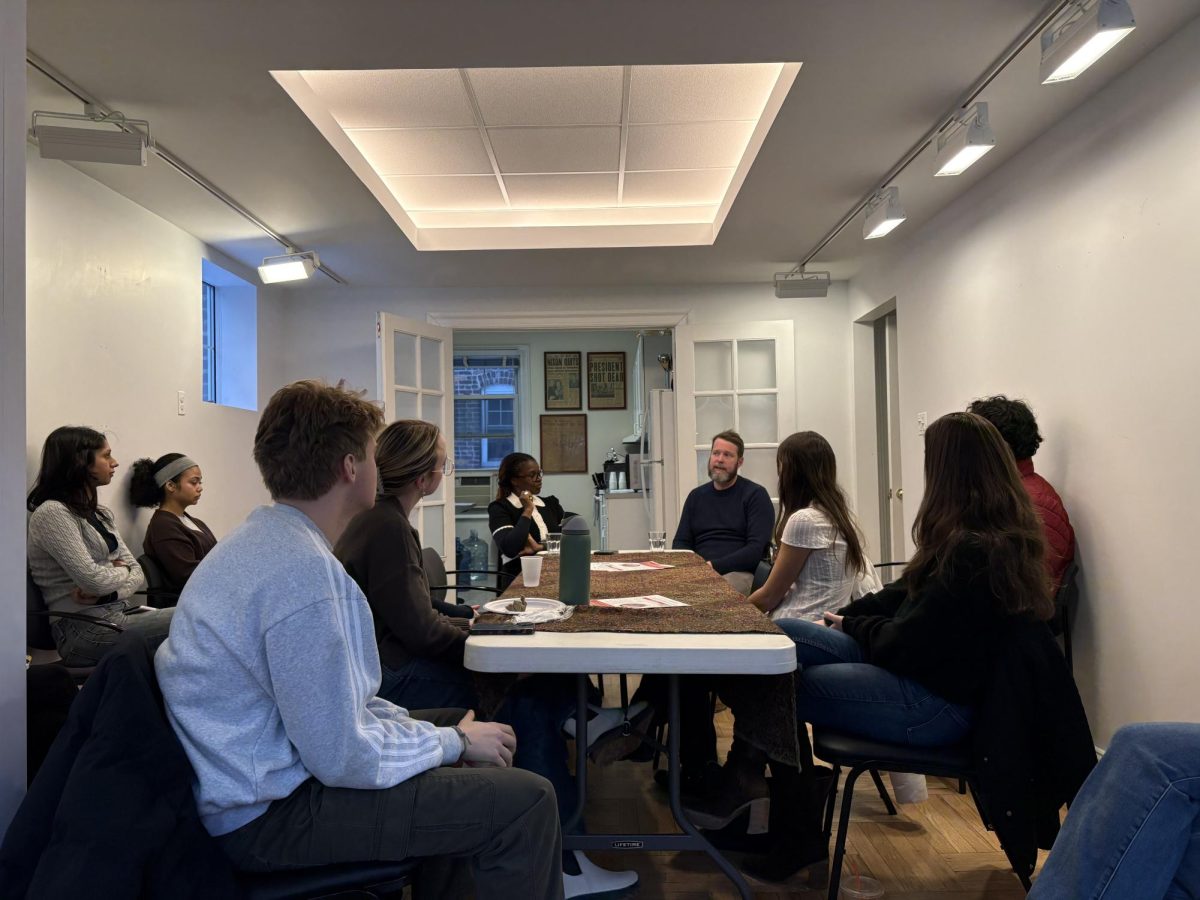
The Fordham University Institute of International Humanitarian Affairs (IIHA) held its monthly “Conversation With Humanitarians” meeting on Wednesday, Jan. 28, in Canisius Hall’s Refuge Gallery. At the event, students asked various questions about funding concerns, as well as ethical dilemmas, international logistics and how these conversations are shaping the future of humanitarian aid worldwide.
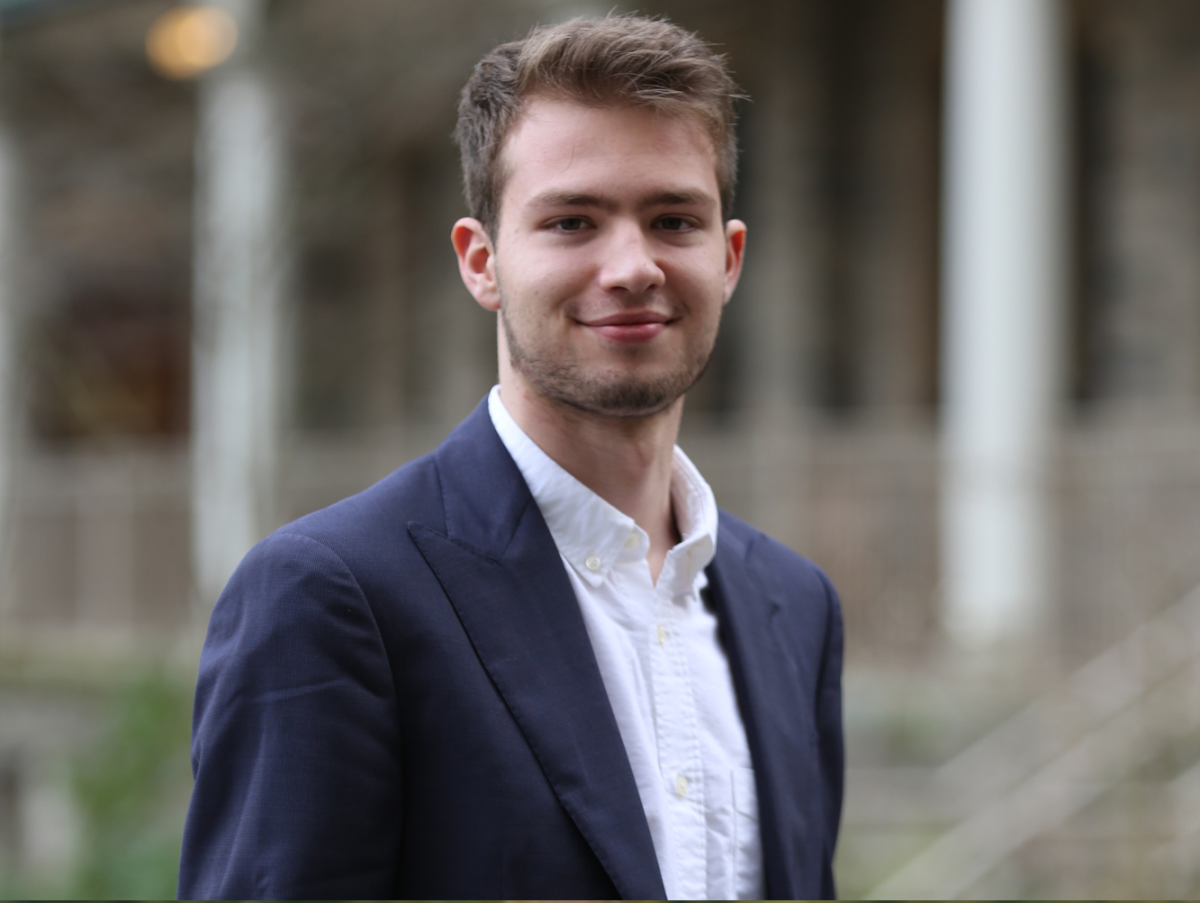
The discussion was held with one Fordham professor, Bernard Wiseman, international associative coordinator and former head of mission for Doctors without Borders, also known as Medecins Sans Frontieres (MSF). He has led humanitarian work in several countries, including but not limited to South Sudan, the Democratic Republic of the Congo, Myanmar and, most recently, Ukraine, where he provided aid to refugees affected by the Russia-Ukraine war in 2022.
Wiseman had also reflected on his career and offered advice to students seeking careers in the humanitarian efforts. He emphasized the importance of maintaining one’s principles in the field — especially during geopolitical and financial adversity.
“I think everyone’s having this conversation right now,” Wiseman said, in reference the pressure funding cuts and geopolitical conflicts put on aid workers.
“We have this really big issue right now in Gaza, in terms of, ‘Is MSF going to be allowed to stay and support the patients in Gaza? Do we provide staff lists to Israel? And do we trust them, and how do we keep our team safe? How do we stick by our principles?’” he asked.
Wiseman advised students interested in humanitarian work to closely examine an organization’s values when ethical dilemmas arise.
“Look at the history of the organization and how it reacts to certain conflicts and contexts, and see if your values align with that organization or not,” he said. “They’re not all the same. A lot of them do good work, but I think it’s important for you to really feel involved in these — there’s a lot of dilemmas that come up within humanitarian work.”
Although MSF is primarily a privately funded, neutral institution that doesn’t depend on government grants, other organizations face a greater financial vulnerability.
According to Wiseman, with the 2025 shutdown of the U.S. Agency for International Development (USAID), the U.S. has lost a significant “institutional memory” and expertise in a humanitarian response.
“You’ve lost a lot of know-how within USAID, and it’s not going to come back very quickly,” Wiseman had said, adding that the loss could contribute to diminished trust in the U.S. as a humanitarian agency.
One of the major concern for humanitarian workers is with negotiating access to victims in conflict zones is a major concern for the humanitarian workers, which becomes even more precarious in unstable political environments that often treat aid workers with hostility. MSF’s funding and political independence have enabled them to treat many patients worldwide, yet it still faces frustration and concerns about compromising ethics to achieve treatment access, according to Wiseman.
“I don’t know how many times I’ve been held at gunpoint while [police] walk into the car and search the material to make sure there’s no, like, weapons that we’re giving to rebels or whatever,” Wiseman said. “It could be about showing up, and being consistent, and making sure that you begin to develop those relationships. It’s about [them] trusting you, and you trusting them.”
In addition to his work in the field, Wiseman teaches an internship seminar and a Humanitarian System course in the IIHA department, where he combines humanitarian studies with strategic thinking on real-world issues. His students have completed internships at the United Nations, International Rescue Committee and MSF.
“I think, sometimes, I feel I get more from the students than they get from me, but it’s been really interesting. I’ve been really happy to teach. It’s a really interesting time in the humanitarian world,” he said in an interview with The Ram. “The world is kind of up in the air, and it’s interesting to see kind of how the humanitarian system survives…how organizations still try to support those populations most in need. And so, it’s been a really great time for me to teach currently.”
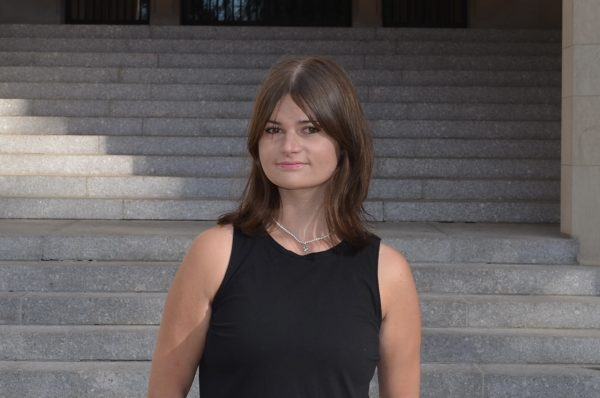
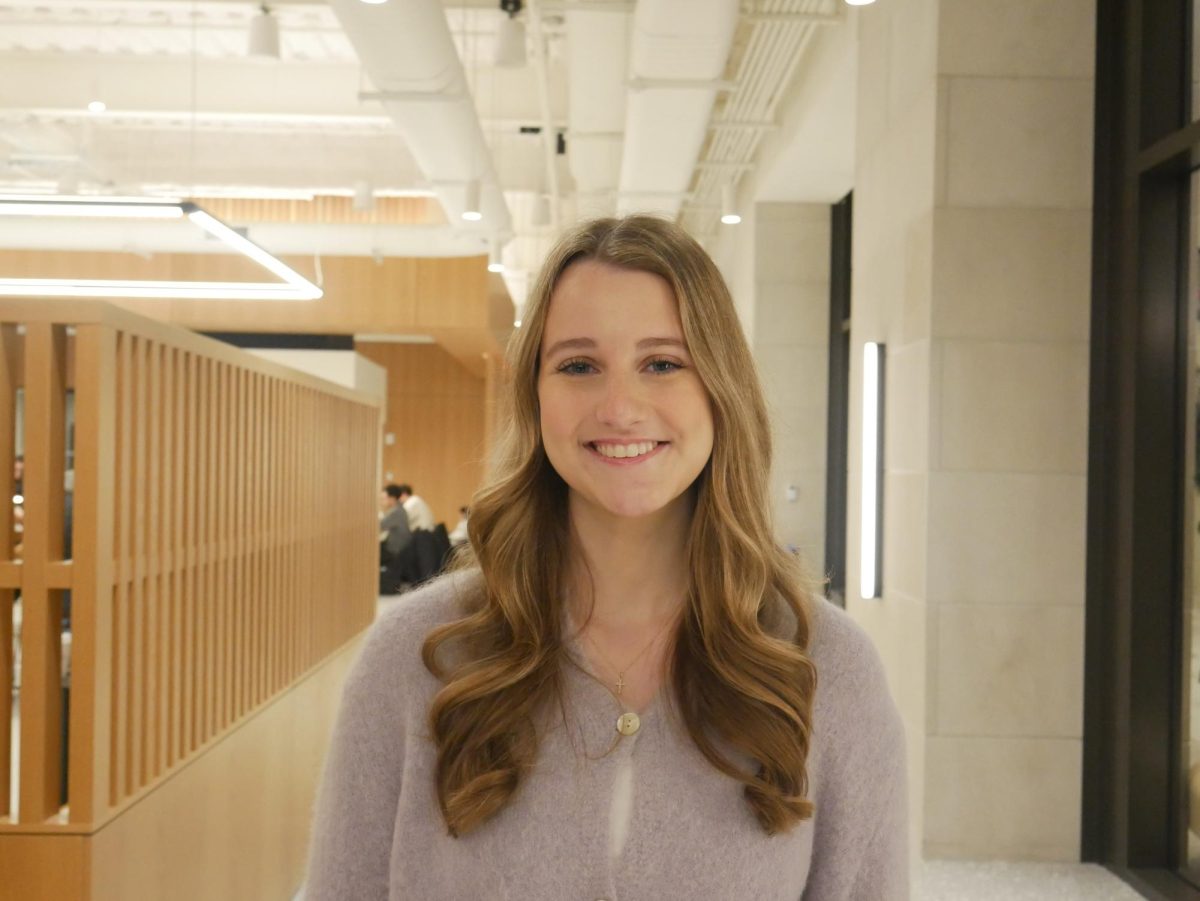
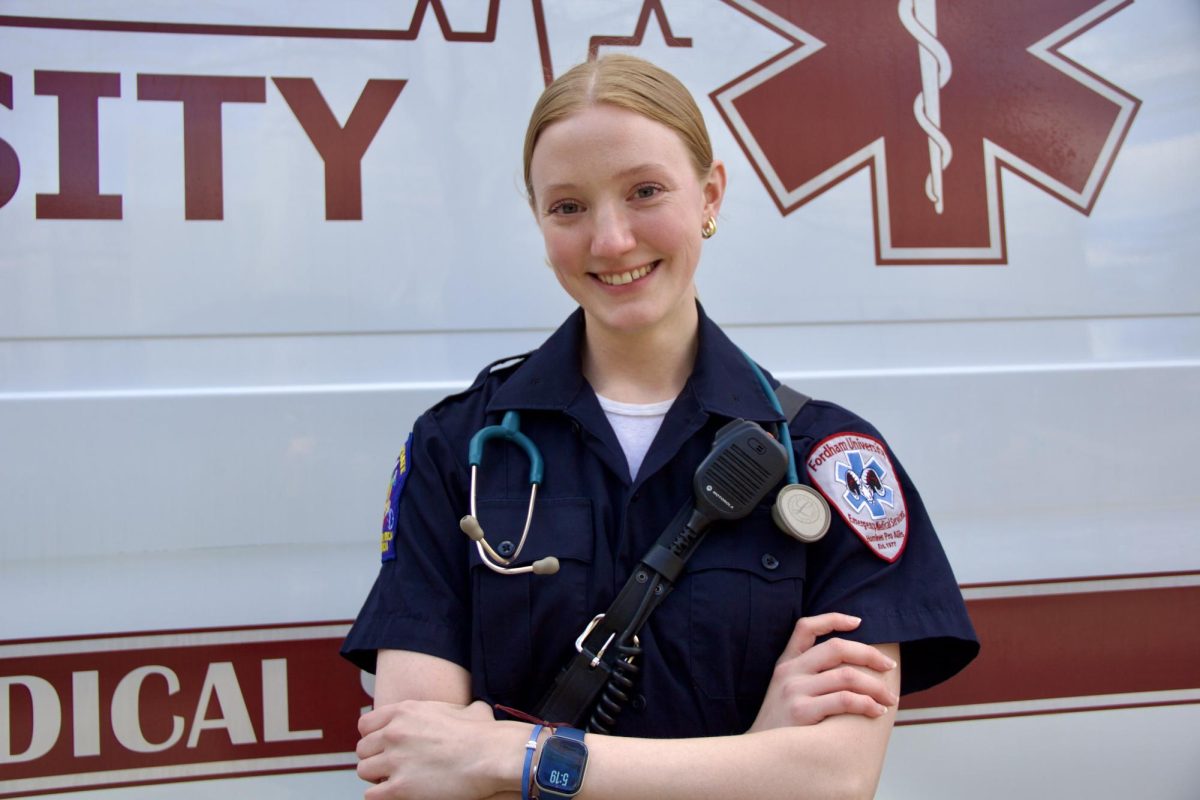
Kaya Parker, FCRH ’29, a biology major on the pre-health track, said she attended the event because of her interest in medical humanitarian work.
“I’m definitely thinking about it now, since hearing them talk, so this just kind of broadened my perspective,” Parker said. “I’m thinking of working as a nurse in countries with less development.”
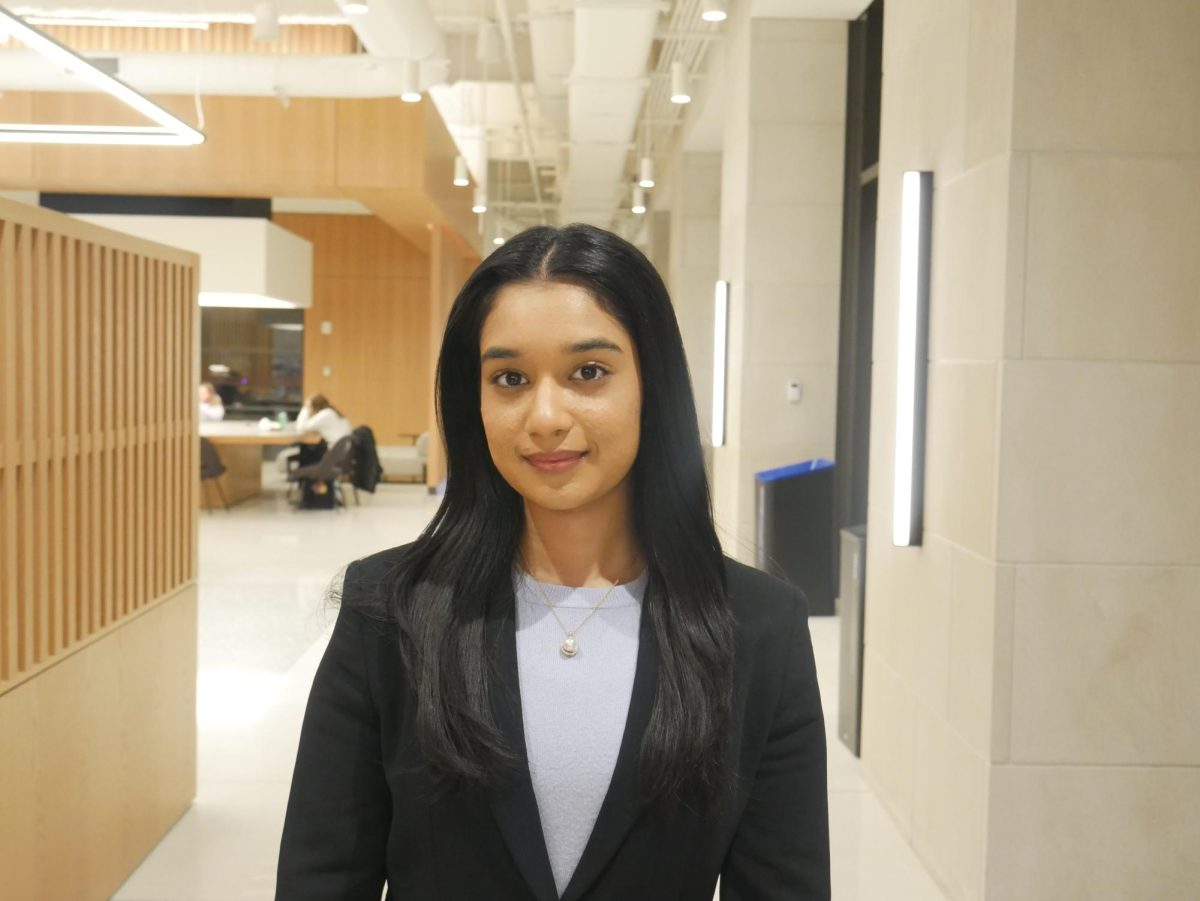
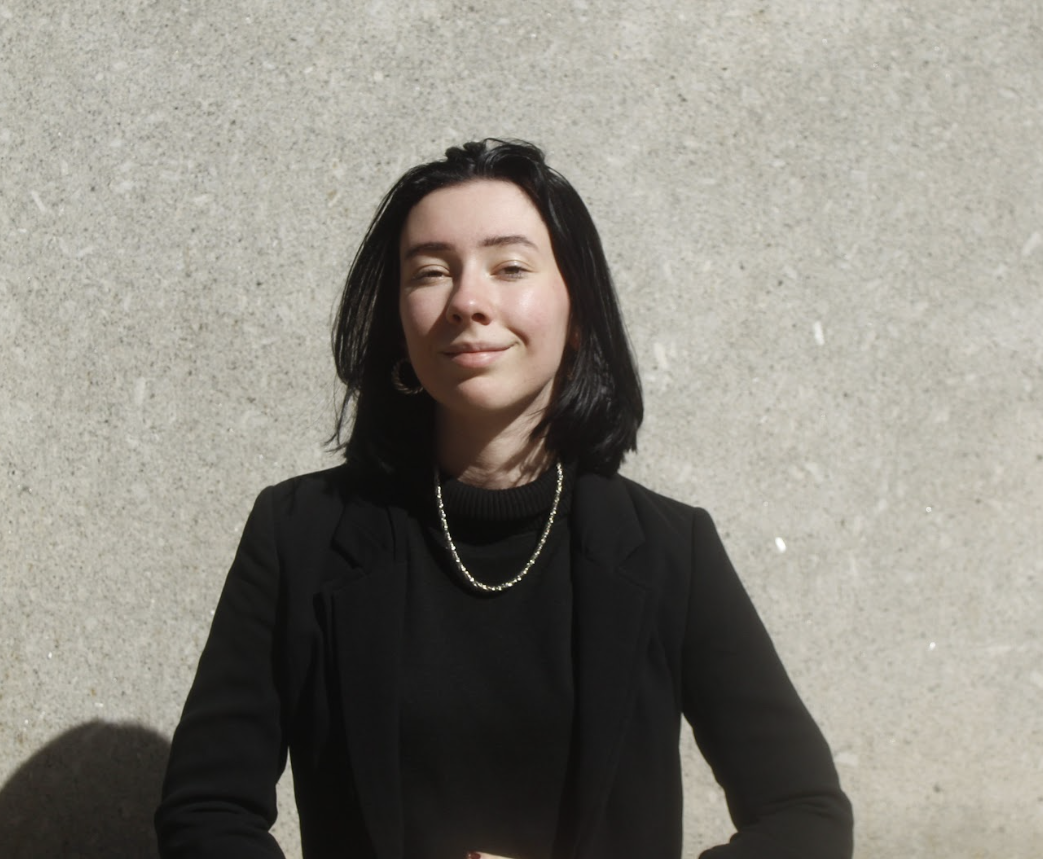
Peer-to-peer networking is a value the IIHA department strongly emphasizes, according to Ruth Mukwana, who is the Helen Hamlyn Senior Fellow and also director of Graduate Humanitarian Studies, and who hosts these events.
Mukwana also said students have been seeking opportunities with major organizations from connections made through the previous events.
“A few students, after the guest speakers, some of them get to really learn about an organization that wasn’t on their radar,” Mukwana said. “And then some of them have ended up going to look for internships with those organizations.”
She continued by discussing the difficulties faced in the career.
“I mean, jobs are difficult, I think, in any sector, but also more so in the humanitarian sector, with everything that’s going on, so it can feel extremely daunting and disheartening,” she added. “So I find listening to different people’s different journeys can, a little bit, reassure students that it is not impossible, and the students tend to get a little bit more ideas on where they can start to look for jobs,” Mukwana said.
According to Wiseman, the humanitarian organizations seek a wide range of skills for prospective applicants — from doctors to electricians — but above all, the ability to work collaboratively with people of diverse backgrounds.
Despite political roadblocks and cuts to humanitarian funding worldwide, Wiseman remains hopeful about the future of aid work.
“I think we get into this line of work because we have hope,” he said. “Because there’s optimism there — because we see that a small group of people with expertise and training can really do a lot to support people in crisis … I hope that this is just a short-term blip.”