







































































































































































A national webinar hosted by Georgetown University’s “Hoyas with Pride” brought together Catholic clergy, alumni leaders and LGBTQ+ advocates to examine questions of joy, belonging and institutional change within the Catholic Church. The event, part of a new spiritual dialogue series, highlighted both progress and persistent disparities facing LGBTQ+ Catholics both across the United States and globally.
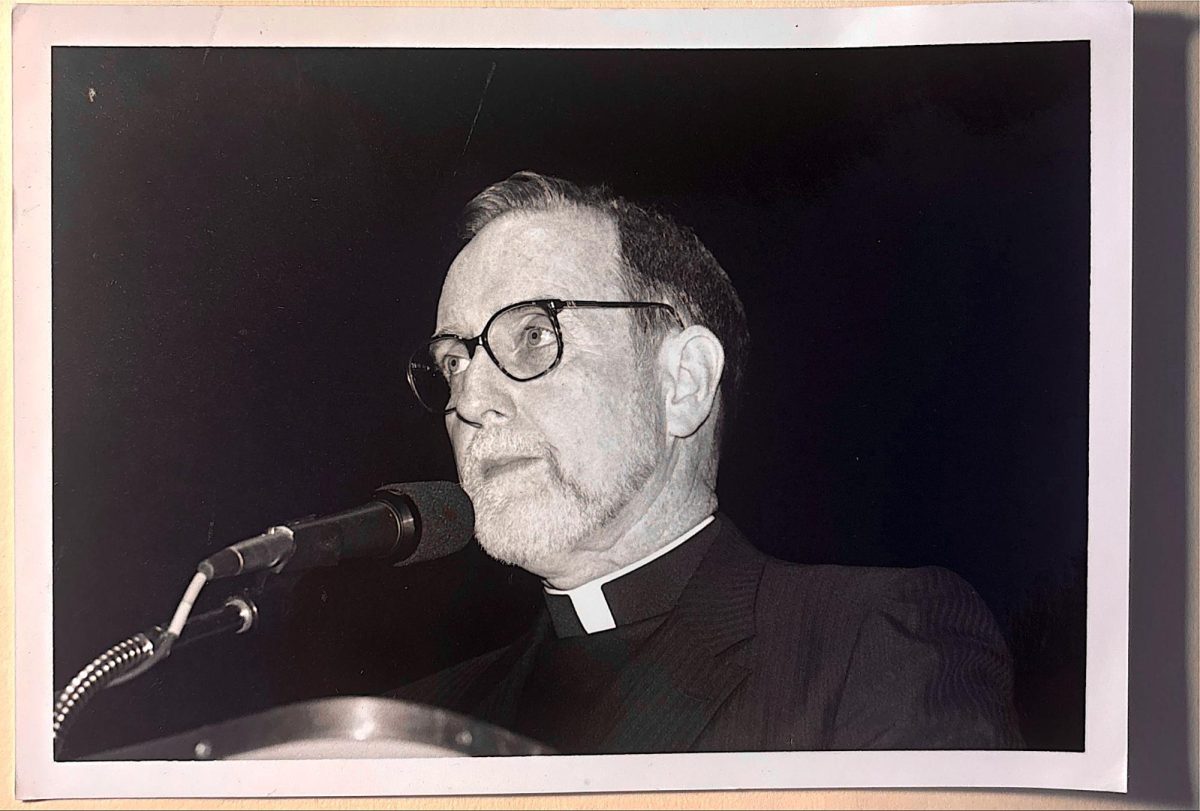
The conversation featured James Martin, S.J., founder of Outreach, a Catholic ministry which serves LGBTQ+ people and their families, and Chris Lawton, C.S.P., an associate pastor at the Church of St. Paul the Apostle, across 60th Street from Fordham University’s Lincoln Center campus. The program was co-sponsored by alumni organizations from Georgetown, Fordham, Boston College, the University of Notre Dame and the College of the Holy Cross.
The event opened with Julian Dellapaz, a Georgetown grad and the co-chair of “Hoyas with Pride,” who framed the series as an effort to create “a faith-centered home for queer Catholics and their allies,” grounded in listening, accompaniment and dignity. The series, he said, is rooted in the belief that “no one is outside the love of God.”
When asked to reflect on the concept of queer joy, Lawton emphasized that joy in a Christian context is not synonymous with happiness, but rather, reflects a deeper theological reality. Drawing on Pope Francis’s apostolic exhortation in “Evangelii Gaudium,” he described joy as a sustaining force that reminds believers they are “infinitely loved,” even amid struggle.
“For LGBT Catholics, queer joy is not just about being welcomed,” said Lawton in the event. “It’s about being celebrated, [and] about knowing that your presence and your gifts are helping move the Church forward in its mission.”
Martin situated queer joy at the intersection of LGBTQ+ dignity and Christian faith, describing it as a recognition of one’s identity as a “beloved child of God.” While noting that the term “queer” carries different meanings across generations, he emphasized that contemporary usage reflects a reclaimed sense of dignity.
Both speakers acknowledged that experiences of queer Catholics vary widely depending on geography, despite progress across the Church as a whole. Both priests acknowledged concerns about Catholics in regions where queer affirming parishes or ministries are scarce; while Catholics in major cities may find multiple affirming communities, others may face silence or worse at the parish level.
Lawton added that many LGBTQ+ Catholics experience challenges of marginalization within religious spaces and skepticism toward religion within the broader LGBTQ+ community. Both priests rejected the premise that queer identity must be hidden in order to belong. Lawton echoed this, noting that parishes often serve as spiritual anchors not only for LGBTQ+ individuals but also for families seeking assurance that their children are welcome within the Church.
Despite these pressures, Martin identified perseverance as one of the most significant contributions queer Catholics bring to the Church. He described encounters with individuals who, after being made to feel unwelcome in their parishes, sought to find a more affirming community within Catholicism.
“That perseverance is a gift,” Martin said in the event. “It’s something the Church should pay attention to.”
He noted that the late Pope Francis took steps to engage with queer Catholics, including public language, pastoral meetings and appointments to Vatican agencies. “What may seem incremental in the West is often revolutionary elsewhere,” Martin said, addressing the Vatican declaration “Fiducia Supplicans,” which permits blessings of same-sex couples under specific circumstances. He noted that the declaration is a significant theological shift that should not be underestimated.
Parents of queer Catholics were identified as a critical, yet often overlooked, group for engaging with queer Catholics. Martin noted that Outreach is expanding programming for parents, including dedicated gatherings at its upcoming conference at Georgetown. Lawton noted this as well, observing that affirming parishes can serve as spiritual anchors for entire families, not just LGBTQ+ individuals.
As the event concluded, both speakers expressed optimism about the future of LGBTQ+ Catholics in the Church.
“This kind of conversation would have been unthinkable 15 or 20 years ago,” Martin said. “We can’t stop pushing forward but we should also recognize how far we’ve come.”