

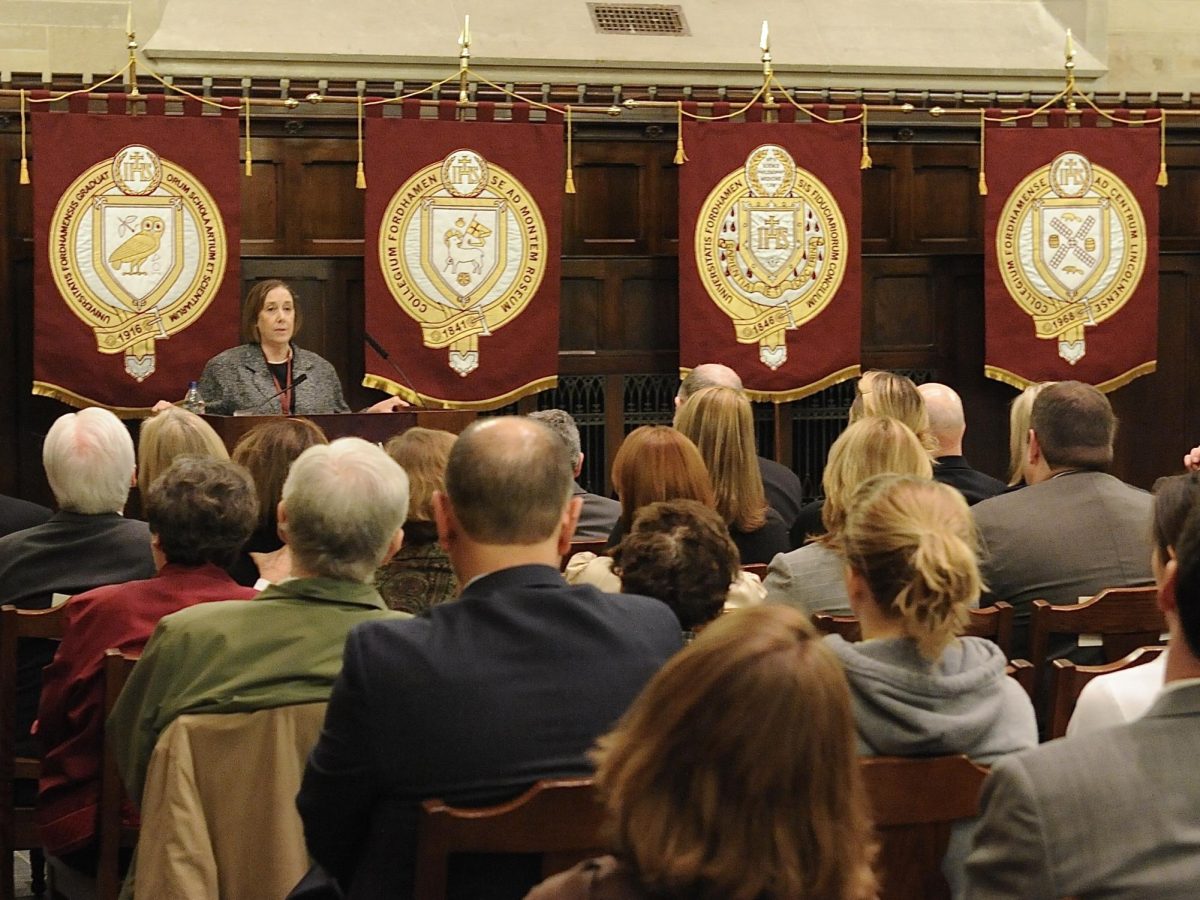









































































































































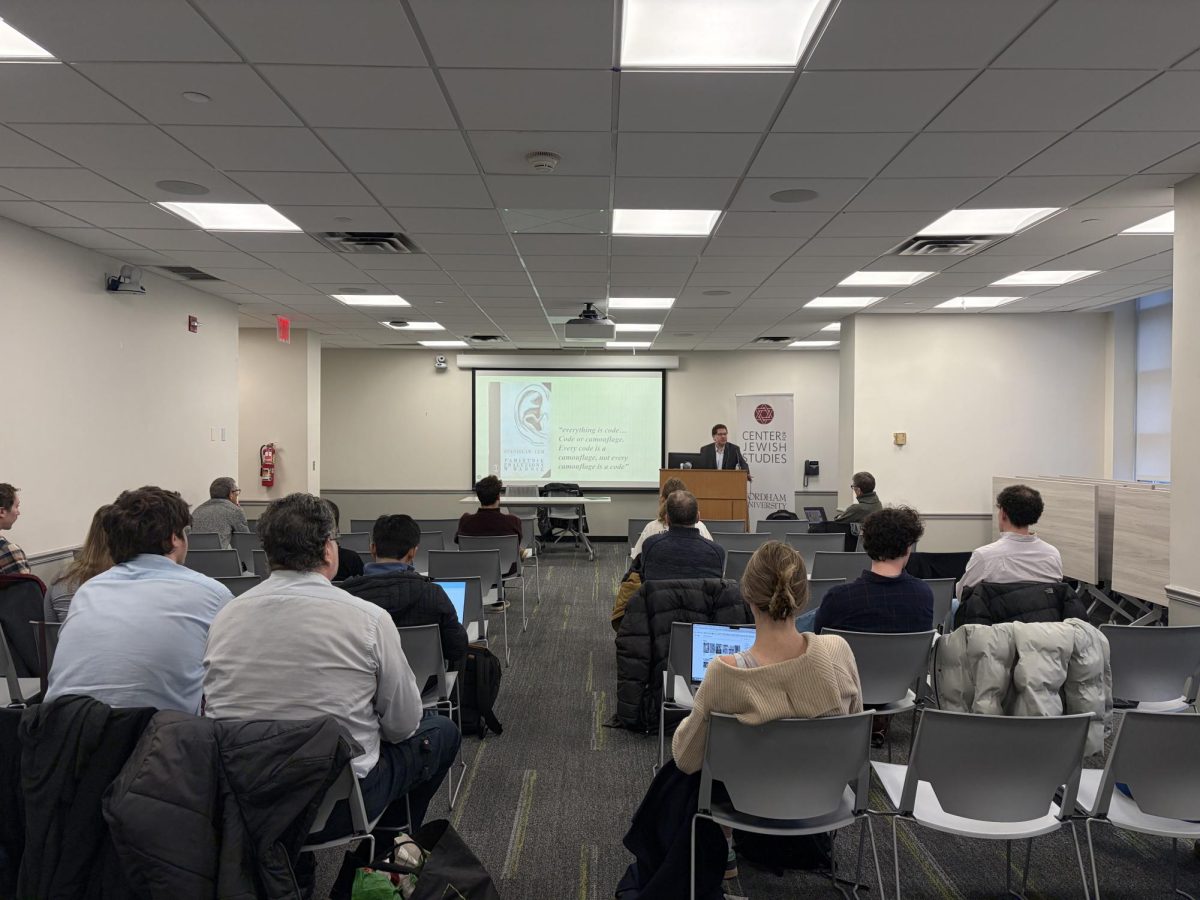
On Tuesday, March 24, Fordham’s Jewish studies department and the New York Public Library (NYPL) held a lecture as part of a series between Fordham and the NYPL. The lecture was presented by Marat Grinberg, a professor of Russian and humanities at Reed College. Grinberg’s writings and academic focal points revolve around Jewish struggle and the literature that emerges from it.
This particular lecture focused on science fiction produced in Eastern Europe and the Soviet Union between the 1960s and the 1980s, a genre that is not typically associated with Jewish writers. In his lecture, Grinberg highlighted that this is a pivotal missing link in modern Jewish literary history.
Drawing on the disconnect between Jewish faith and identity, and what Jewish literature truly consists of, Grinberg’s primary question he focused his lecture on was: Can science fiction be a part of Jewish culture?
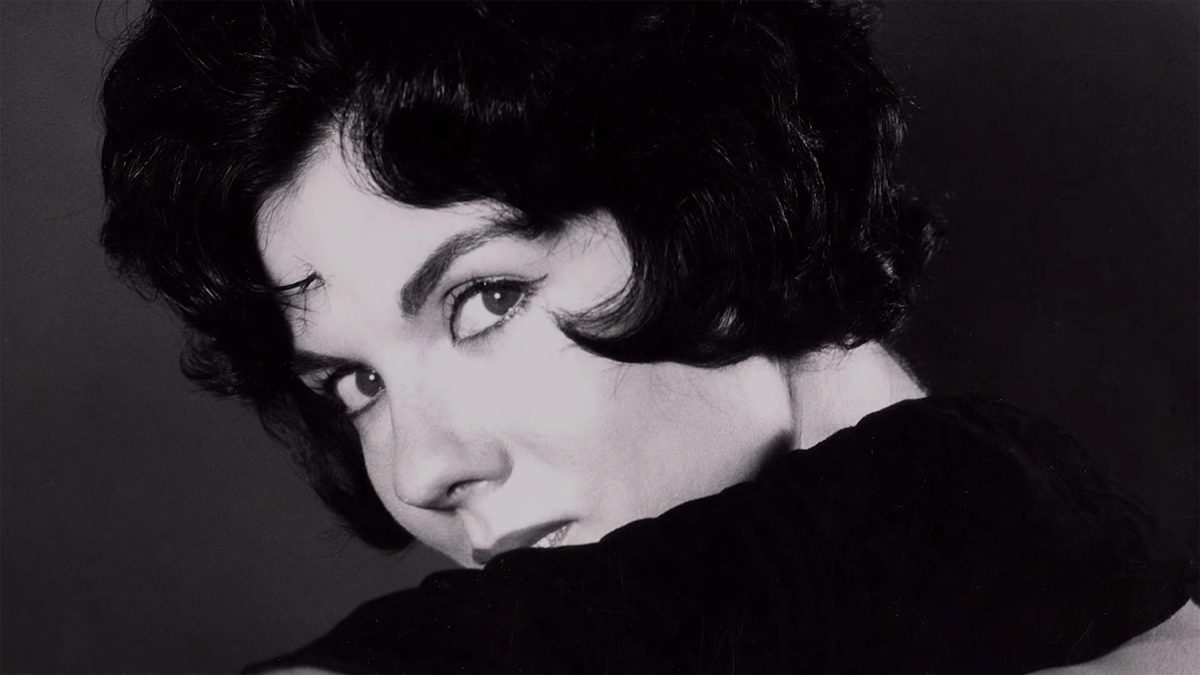
Grinberg argued that much of the writing from renowned writers in this era, including the Strugatsky brothers and Ariadna Gromova, was shaped by the antisemitic and repressive political frameworks of the 20th century, regardless of whether they identified as Jewish or political writers.
Grinberg devoted the most attention to Stanisław Lem, who he described as one of the “least Jewish” and political compared to the Strugatsky brothers and Gromova. However, Grinberg noted that regardless of whether these authors emphasized their Jewish identities or acknowledged that their works are a commentary, the societal contexts of the Third Reich and the Soviet Union made an impression on them that manifested through their work.
Stainsław Lem, born in Ukraine in 1921, considered himself neither a political nor a Jewish writer. Grinberg argued, however, that his prose largely relayed the generational atrocities and horrific impact of Eastern European antisemitism and genocide.
“The survival in these hellish circumstances left an indelible imprint on Lem,” said Grinberg, referencing this persecution. “Having witnessed and experienced first the brutalities of the Soviet and then the Nazi occupation, he learned to harbor no illusions about the two totalitarian systems, though he often did place the Nazi exterminationist practices in a separate category.”
In Lem’s works “Solaris,” “The Cyberiad” and “The Invincible,” Grinberg noted a theme where he synthesized humanity’s horrid nature and its poetic elements. Lem focused on radical extremes writing from an ontological perspective.
“Unsatisfied with just imagining, portraying, or explaining away the problems facing humanity, he opted for what he called the ontological interpretation of the world, which his existence itself is insolubly riddled with contradictions,” Grinberg said.
When asked if he thought Lem’s focus on radical extremes was based on the radical and oppressive political powers that controlled Europe during his life and upbringing, Grinberg said Lem was not a political writer commenting on political radicalism. He also said Lem was projecting his experiences of being the radical opposite: the subject of oppression.
“Lem witnessed historical traumas in the war, the Holocaust, Stalinism, but the most personally horrifying of which was the erasure of Jewish life and his native, Lviv,” said Grinberg.
Furthering Grinberg’s primary premise that these works need to be understood as Jewish works, regardless of whether they are written with the intention of being so, the context prevails.
During the lecture, Grinberg broadened the scope to provide context for the entire cohort of Jewish sci-fi writers.
When asked why sci-fi in particular was so popular with Jewish writers emerging from Eastern Europe in the 20th century, Grinberg responded that “Sci-fi became a kind of escape route” and that the “allegorical frameworks, distant planets, and futuristic settings allowed the writers to have their commentaries and critiques published and recognized under the guise of another realm.”
Grinberg focused on the prevalence of this previous epoch of horrid discrimination and persecution. He discussed a parallel about how in the 21st century, with rising antisemitism, we can prevent the same repression.
“One way antisemitism expressed itself in the Soviet Union/Eastern Europe was anti-Zionism. So what you’re hearing today, comparing Israelis to the Nazi’s, this is all the Soviet playbook,” said Grinberg.
Grinberg highlighted the importance of working in colleges and having students read this Jewish science fiction to see the realities of antisemitism.
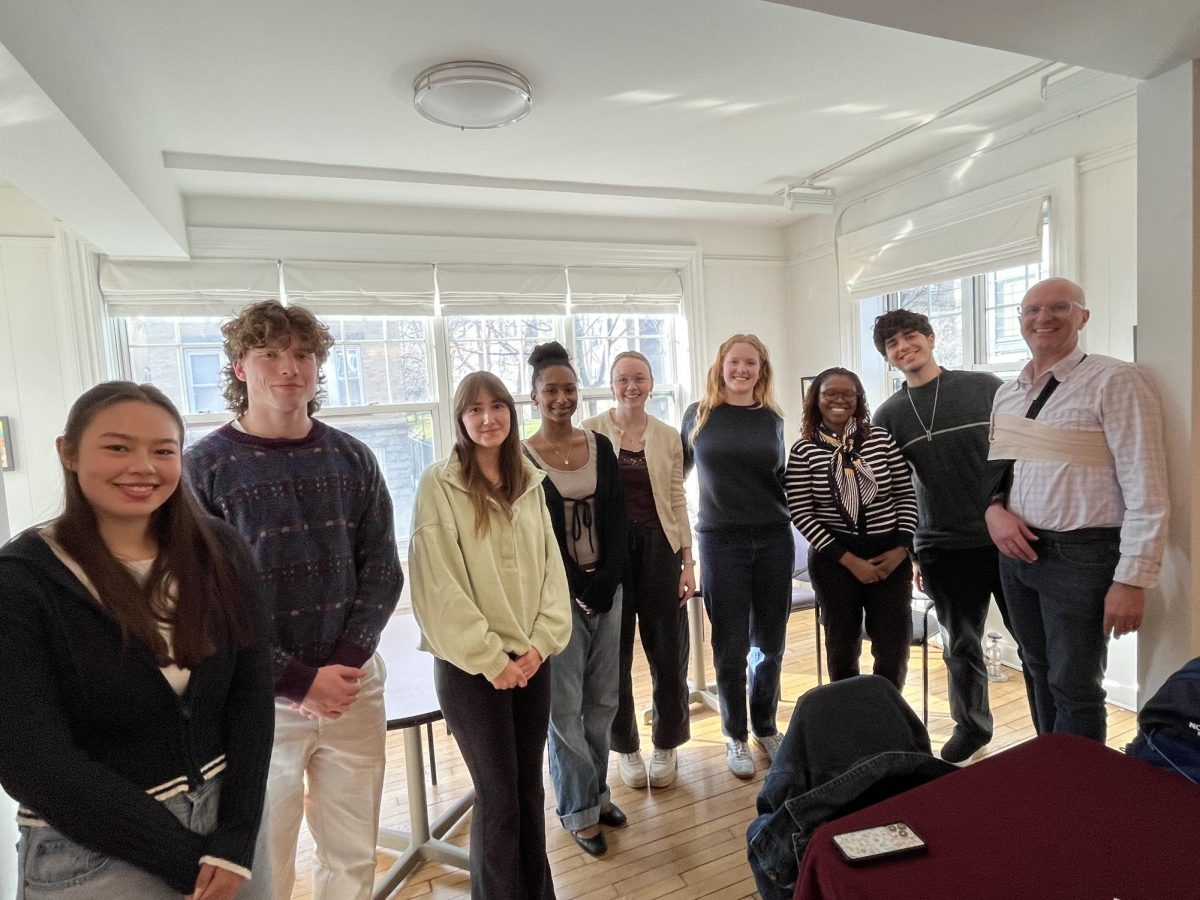
One student, Sarina Danko, FCRH ’28, talked about how she thinks universities have done in representing Jewish students.
“I think at least Fordham University doesn’t do a very good job,” said Danko. “Freshman year, I had no idea there was a Jewish fellowship. I didn’t even know they did shabbat on Fridays.”
Danko said she doesn’t believe this lack of representation is applicable to all Fordham religious groups.
“I’ve seen things for like Muslims and other religions, but it wasn’t until I joined this class that I found out this school actually does things for Jews,” said Danko.
According to the Anti-Defamation League’s 2024 Audit of Antisemitic Incidents, there was an 84% year-over-year increase in Jewish discrimination on campuses after Oct. 7. Because of this, universities such as Harvard University and Columbia University, have faced institutional lawsuits. Fordham’s highlighting speakers, such as Grinberg, who are driven to continue to spread Jewish culture, contribute to the combatting of campus antisemitism.
Grinberg highlighted that, partially because of longstanding antisemitism, it is common for Jewish artists to not entirely affiliate, either with the aspects of religion or identity, drawing parallels between Lem, Larry David and Woody Allen, all influential figures whose identity and core worldview were not defined by religion.
On April 14 from 12 to 1:30 p.m., in continuation of the Fordham-NYPL Lecture series, the Jewish studies department hosted Chaya Nove, who lectured on how Yiddish, which came to New York by Hasidic Holocaust survivors after the Second World War, has been maintained as a language of everyday life.