








































































































































































The Center for Jewish Studies welcomed one of the world’s leading scholars of medieval Hebrew manuscripts to campus for the final event in a three-part lecture series examining the art and ritual of the Passover Haggadah.
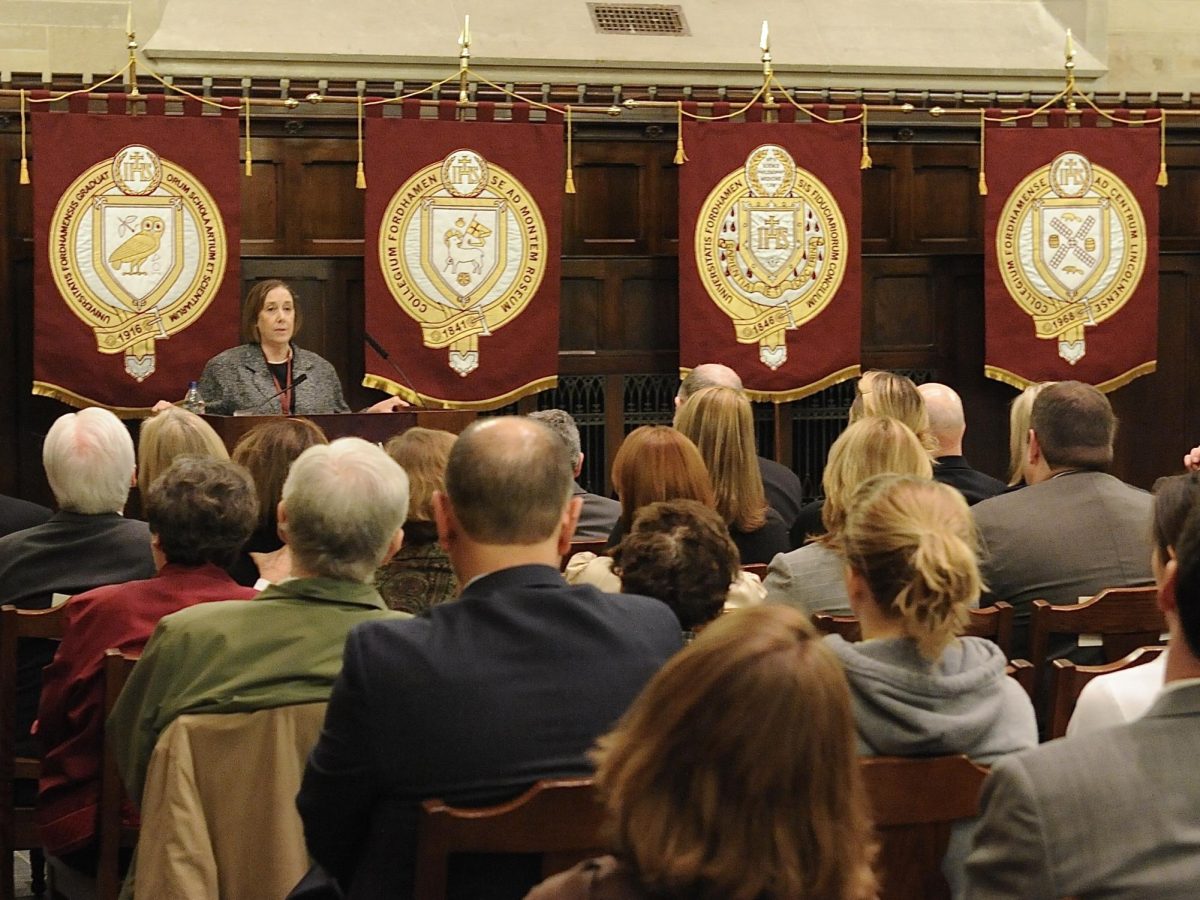
Katrin Kogman-Appel, a professor at the University of Münster and an internationally recognized authority on illuminated Hebrew manuscripts, delivered the concluding lecture of the Distinguished Lecturer series on March 4. Her talk, titled “Medieval Passover Haggadah: From Rituals to Illuminations,” explored how illustrated Haggadot from the Middle Ages reveal the religious, social and cultural life of Jewish communities across Europe.
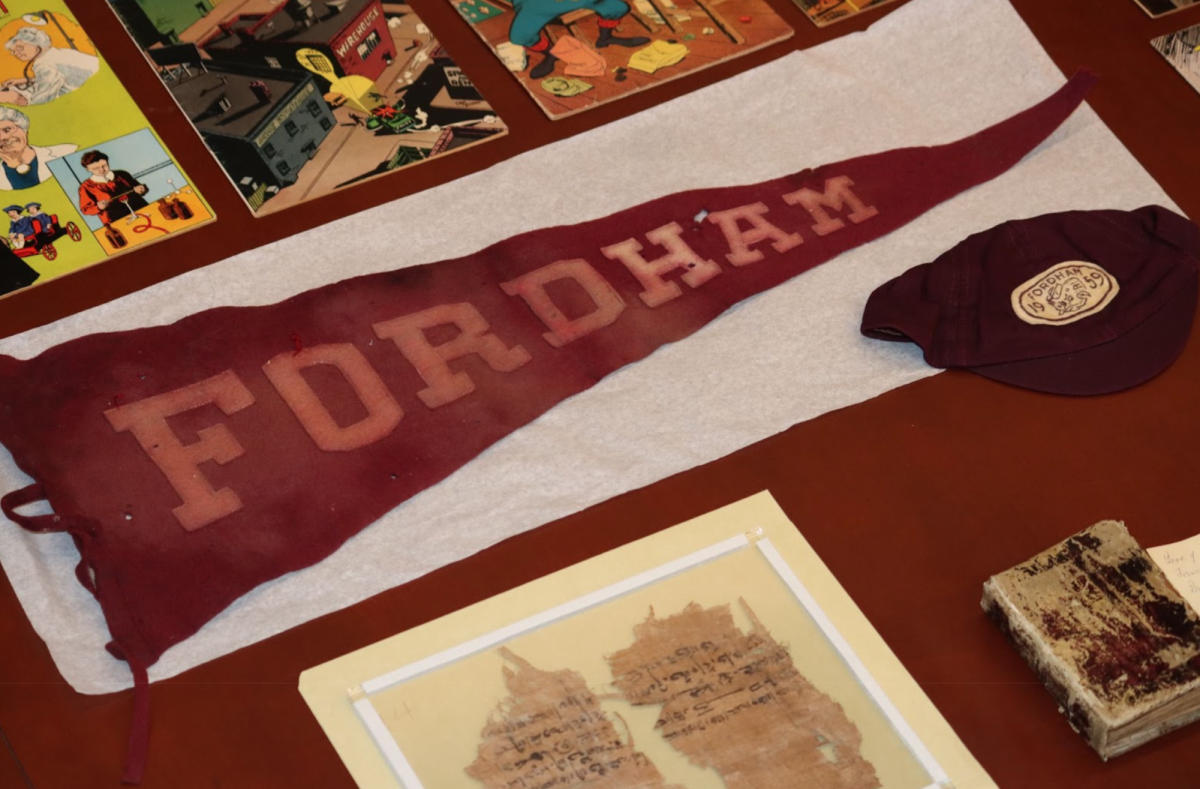
The event followed two previous sessions in the series and included a hands-on workshop where students and faculty examined rare materials preserved in the Fordham University Special Collections and Archives at Walsh Library.
Passover centers on the ritual meal known as the Seder, which commemorates the biblical story of the Israelites’ liberation from slavery in Egypt. The Haggadah, literally meaning “telling,” serves as the guidebook for the evening, structuring the retelling of the Exodus narrative while directing the ritual acts performed during the meal.
Medieval versions of the Haggadah often included elaborate illustrations. These illuminated manuscripts offer scholars a rare glimpse into how Jewish communities understood and enacted the Passover ritual centuries ago.
“Understanding these images requires knowledge not only of Jewish ritual but also of medieval European art history,” Kogman-Appel said. “The artists who created the illustrated Haggadot were deeply influenced by the artistic conventions of the regions and periods in which they lived, meaning that interpreting the images requires familiarity with broader artistic trends of the 14th and 15th centuries.”
For students encountering these manuscripts for the first time, Kogman-Appel suggested that they can be studied from several perspectives. Art historians might focus on stylistic features and iconography, while students of religion could examine the theological context behind the imagery. Others interested in social history could explore questions of ownership, readership and the role of books within medieval Jewish households.
“The images can tell us a great deal about the society that produced them,” Kogman-Appel said, noting that illustrated manuscripts often reflect contemporary debates, cultural exchanges and even tensions between Jewish communities and the surrounding Christian world.
Interpreting these images, however, presents several challenges, according to Kogman-Appel. Scholars must combine a visual analysis with their extensive knowledge of historical context, including the circumstances of Jewish life in medieval Europe. Artists and patrons sometimes embedded references to contemporary controversies or polemics, meaning that the imagery can reflect broader intellectual or political debates of the time, Kogman-Appel said.
During the lecture, Kogman-Appel highlighted different types of illustrated Haggadot. Some manuscripts feature relatively sparse imagery that functions mainly as visual markers within the text. These images can serve as bookmarks, signaling particular moments in the ritual without providing extensive narrative detail.
Others, however, include far more elaborate cycles of images that appear to function as visual guides for conducting the Seder itself. In these manuscripts, the illustrations depict ritual actions step by step — from preparing the matzah to washing hands, pouring wine and breaking the matzah.
One example Kogman-Appel presented is the Bird’s Head Haggadah, produced around the year 1300 in the medieval Rhineland. The manuscript contains detailed images illustrating the sequence of the Passover ritual. One scene shows a man lifting a cup of wine for the opening blessing while ritual objects sit on the table nearby, visually reminding the viewer of the next steps in the ceremony.
Later manuscripts developed this approach even further. Some 15th-century examples from Franconia, Germany, contain extensive sequences depicting nearly every stage of Passover preparation. In one case, the illustrations show the entire process of baking unleavened bread — fetching water, mixing dough, shaping the matzah and placing them in the oven.
The purpose of these detailed images, Kogman-Appel noted, was likely to help guide households in properly staging the ritual. She further noted that scholars of ritual theory often emphasize that ceremonies succeed when participants fully engage in the performance and meaning of the event. By illustrating each step visually, the manuscripts helped ensure that the Seder was done correctly.
Kogman-Appel noted during the lecture that the manuscripts also reveal clues about the social groups who commissioned and used them, as producing an illuminated Haggadah required expensive materials such as parchment and professional scribal work. This meant that the owners were likely wealthy and literate. At the same time, she noted that many were not members of the rabbinic, scholarly elite.
Instead, Kogman-Appel argued, these books may have belonged to prosperous merchants or moneylenders who sought a visual guide to help them lead the ritual in their homes. “They were wealthy and educated, but they were not necessarily rabbinic scholars,” she said.
For modern readers, illuminated Haggadot can also reveal how traditions evolve over time, according to Kogman-Appel. One example involves the afikoman, a broken piece of matzah wrapped in cloth and eaten at the end of the meal. Today, many families have a custom in which children hide the afikoman and later return it in exchange for a prize. However, Kogman-Appel noted that this practice did not exist before the 15th century. Earlier traditions simply involved setting the matzah aside. Only later do images begin to appear, suggesting that children were involved in retrieving them.
For students who attended the lecture and workshop, the series provided an opportunity to examine how religious texts function as historical artifacts. Through their illustrations, medieval Haggadot reveal the artistic creativity and the lived experiences of Jews across Europe.