

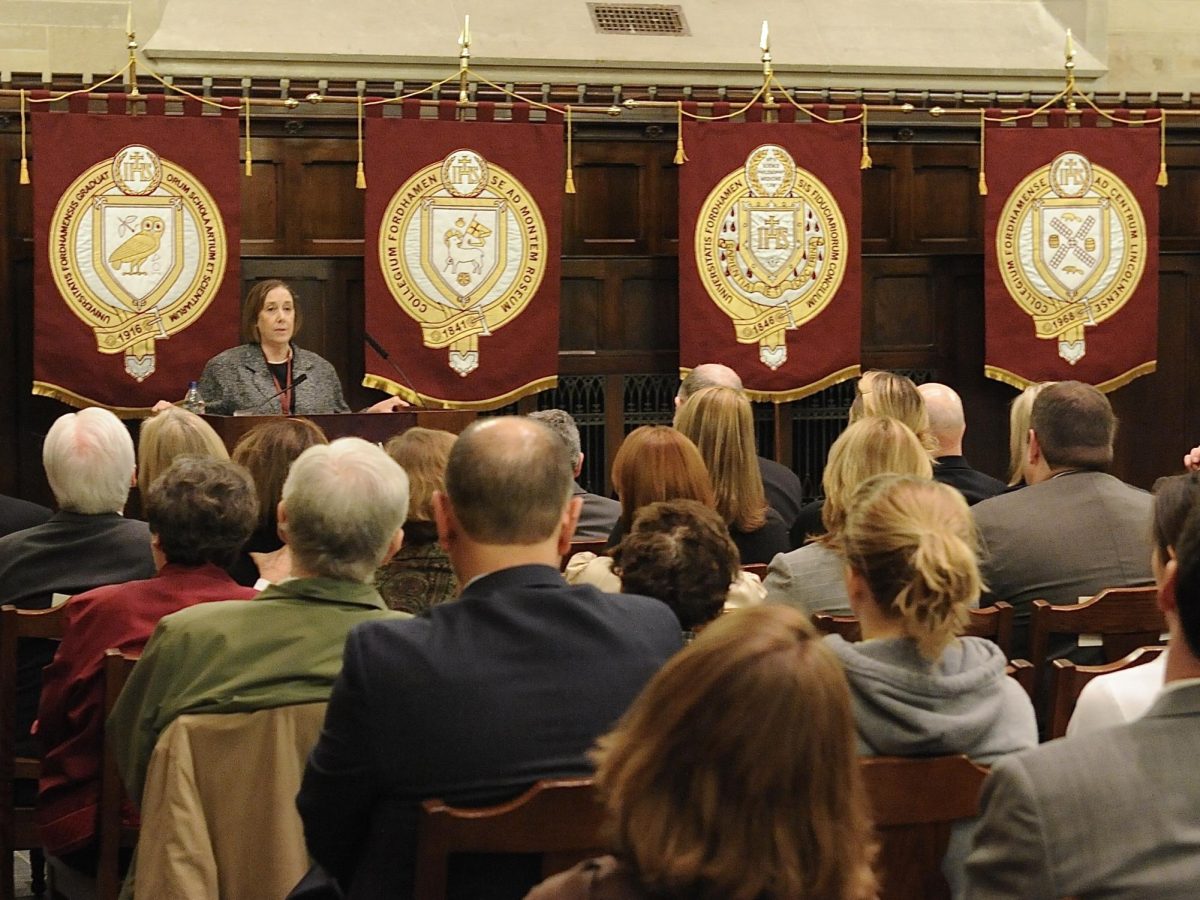












































































































































































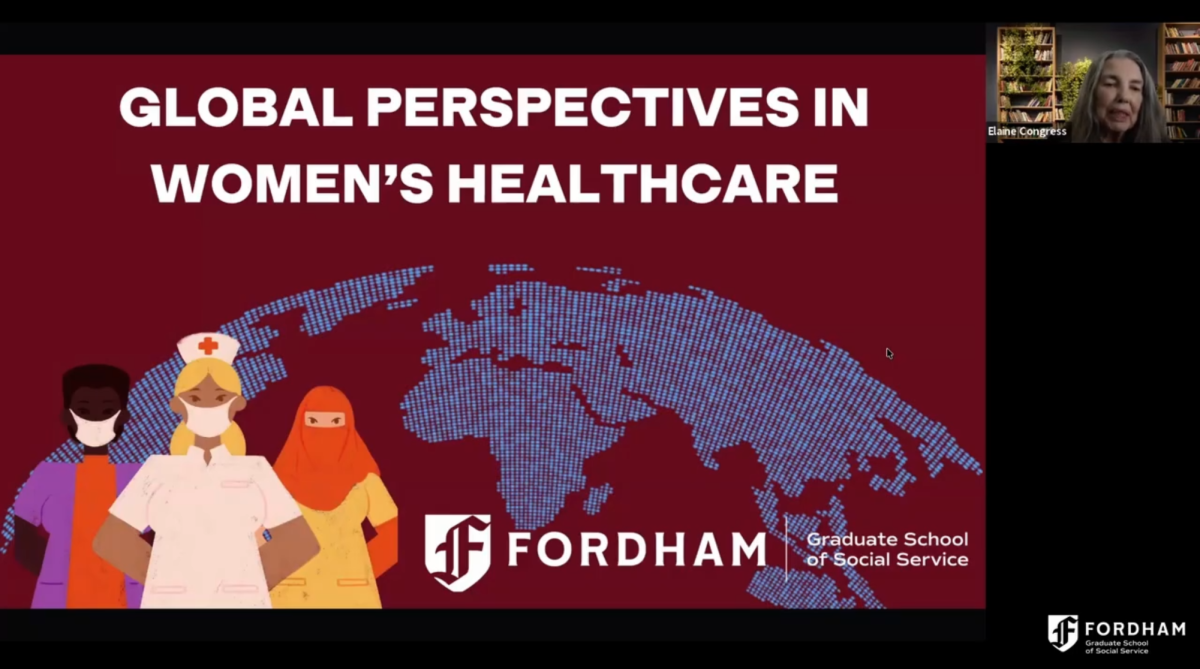
Fordham University’s Graduate School of Social Service (GSS) convened students, faculty and international partners for a discussion on women’s healthcare, which focused on maternal mortality and global health equity.
This conference was organized by Fordham Master of Social Work (MSW) students participating in the school’s United Nations Internship Experience in coordination with their faculty advisor, Elaine Congress, Ph.D. The event highlighted disparities in outcomes while emphasizing the vital role social workers play in advancing equitable healthcare worldwide.
In an interview with The Ram, Congress said that the event’s topic was rather natural. “There are about five million [social workers] in the world, and we’re concerned about social justice issues,” Congress said. “There are a lot of social justice issues involved in terms of healthcare.”
“This event reflects our shared commitment to [the advancement of] women’s rights to equitable and quality health care worldwide,” said Connor White, communications director of GSS. “Equipping future social workers with global perspectives is essential, as they are often on the front lines supporting vulnerable populations.”
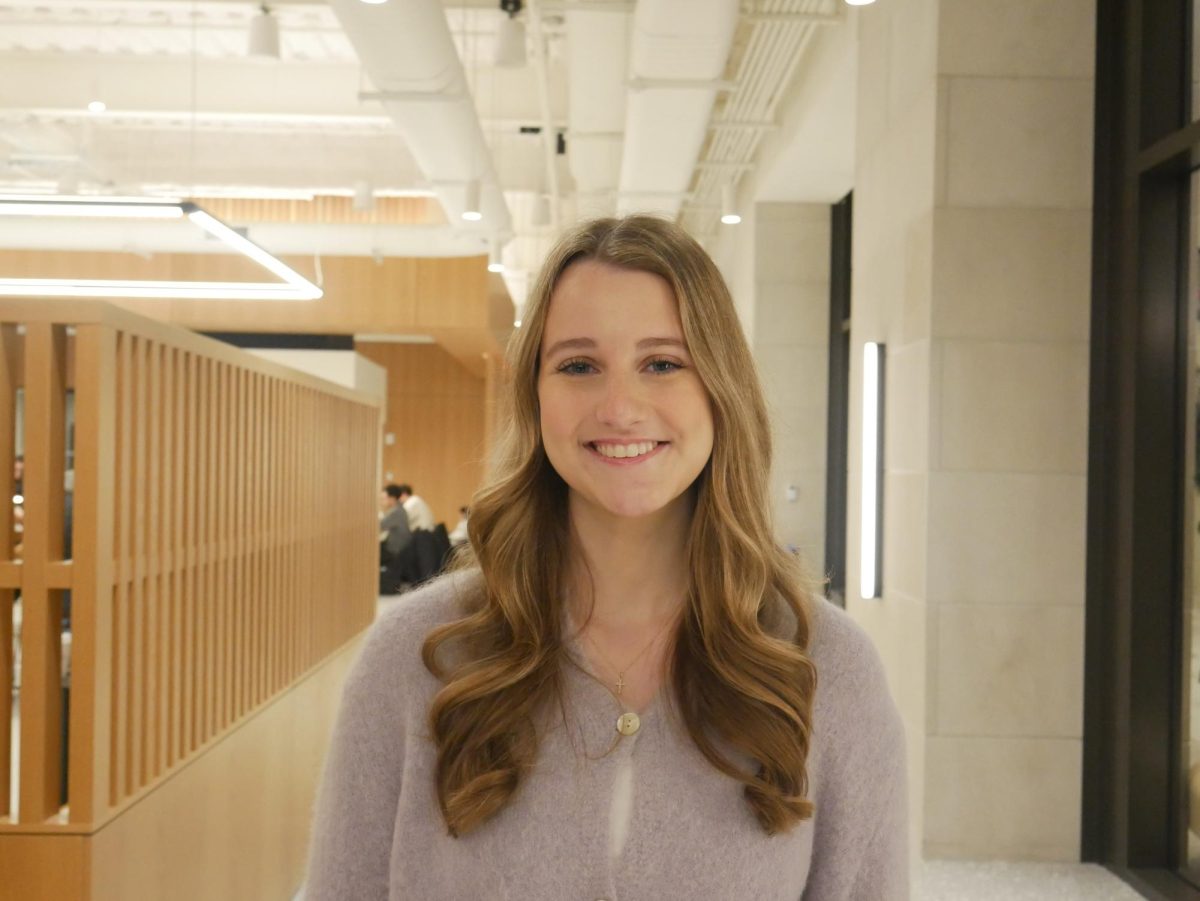
Student organizer Elena Soler, GSS ’26, described the forum as both timely and necessary, because the event coincided with the 70th anniversary of the United Nations (UN) Commission on the Status of Women.
“Of course, it had to be about women. And we chose health care just because … healthcare right now is being attacked in our country,” Soler said.
A central theme of the event was the presence of structural barriers within the healthcare systems. Presenters shared how inequities that are embedded in policy, training and institutional practices often result in delayed diagnoses, inadequate treatment and unequal access to care.
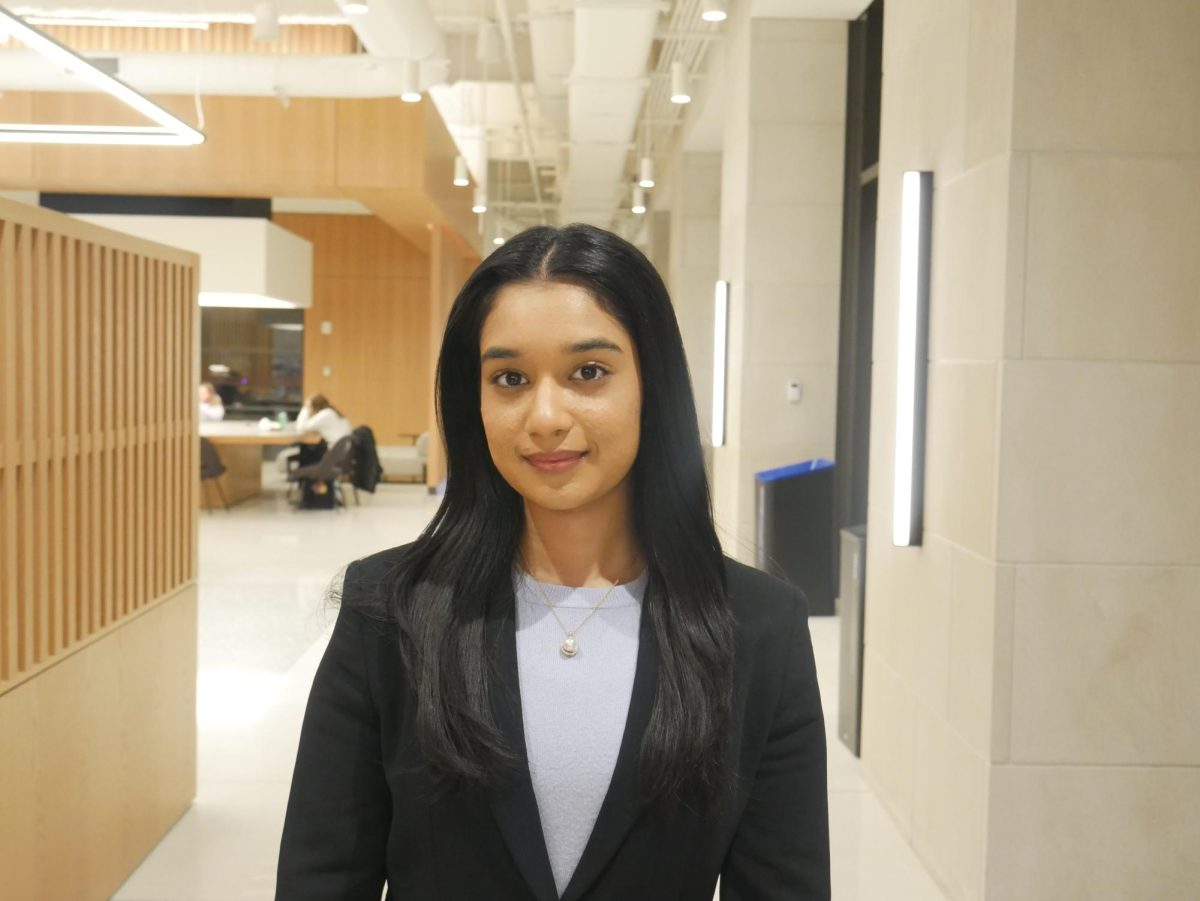
Maria Treloney Perlett, GSS ’26, addressed the phenomenon of medical gaslighting, which is when patients’ symptoms are dismissed or attributed to emotional causes without proper investigation, and drew on her personal experience with endometriosis.
“When dismissal becomes patterned across many patients, it is no longer personal, it becomes systemic,” Plet said. “Medical gaslighting is a health equity issue rooted in how systems are designed.”
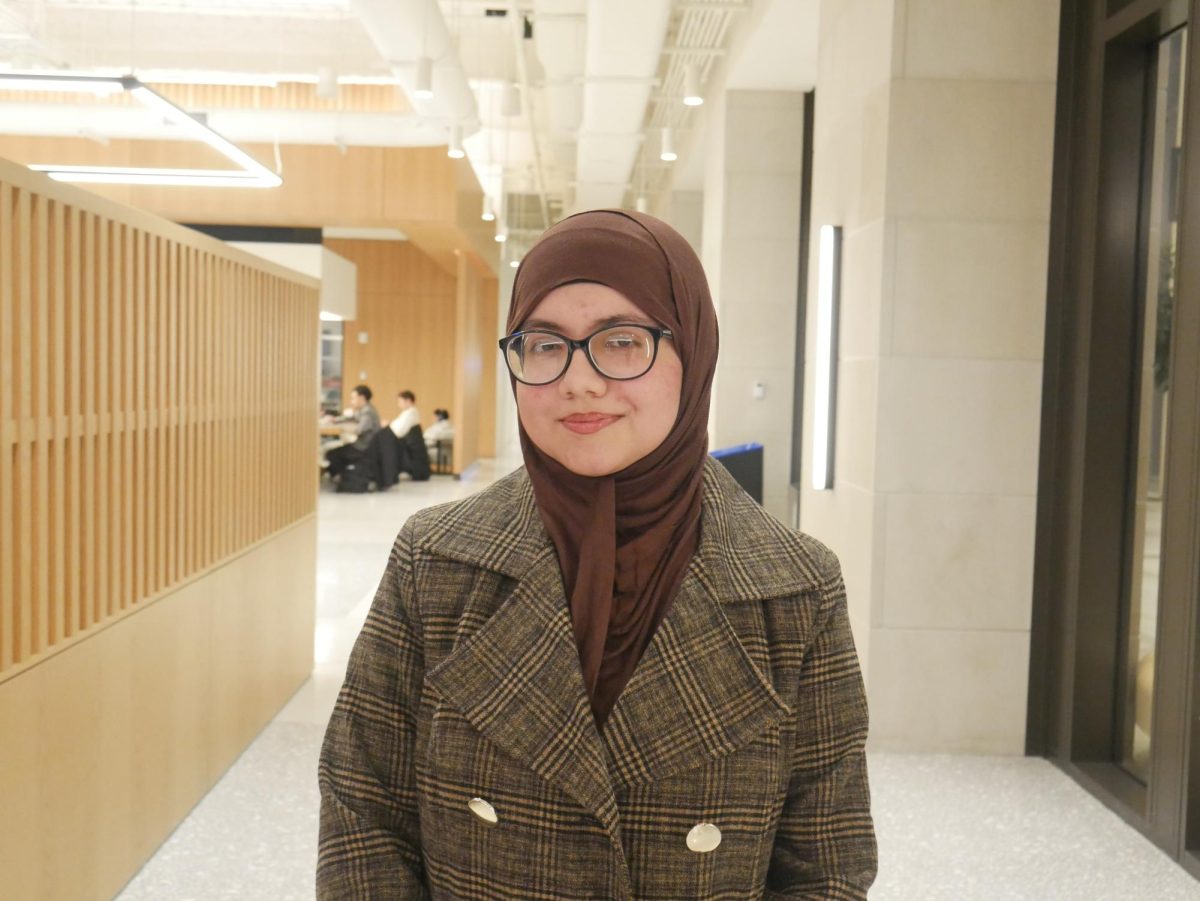
Maisha Cogle, GSS ’26, highlighted disparities in maternal health outcomes among Black women in the United States. She noted during her presentation that despite advances in medical technology, the U.S. continues to report higher maternal mortality rates in Black women than in other high-income countries.
“These disparities exist regardless of [one’s] education or income, showing that postpartum mortality and dangers is a structural issue rather than an individual one,” Cogle said. “Behind these numbers there are real people whose voices deserve to be heard.”
Cogle emphasized the need for policy interventions, such as extending postpartum Medicaid coverage and implementing mandatory bias training for health care providers.
The discussion on health also expanded internationally, incorporating global perspectives on environmental determinants of health. Sophie Balson and Jemimiah Giles-Cook, medical students at the University of Notre Dame-Sydney, examined the intersection of climate change and women’s health, noting that environmental crises impacts women and girls disproportionately.
“Four out of five people displaced by climate impacts are women and girls,” Giles-Cook said. “Women and children are 14 times more likely to be displaced, face violence and experience adverse health outcomes during environmental disasters.”
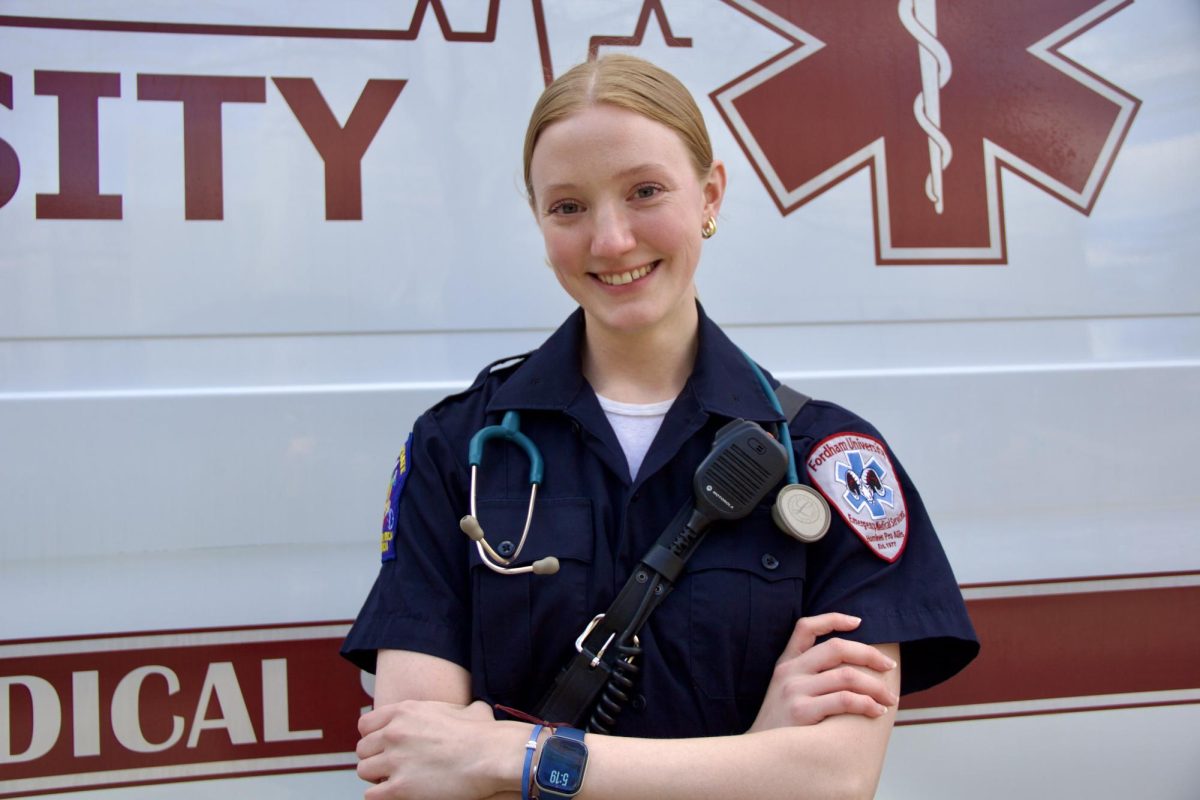
Mental health and social stigma were also key areas of the webinar’s focus, particularly in discussions surrounding menopause and postpartum care. Monica Mendez, GSS ‘26, highlighted how cultural taboos and inadequate medical training contribute to the marginalization of women’s experiences, often discouraging them from seeking support.
“Silence around these issues leads to suffering,” Mendez said. “Education and open dialogue are essential to breaking stigma and improving outcomes.”
The event concluded with a call to action, urging attendees to carry the conversation forward into professional and community work. Organizers stressed that awareness alone is insufficient without concrete steps toward reform.
Soler told The Ram that the best way to get involved with women’s healthcare inequality, in education or active work, whether through academia or outside it, is through community outreach.
“Always look within your own community,” Soler said on this topic, echoing her own experience. “Get involved with what you see when you walk out of your home right now … I think oftentimes as students, we’ll, like, detach ourselves and look at what’s happening in the world, but we’re also a part of the world.”